
Molar Mass Of Barium Hydroxide
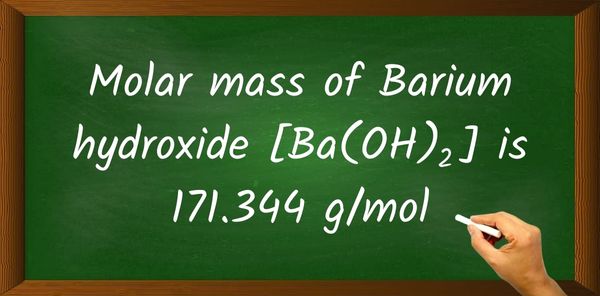
Okay, so picture this: I'm in the lab, probably fueled by too much coffee and a vague sense of impending doom (relatable, right?), staring blankly at a beaker. The label? "Barium Hydroxide." Sounds intimidating, doesn't it? Like something a supervillain would concoct. And I'm thinking, "Great, another day, another chemical I need to understand. But how do I even begin to understand it?"
That's when the concept of molar mass swooped in like a slightly less dramatic superhero. Because let's be honest, it’s not saving the world, but it is crucial in chemistry. And today, we're tackling the molar mass of barium hydroxide – Ba(OH)2. Brace yourselves!
What is Molar Mass Anyway?
Simply put, molar mass is the mass of one mole of a substance. Think of a mole like a baker's dozen, but instead of 13 donuts, it's 6.022 x 10²³ particles (atoms, molecules, ions, etc.). That's Avogadro's number, and it's seriously huge. (I always imagine trying to count that many grains of sand. My brain hurts just thinking about it.) So, molar mass is basically the mass of that gigantic group of particles.
Must Read
The beauty of molar mass is that it connects the microscopic world of atoms and molecules to the macroscopic world we can actually weigh in a lab. It's measured in grams per mole (g/mol). Convenient, right?
Finding the Molar Mass of Barium Hydroxide: The Detective Work
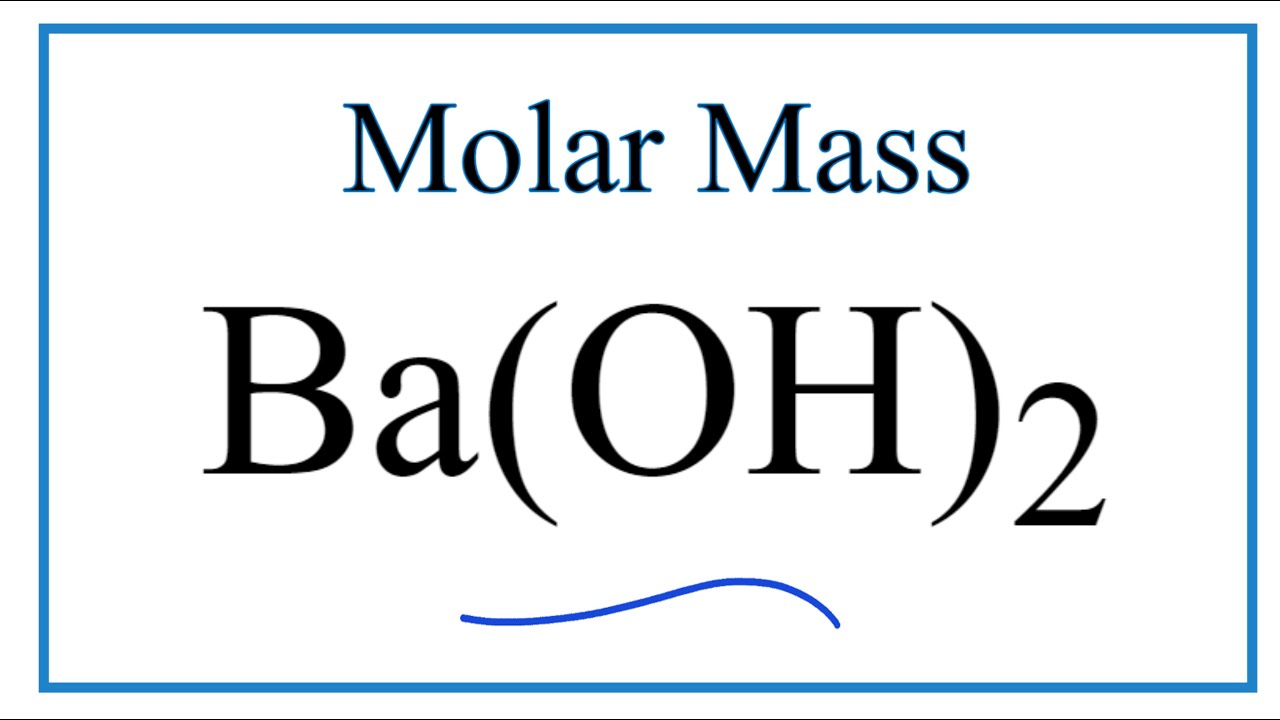
Now, let's get to the fun part: calculating the molar mass of Ba(OH)2. This isn't as scary as it sounds, I promise. We need to play detective and use the periodic table as our trusty sidekick.

First, we need to identify the elements in our compound: * Ba: Barium * O: Oxygen * H: Hydrogen
Next, we look up the atomic masses of these elements on the periodic table. (You can usually find these values listed under each element symbol.) * Barium (Ba): Approximately 137.33 g/mol * Oxygen (O): Approximately 16.00 g/mol * Hydrogen (H): Approximately 1.01 g/mol
Important Note: These values are usually given with several decimal places. The number of significant figures you use will depend on the precision required for your calculations. But for our purposes, let's stick with these numbers.
The Calculation: Putting it all Together
Okay, now for the math. Ba(OH)2 means we have: * 1 barium atom * 2 oxygen atoms (because of the subscript 2 outside the parentheses) * 2 hydrogen atoms (again, due to the subscript 2)
So, the molar mass of Ba(OH)2 is calculated as follows:
(1 x Barium's atomic mass) + (2 x Oxygen's atomic mass) + (2 x Hydrogen's atomic mass)
![Barium hydroxide [Ba(OH)2] Molar Mass (With Calculations)](https://knordslearning.com/wp-content/uploads/2022/08/1-600x390.jpg)
(1 x 137.33 g/mol) + (2 x 16.00 g/mol) + (2 x 1.01 g/mol)
137.33 g/mol + 32.00 g/mol + 2.02 g/mol
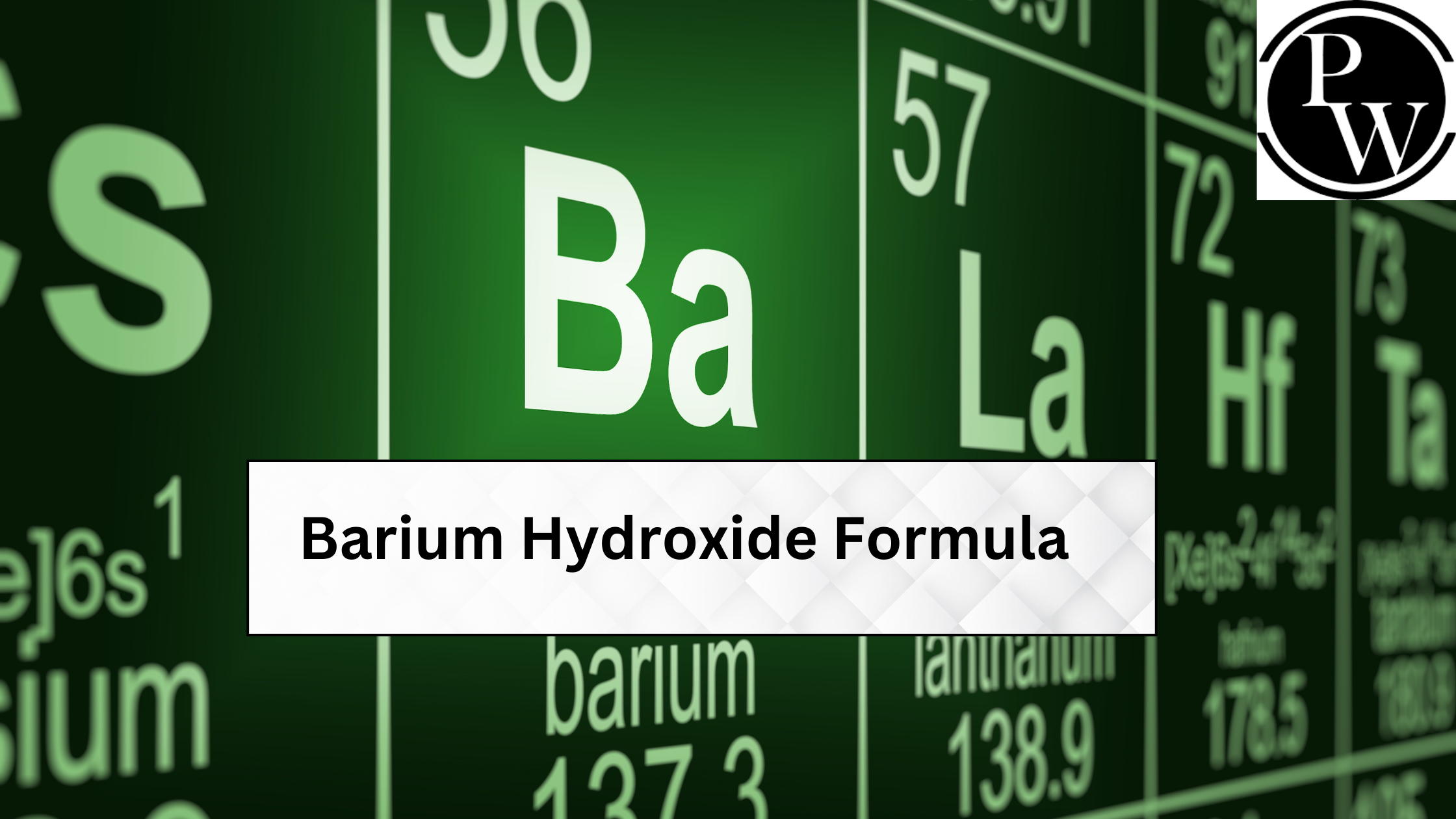
Therefore, the molar mass of Ba(OH)2 is approximately 171.35 g/mol.
Ta-da! We did it! That wasn’t so bad, was it? You've successfully calculated the molar mass of barium hydroxide. You're practically a chemist now!
Why Does it Matter?
You might be thinking, "Okay, I calculated a number. So what?" Well, knowing the molar mass is essential for converting between mass and moles, which is crucial for all sorts of chemical calculations, like determining the amount of reactants needed for a reaction or calculating the yield of a product. It's the foundation for stoichiometry, which is basically the grammar of chemistry. Without it, you're just shouting random elements into a beaker and hoping for the best. (Spoiler: that rarely works.)
So, the next time you see "barium hydroxide" (or any other chemical formula, for that matter), don't panic. Just remember the trusty periodic table, the concept of molar mass, and a little bit of simple arithmetic. You've got this!