
Where Should I Install Carbon Monoxide Detectors
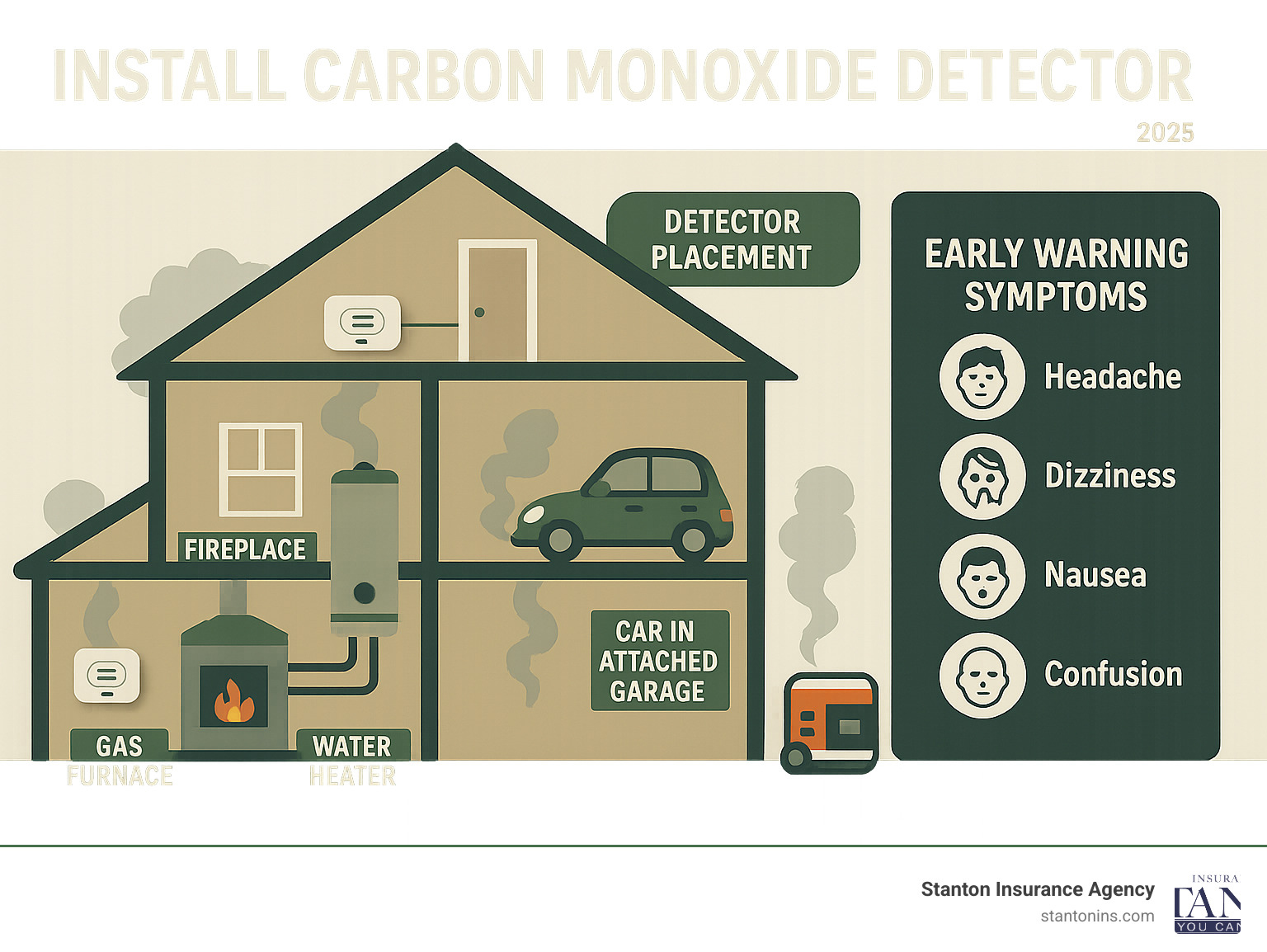
Okay, let's talk about something super important but often overlooked: carbon monoxide (CO) detectors. We’ve all heard of smoke detectors, right? The ones that chirp at you when your toast gets a little too adventurous? Well, CO detectors are like their quieter, sneakier cousins, and they protect you from a much more insidious threat.
Imagine a gas that’s invisible, odorless, and tasteless. It’s like a master of disguise, a ninja of the air, slipping into your home without a single warning sign. That’s carbon monoxide. It can come from all sorts of everyday things – your furnace, water heater, fireplace, even a running car in an attached garage. And if it builds up, it can be incredibly dangerous, even deadly. The scary part? You won't know it's there until it's too late. It’s like getting a flat tire on a smooth road – no bumps, no warning, just sudden trouble. This is why these little gadgets are total superheroes in your home!
Why Should I Care (Besides the Obvious)?
Think about it: most CO poisonings happen while people are sleeping. You’re in dreamland, completely unaware of what’s happening. It’s not like a smoke detector that might wake you up with a smell before the alarm blares. CO just slowly and silently replaces the oxygen in your blood, making you feel drowsy, headachy, or nauseous – symptoms that can easily be mistaken for the flu, or just being tired. That’s the really tricky part. Your body can’t tell the difference between oxygen and CO, so it happily takes in the bad stuff, leading to serious health issues, unconsciousness, and worse.
Must Read
So, these detectors aren't just protecting your house; they're literally protecting your ability to wake up in the morning, ready for that first cup of coffee. They're like an invisible bodyguard for your family, your pets, and even your goldfish (okay, maybe not the goldfish, but you get the idea!).
Where to Install Your CO Superheroes: The Basics
Alright, let’s get down to brass tacks. Where do these silent guardians need to stand guard? The general rule of thumb is pretty straightforward:

1. On Every Level of Your Home: Just like you wouldn’t have just one smoke detector in a multi-story house, you need CO detectors on every single level, including the basement and attic if it’s an occupied space. Think of it like having security cameras in every major zone of your home – you don’t want any blind spots for our sneaky friend, CO!
2. Near Sleeping Areas: This is arguably the most important spot. You want a detector close enough to hear if it goes off while everyone is catching Zs. Imagine a hallway right outside the bedrooms. If CO is trying to pull a fast one while you're dreaming of unicorns, you want that alarm to be loud and clear, shaking you awake like a surprise party.
3. Near Fuel-Burning Appliances: Got a furnace, water heater, gas fireplace, or even a wood-burning stove? These are the usual suspects for CO leaks. Having a detector within earshot of these appliances (but not right on top of them, we'll get to that) is a smart move. It’s like placing a diligent watchman right outside the "danger zone."

4. If You Have an Attached Garage: A car running in an attached garage can quickly fill your home with CO. If you’ve got one, definitely install a detector in the room adjacent to the garage. Even if you only run your car for a minute to warm it up, exhaust fumes can sneak in surprisingly fast.
A Few Nitty-Gritty Details and "Don'ts"
Now, for some finer points. Unlike smoke, which rises, CO actually mixes with the air. So, there's no "CO rises" or "CO sinks" rule. Most manufacturers recommend installing them at eye level, or at least no lower than knee height, and no higher than a few inches from the ceiling. Basically, anywhere in the middle of the wall works well, just follow the instructions in the box. Think of it like hanging a picture – you want it where everyone can see (or hear) it.

Here are a few places to avoid putting your detectors:
- Right next to windows or doors: Drafts can mess with the sensor and give you false readings.
- Near vents: Again, air currents from heating/cooling vents can interfere.
- In humid areas: Bathrooms or laundry rooms are too steamy and can cause false alarms.
- In direct sunlight: Extreme temperatures aren't good for the electronics.
- Too close to fuel-burning appliances: Give them a little breathing room, at least 15 feet away, to avoid false alarms from normal appliance operation.
The Peace of Mind Payoff
Installing carbon monoxide detectors is one of those incredibly simple tasks that delivers a massive return on investment: peace of mind. It’s like buying insurance for your home, but way less complicated and much more immediate in its protection. Most detectors nowadays last about 5-7 years, and they'll chirp when it's time to replace them. And don't forget to test them regularly, just like your smoke detectors! A quick press of a button ensures your superheroes are always ready for action.
So, go on, take a quick inventory of your home. Are your CO superheroes in all the right places? A little proactive thinking today can make all the difference tomorrow. Stay safe and breathe easy, friends!
/where-to-place-smoke-detectors-1152485_V2-3c5086adfaa646d69d312b45d342c621.png)