
Why Do We Hear Thunder After Seeing Lightning

Picture this: you're sitting inside, maybe with a cup of tea, and suddenly – FLASH! A brilliant, blinding streak of lightning lights up the sky. It's majestic, a little bit awe-inspiring, and perhaps a tad bit startling. But then, you wait. A second passes, then two, maybe five, or even longer… and then, BOOM! The rumble of thunder shakes your windows, a deep, powerful sound that follows the light show.
Ever wondered why there's always that little pause? Why don't we see the lightning and hear the thunder at the exact same instant? It's one of those everyday mysteries that, once you understand it, makes you go, "Aha! That’s so cool!" And trust me, the answer is wonderfully simple and showcases just how amazing our universe really is.
It’s All About Speed, Baby!
The shortest answer to our electrifying question boils down to one fundamental difference: light is incredibly, unbelievably, mind-boggingly faster than sound. Seriously, it's not even a fair race!
Must Read
Think of it like this: imagine you're watching a drag race. One car is a cosmic speedster, practically teleporting from point A to point B. The other car is, well, just a really fast car. Lightning is the cosmic speedster, and thunder is the really fast car. Even though the "really fast car" (sound) is quick, it simply can't compete with the instantaneousness of light.
How fast are we talking? Light travels at approximately 299,792,458 meters per second in a vacuum. To put that in perspective, light could zip around the Earth roughly 7.5 times in a single second! Your eyes literally register the lightning almost the very instant it happens, no matter how far away it is (within reason, of course, we’re not talking about lightning on Mars here!).
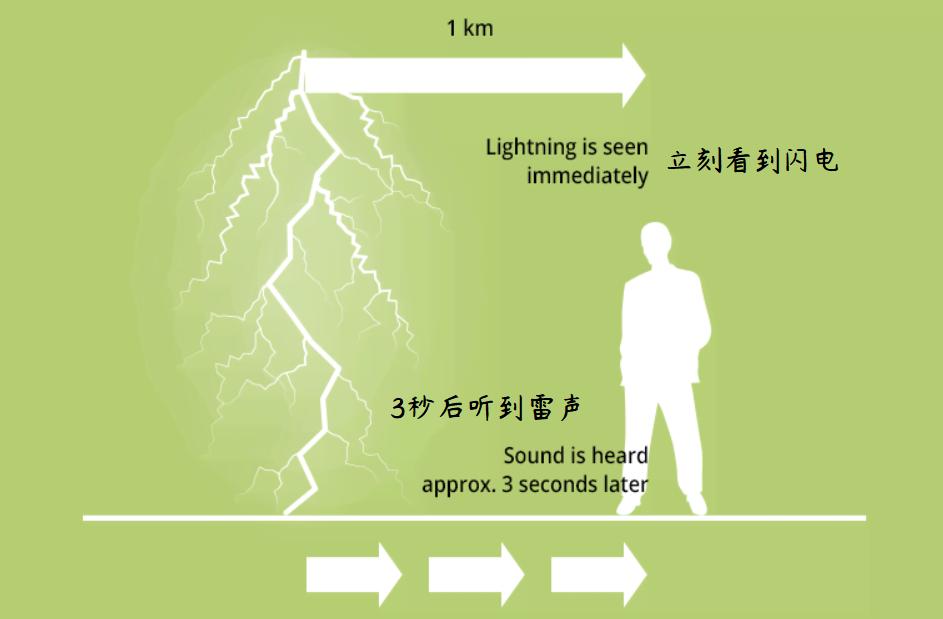
Sound, on the other hand, is a bit more leisurely. It travels at about 343 meters per second in dry air at room temperature. Still fast, right? Absolutely! But when you compare 343 meters per second to nearly 300 million meters per second, you start to see the Grand Canyon-sized gap in their speeds. That difference is the secret sauce behind the lightning-thunder delay.
What Actually Is Thunder, Anyway?
So, we see the flash almost instantly, but the sound takes its sweet time to get to us. But what is that sound? Is it just the sky rumbling?
When lightning strikes, it's not just a pretty light show; it's an unbelievably powerful electrical discharge. This discharge heats the air around the lightning channel to extreme temperatures – hotter than the surface of the sun, in fact! We're talking temperatures up to 50,000 degrees Fahrenheit (27,760 degrees Celsius) in a fraction of a second.

What happens when air gets super-hot, super-fast? It expands explosively! Think of it like a tiny, incredibly powerful explosion happening right along the lightning bolt's path. This sudden, violent expansion of air creates a shockwave. As this shockwave travels outward, it cools down and slows to the speed of sound, turning into the familiar rumble and crackle we call thunder.
It's basically a gigantic, natural sonic boom! Isn't that wild? You’re not just hearing a storm; you're hearing the air literally exploding and then collapsing back in on itself, all triggered by that intense jolt of electricity. It's like the atmosphere is clapping its hands incredibly loudly right after the flashbulb goes off.
Your Built-in Storm-Distance Calculator!
This difference in speed isn't just a cool party trick of nature; it's also incredibly useful! You can actually use the delay between seeing lightning and hearing thunder to estimate how far away a storm is. How cool is that? You’ve got a natural storm detector built right into your senses!

Here's the trick: as soon as you see the lightning flash, start counting the seconds. One Mississippi, two Mississippi, three Mississippi… Keep counting until you hear the thunder.
For every five seconds you count, the lightning strike was approximately one mile away. So, if you count 10 seconds, the storm is roughly two miles from your location. If you count 15 seconds, it's about three miles away.
If you're more of a metric system fan, it’s roughly three seconds for every kilometer. So, 9 seconds means 3 kilometers away. Easy peasy!

This little trick is super handy for gauging how close a thunderstorm really is. If the thunder follows almost immediately after the flash (like, less than five seconds), the storm is pretty much right overhead, which means it’s time to head indoors and stay safe!
The Everyday Magic of Physics
It’s amazing, isn’t it? This simple observation, something we’ve all experienced countless times, opens up a whole world of physics. It’s the same reason you see fireworks burst into color high in the sky before you hear the accompanying "pop!" or "whiz!" You see the bat hit the baseball before you hear the crack, if you're far enough from the field. Our world is full of these tiny, fascinating demonstrations of how light and sound work.
So the next time a thunderstorm rolls in, don't just duck for cover. Take a moment (from a safe place, of course!) to appreciate the incredible cosmic race happening right before your eyes and ears. It's a vivid reminder that even the most common natural phenomena hold thrilling scientific stories, just waiting for our curious minds to explore. Happy storm-gazing!