
How To Tell What Type Of Battery You Have

Alright, settle in, grab another sip of that latte, because we're about to dive into one of life's great, unsung mysteries: How to tell what type of battery you're actually holding. You know, besides the obvious "it's a battery and it's dead" crisis.
It's like being a detective, but instead of gritty crime scenes, you're staring down a tiny cylindrical power source, wondering if it's going to save your remote or explode your charging port. Dramatic? Maybe. But let's be honest, we've all been there!
The Old Reliables: AA, AAA, C, D (The Kindergarten of Batteries)
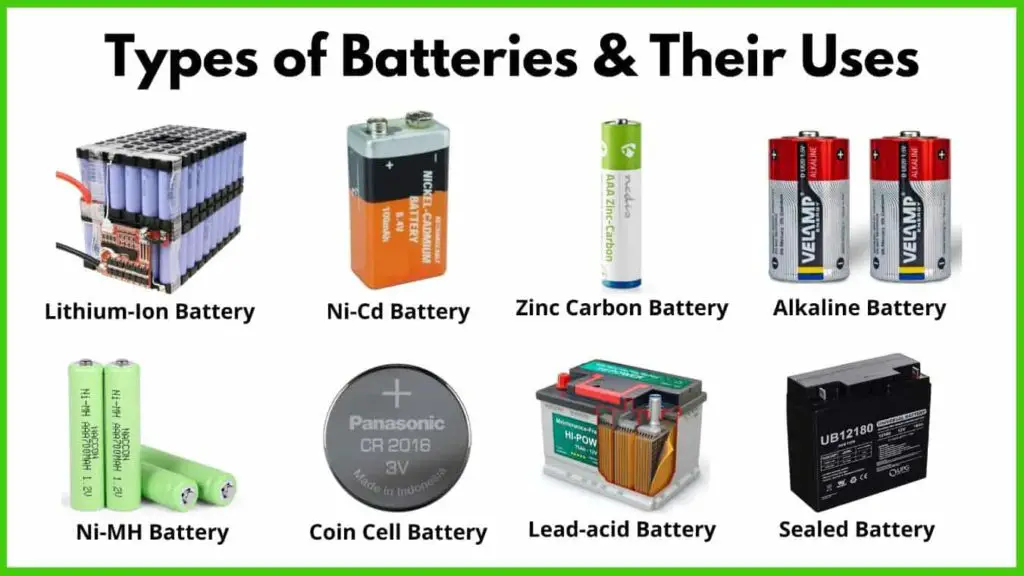
Let's start with the absolute basics, the ones that make you feel like a battery genius for approximately three seconds. These are your everyday, run-of-the-mill, "my flashlight died" heroes: AA, AAA, C, and D cells. You know them, you love them, you always have a dead pile of them somewhere in a drawer. Their names are usually emblazoned right on their little metal hats. If you can read "AA" on it, congratulations, you've identified an AA battery! You're practically a power-source pro already.
Must Read
These are typically alkaline (single-use, don't recharge them unless you enjoy fireworks indoors), or sometimes NiMH (Nickel-Metal Hydride) if they're rechargeable. The key here is the size and the label. If it looks like a miniature soda can, it's probably a C or D. If it's pencil-thin, it's an AAA. Simple, right? We're easing you in.
The Slim, Sexy, and Sometimes Spicy: Lithium-Ion (Li-ion)
Now, let's talk about the battery that powers pretty much your entire modern existence: Lithium-ion. Your phone? Li-ion. Your laptop? Li-ion. That fancy cordless drill? Li-ion. Even most electric vehicles? You guessed it! These guys are the rockstars of rechargeable power.

How do you spot them? Well, for starters, they rarely come in those neat cylindrical shapes we just discussed. They're often flat, rectangular pouches (especially in phones and tablets, encased in that sleek shell), or sometimes cylindrical but with specific numbers like 18650 (often found in vapes, power banks, and flashlights). The dead giveaway? They're usually covered in a specific wrap that clearly states "Li-ion" or "Lithium-ion" and a voltage, typically 3.7V or 3.8V. They're also surprisingly lightweight for the punch they pack. But here's the crucial bit: Li-ion batteries need specific chargers. Don't go trying to shove them into your old AA charger unless you want a very expensive paperweight, or worse, a fiery incident! Seriously, these can be temperamental if mishandled.
The Heavyweight Champs: Lead-Acid Batteries
Next up, we have the undisputed heavyweights, the muscle-bound brutes of the battery world: Lead-Acid batteries. If you're looking at something that could double as a small anvil, you've probably found a lead-acid battery. Think car batteries, UPS (Uninterruptible Power Supply) units for your computer, golf carts, or those big backup power systems. These are big, bulky, and surprisingly heavy.

They often have multiple cells, sometimes six, which gives them their characteristic 12V (or 6V, 24V, etc., in multiples of 2V per cell) output. You'll often see warning labels about corrosive acid and explosion risks. These are not something you casually toss in your recycling bin with the AAAs. They're usually sealed, but their weight and sheer size are dead giveaways. If you need two hands and a grunt to lift it, it's probably lead-acid. And please, for the love of all that is holy, don't try to open one up. The "acid" part isn't just for show.
The Tiny But Mighty: Coin/Button Cells
Peeking out from the bottom of your watch, remote, or even that singing greeting card, you'll find the adorable little coin or button cell batteries. These are flat, round, and look exactly like tiny metal buttons. They're often denoted by codes like CR2032, LR44, or SR44.
The "CR" usually means Lithium (and non-rechargeable), "LR" means Alkaline, and "SR" means Silver Oxide. They're usually 1.5V or 3V. Their distinguishing feature is their size and that little code stamped on their back. If you need tweezers to get it out, it's probably a coin cell. And yes, they pose a serious choking hazard for little ones, so keep an eye out!
So, Why Does It Even Matter?! (Beyond Bragging Rights)
Okay, so you've learned to identify a few types. Good job, Sherlock! But why is this more than just a party trick? Safety, my friend, safety!
1. Charging: As mentioned, trying to recharge a single-use alkaline or using the wrong charger for a Li-ion can lead to overheating, explosions, and general mayhem. Don't be that person who sets their house on fire trying to save $5 on new batteries.
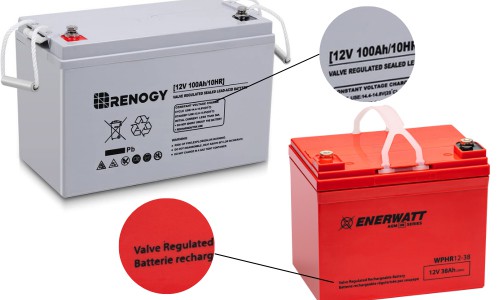
2. Disposal: Batteries contain all sorts of fun chemicals. Lead-acid, Li-ion, and NiMH batteries need special recycling because they contain hazardous materials. Tossing them in the regular trash is a big no-no for the environment.
3. Performance: Knowing your battery type helps you pick the right replacement for optimal performance and lifespan for your device. Don't put an alkaline in a device meant for a high-drain rechargeable – you'll just be frustrated.
So, the next time you encounter a mysterious power source, don't just stare blankly. Take a moment, look for the clues, and remember our little chat. You'll be able to identify its type, understand its quirks, and maybe even impress someone with your newfound battery wisdom. And that, my friend, is a power move if ever there was one!