
Can You Buyout Your Contract In The Military
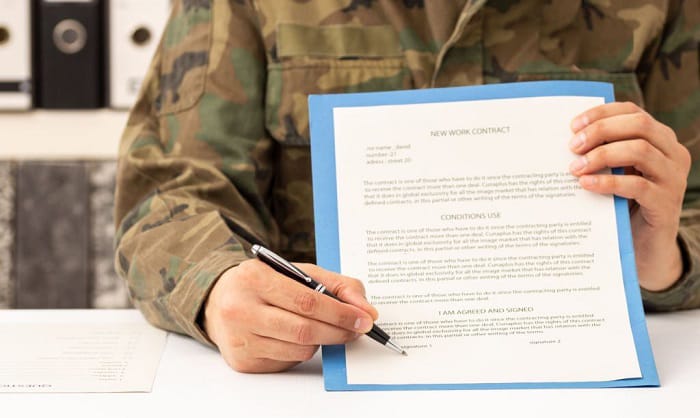
Hey there, ever found yourself staring at a contract, maybe for your phone or a gym membership, and wondered, "What if I just... bought my way out?" You know, paid a fee, shook hands, and walked away scot-free? It’s a pretty common thought in our civilian world, where everything seems to have an escape clause, right?
But then, you start thinking about something a bit more serious. Say, a military contract. Suddenly, that casual "buyout" idea feels a lot heavier. The military isn't exactly a gym, and a service commitment isn't quite the same as a data plan. So, the big question pops into your head: can you actually buyout your contract in the military? Can a service member just cut a check and say, "Thanks for the training, it's been real, but I'm out!"?
The Short Answer (Spoiler: It's Not Like Your Cell Phone)
Let's get straight to it: for the vast majority of enlisted personnel, a direct "buyout" in the civilian sense – where you just pay a fee and are released from your obligations at will – is not really a thing. It's not like there's a secret menu item for "Early Exit Fee" in the military's HR department.
Must Read
And when you think about it, that makes a lot of sense. The military isn't just a job; it's a national commitment, a highly specialized training program, and often, a matter of national security. Imagine Uncle Sam investing hundreds of thousands of dollars in your flight training, only for you to decide you'd rather open a cupcake shop after a year, offering to pay a token fee to leave. It just doesn't quite add up, does it?
Why It's Different: More Than Just a Job
Think of it this way: when you join the military, you're not just signing up for a paycheck. You're signing up for a mission. You're receiving world-class training, gaining unique skills, and becoming part of a team that relies on every single member. The military invests heavily in its people, from basic training to advanced technical schools. That investment is predicated on you fulfilling your commitment.

It’s like if you were part of a super intense, high-stakes relay race. You can't just drop the baton mid-run because you feel like it, offering to pay the team for the inconvenience. Your teammates are counting on you!
So, Are People Just Stuck? Not Exactly...
Okay, so a casual "buyout" isn't an option. But does that mean once you're in, you're absolutely, positively, 100% stuck until your contract is up, no matter what? Well, not quite. Life happens, and even the military, for all its strictness, understands that. There are avenues for early separation, but they are generally for specific, serious circumstances, not just a change of heart.

1. Medical Discharge: When Your Body Says "Nope"
This is one of the most common reasons for early separation. If a service member develops a medical condition or injury that makes them unable to perform their duties, they might be medically discharged. This isn't something you can choose; it's determined by medical evaluations. It's not a "buyout" – it's an acknowledgment that you physically can't meet the requirements of service anymore. And no, you can't fake a medical condition; the military doctors are pretty thorough!
2. Hardship Discharge: When Life Throws a Curveball
Imagine a sudden, severe family crisis – a parent becomes gravely ill, and you're the only one who can care for them. In such extreme cases, a service member can apply for a hardship discharge. This requires extensive documentation and proves that your presence is absolutely essential to your family's well-being and that there are no other options. It's a humanitarian relief, not a voluntary exit. Think of it less like cancelling a subscription and more like a compassionate leave that becomes permanent.
3. Early Release Programs: Sometimes the Military Downsizes
Believe it or not, sometimes the military needs to trim its ranks. During periods of force reduction, or if they have too many people in a particular job specialty, they might offer early release programs. This is probably the closest thing to a "mutually beneficial" separation, but it's initiated by the military, not the individual. They might even offer incentives to leave! This is rare and depends entirely on the military's needs.

4. Officer Resignation: A Different Ballgame
For officers, especially those who received scholarships or special training (like doctors or lawyers), the path can be a little different. They might have options to resign, but it often comes with a hefty price tag: repaying bonuses, education costs, or serving in the reserves. This is arguably the most "buyout-like" scenario, where there's a clear financial transaction involved to offset the military's investment, but it's still not available to everyone or at any time.
5. Unsuitability or Misconduct: Getting Kicked Out (Not Recommended!)
And then there's the less desirable path: getting separated for unsuitability, poor performance, or misconduct. This is when the military decides you're not meeting standards or violating rules. While it gets you out of your contract early, it often comes with a less-than-honorable discharge and can have long-term negative consequences for your future. Definitely not a "buyout" you'd want!

The Takeaway: Commitment is Key
So, can you buyout your contract in the military? In the civilian sense of simply paying a fee to walk away whenever you want, the answer is a pretty firm no. The military operates on a principle of commitment and mutual obligation that's far deeper than most civilian contracts.
However, the system isn't entirely rigid. There are specific, often serious, circumstances under which a service member might be released early. These aren't loopholes to be exploited, but rather mechanisms to address genuine hardship, inability to serve, or the military's evolving needs. It highlights the seriousness of military service and the immense trust placed in each individual.
It's a fascinating look into a world where agreements hold a different kind of weight, isn't it? Less about simple transactions, and more about solemn promises.