The dreaded sound. It starts as a quiet, intermittent “chirp.” Then it grows louder, more insistent, a tiny avian alarm clock demanding your attention at 3 AM. It’s your
smoke detector
, of course. And with that single, annoying sound, a deep, philosophical question arises: “How do I know if this thing is hardwired?”
For many of us, this question immediately sends us down a rabbit hole of domestic detective work. We stare up at the ceiling, squinting, hoping for some cosmic sign. Is it just batteries? Or is it connected to the very fabric of our home’s electrical soul?
Your first instinct, naturally, is to hunt for a battery door. You climb onto a chair, perhaps wielding a trusty broom handle, and peer at the device. You gently, or not so gently, try to pry open what looks like a seam. Sometimes, there’s a clear compartment, a little door screaming, “Batteries live here!” Ah, sweet relief. You pop in a fresh 9-volt, and silence reigns.
But sometimes, oh sometimes, there’s no obvious door. Or, worse, there’s a door, but after you replace the battery, the darn thing still looks suspiciously attached to the ceiling. That’s when the nagging doubt truly sets in. Is it a trick? Is it both? Welcome to the confusing world of the modern
smoke detector
.
The Ceiling Stare-Down: A Game of Wires?
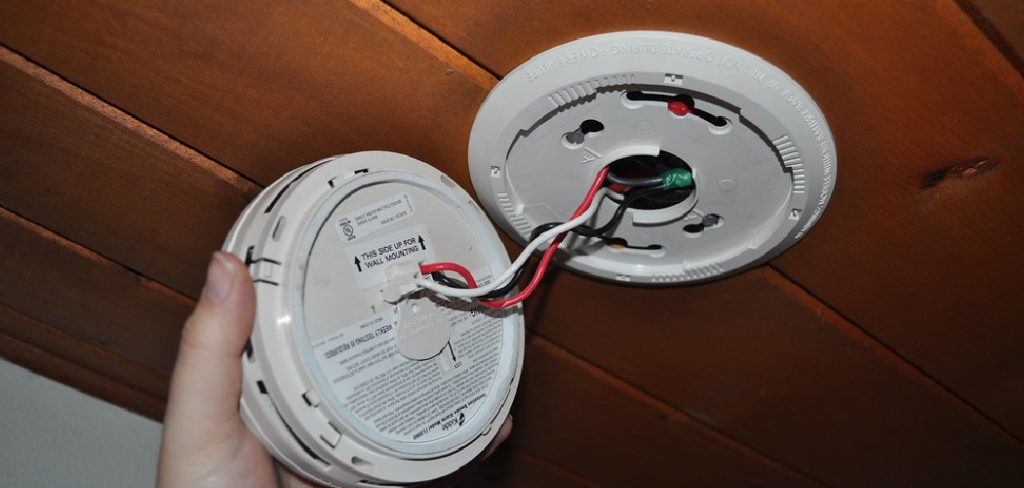
Next, you adopt the posture of the intrepid home investigator. You tilt your head. You look for wires. Do you see them peeking out from the base where the detector meets the ceiling? If you see a cluster of wires—red, black, white, maybe even an orange one if you’re feeling adventurous—then congratulations, you’ve likely found a
hardwired
Steps to Install Hard-Wired Smoke and CO Alarms at The Home Depotunit. This means it’s drawing power directly from your home’s electrical system.
But here’s the kicker: many
hardwired
smoke detectors also have a
battery backup
. That little battery isn’t powering the main unit; it’s there to keep things running if your electricity goes out. So, finding a battery doesn’t automatically rule out
hardwiring
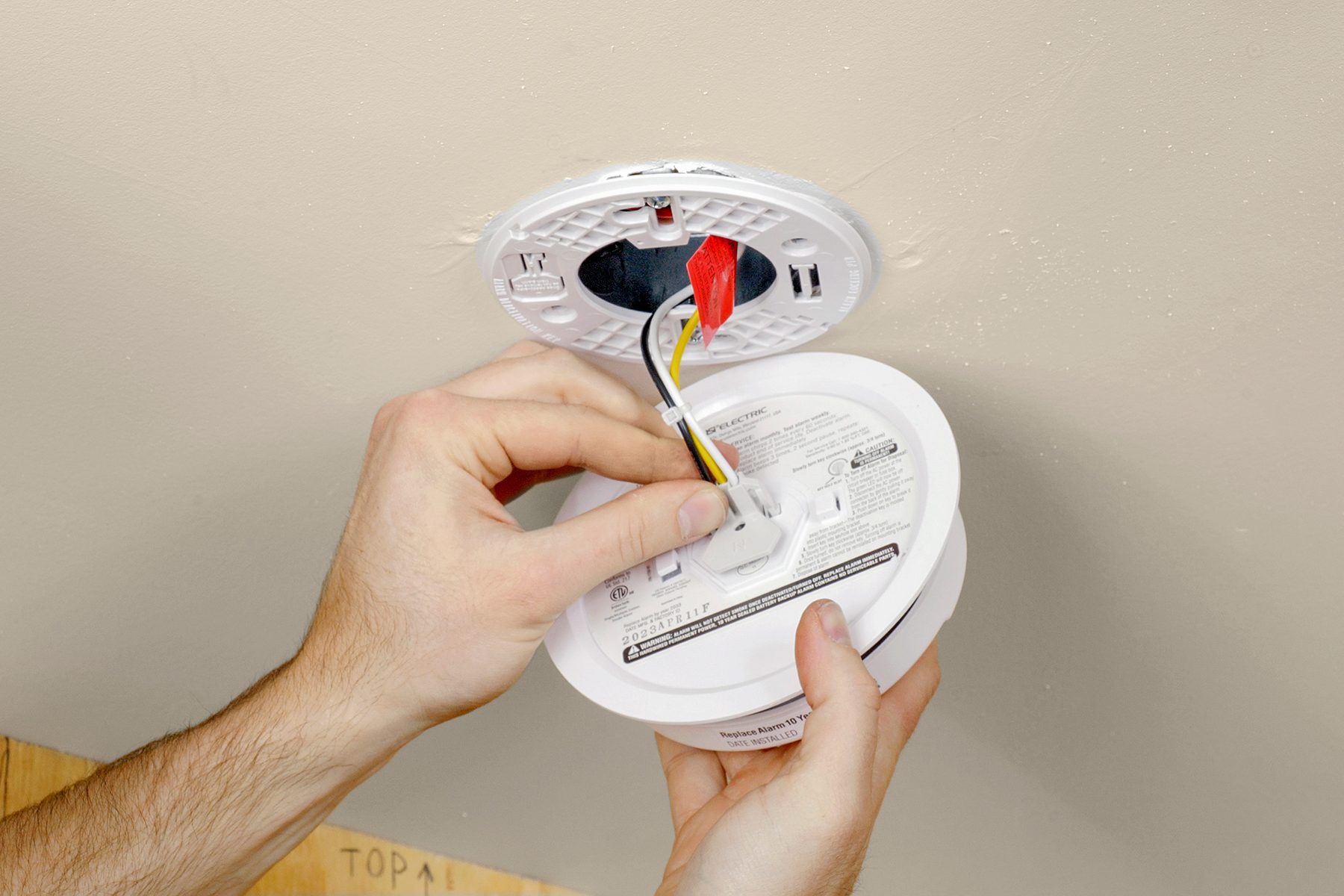
How To Install a Hard Wired Smoke Detector | Family Handyman. It just means you’ve got a belt-and-suspenders situation. Or, more accurately, a wire-and-battery situation.
My Unpopular Opinion: It's a Conspiracy!
Here’s my truly unpopular opinion: Most of us, deep down, don't actually know if our smoke detector is hardwired just by looking at it. We make educated guesses. We hope for the best. And sometimes, we just swap batteries and cross our fingers, never truly understanding the full electrical mystery above our heads. The manufacturers, I suspect, love this confusion. It adds a certain mystique to fire safety.
It’s not always as obvious as a cartoon lightbulb going off. Some units are designed to be sleek, with the wires neatly tucked away, giving the illusion of a floating, battery-only device. It’s like a magic trick, but with vital safety implications.
Why Even Bother With This Mystery?
You might wonder why this distinction even matters. Well, if it’s solely battery-operated, replacing it is a cinch. Just twist it off, put a new one on. If it’s
hardwired
Connecting a Hardwired Smoke Detector: A Comprehensive Wiring Guide, it’s a bit more involved. You’re dealing with
electricity
. You might have multiple units interconnected, meaning if one alarm goes off, they all do. This is a great safety feature, but it means replacing one might require a specific type of unit to keep the network happy.
The Moment of Truth (If You Dare)
If you're still truly unsure, and you feel brave, the ultimate test involves gently twisting the unit counter-clockwise. Make sure you have a sturdy ladder!
If it twists off easily and there are no wires, just two terminals for a battery, then it’s likely purely battery-operated. Replace it with another battery-only unit.
If it twists off and you see a connector with wires disappearing into the ceiling, then bingo! You've got a
hardwired
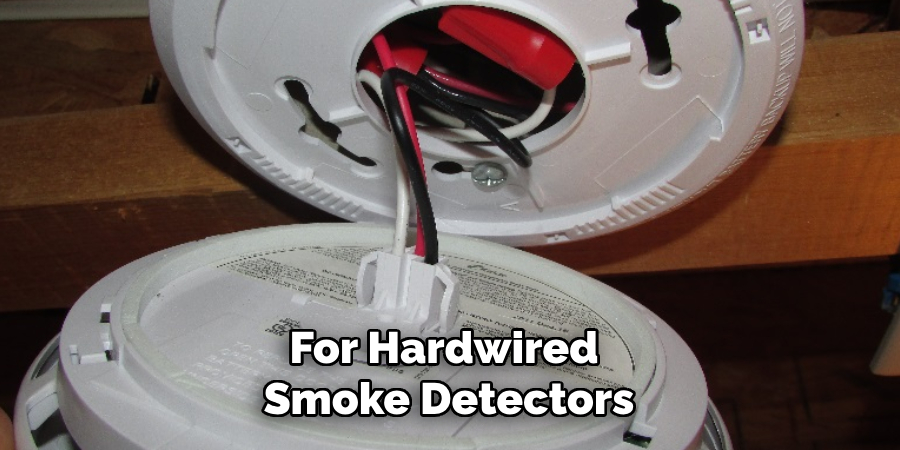
How to Know Which Smoke Detector Is Beeping | 10 Easy Stepsunit, possibly with a
battery backup
. At this point, if you're not comfortable with household wiring, it's a good idea to call a professional. Remember to always, always
turn off the power
at the circuit breaker before disconnecting any wires! Your fingers will thank you.
The Unpopular, Yet Surprisingly Practical, Truth
The truly unpopular truth is this: when faced with the hardwired dilemma, if you have to ask, if you have to guess, if you feel even a tiny flutter of anxiety about touching those wires – it’s perfectly okay to admit you don't know for sure. And it’s even better to call in an electrician. Your peace of mind (and avoiding a potential shock) is worth more than solving a casual domestic mystery.
So, the next time that little chirp starts, remember: you’re not alone in your confusion. The smoke detector mystery is a rite of passage for every homeowner. Embrace the unknown, but always prioritize your
safety
over solving the puzzle yourself. Sometimes, the easiest answer to "how do I know?" is simply, "I'll let an expert tell me." And there's absolutely no shame in that.