
How Many Types Fire Extinguishers Are There

Okay, so picture this: I was once at a friend's place, minding my own business, trying to impress everyone with my questionable culinary skills. Long story short, a pan of oil decided to get a little too excited on the stove. Smoke, alarm blaring, general panic ensued. Someone, bless their heart, grabbed the nearest fire extinguisher, pointed it at the flaming pan, and... nothing. Or rather, it made things worse for a split second, before we all panicked properly and got it out with a lid. It was a messy, embarrassing, and slightly terrifying experience. And it got me thinking: what was that thing we grabbed? And more importantly, why didn't it work on an oil fire?
That little kitchen drama sparked a curiosity in me – much like the oil in the pan, ironically – about those big red (and sometimes silver) cylinders hanging on walls everywhere. You see them in offices, schools, restaurants, even your local grocery store. But have you ever really stopped to think about them? Like, are they all the same? Do they just spray "fire-be-gone" dust? Turns out, my friend, the world of fire extinguishers is a lot more nuanced and, dare I say, fascinating than just a big red can.
Why So Many Types, Anyway? It's All About the Fire!
The core reason we have different types of extinguishers boils down to one simple, yet crucial, fact: not all fires are created equal. You can't just throw water on a grease fire (as I almost learned the hard way!), and you definitely don't want to spray certain chemicals on electrical equipment. This is where the concept of fire classes comes in, and understanding them is like unlocking the secret code of fire safety. Prepare to be educated!
Must Read
There are generally five main classes of fire, and each one demands a specific extinguishing agent:
- Class A fires: Think ordinary combustibles. Wood, paper, cloth, plastic – basically anything that leaves an ash.
- Class B fires: These are your flammable liquids and gases. Gasoline, oil, paint, propane. Remember my kitchen disaster? That was a Class B waiting to happen.
- Class C fires: This one's tricky because it’s a fire involving live electrical equipment. The fire itself might be wood (Class A) or oil (Class B), but because it involves electricity, it’s a Class C. Remove the power, and it might revert to A or B.
- Class D fires: These are super specific and rare for most of us – fires involving combustible metals like magnesium, titanium, potassium, or sodium. Think industrial settings, not your living room.
- Class K fires: Ah, my old nemesis! These are cooking oils and fats, typically found in commercial kitchens with deep fat fryers. While technically a subclass of B, they burn at much higher temperatures and require specialized suppression.
See? It's not just "fire." It's a whole family of fiery personalities! Now that we know what we're up against, let's meet the heroes designed to tackle each villain.

The Main Players: Meet the Extinguisher Families
Alright, grab your imaginary notepad, because here are the main types you're likely to encounter, and what they're good (or not so good) for:
1. Water Extinguishers (APW - Air-Pressurized Water)
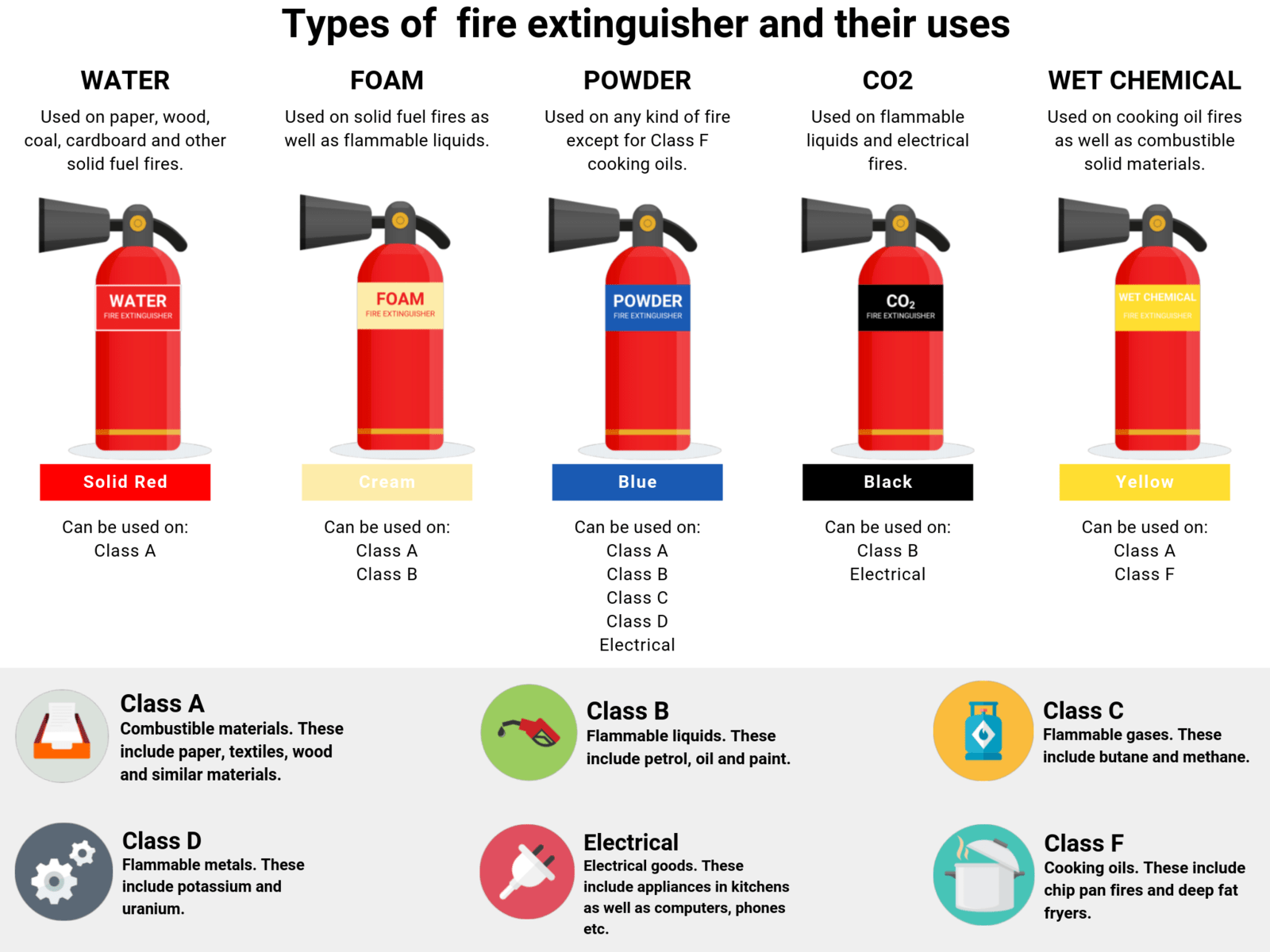
These are your classic red ones, often labeled "A." They cool the burning material by removing heat. They’re super effective on Class A fires (paper, wood, etc.). But please, for the love of all that is holy, do not use them on electrical fires (Class C) or flammable liquids (Class B). Water conducts electricity, and it'll just spread a liquid fire. Trust me, it's a bad time.

2. Foam Extinguishers
Often yellow or cream-colored, these create a blanket over the fire, suffocating it and cooling it down. They’re great for Class A and Class B fires. Think of it like putting a really thick, bubbly duvet on a fire. They’re a good all-rounder for many common fires, but still a no-go for electrical stuff.
3. Dry Chemical Extinguishers (DCP)
Now, these are probably the most common you’ll see! They come in two main flavors:
- ABC Dry Chemical: These are typically red with a gauge and are filled with monoammonium phosphate. They literally interrupt the chemical reaction of the fire. As the name suggests, they’re effective on Class A, B, and C fires. They're a fantastic general-purpose extinguisher for homes and businesses. The downside? They leave a super messy, corrosive residue. But hey, better a mess than a burnt-down building, right?
- BC Dry Chemical: Usually containing sodium bicarbonate or potassium bicarbonate, these are effective on Class B and C fires. They don't typically handle Class A fires as well as ABC types.
4. Carbon Dioxide (CO2) Extinguishers
You'll recognize these by their distinctive hard horn (no pressure gauge here!). They work by displacing oxygen, suffocating the fire, and also by cooling it down significantly. CO2 extinguishers are perfect for Class B and C fires because the gas dissipates, leaving no residue. That's why you often find them in server rooms or labs where electronics are sensitive. They’re not so hot on Class A fires, though, as they don't prevent re-ignition.
5. Wet Chemical Extinguishers
These are your specialized heroes for Class K fires – yes, the nasty, high-temperature cooking oil and fat fires. They contain a potassium acetate-based solution that forms a thick, soapy foam, cooling the oil and creating a barrier to prevent re-ignition. If you work in a commercial kitchen, you absolutely need to know these guys. They're usually silver or stainless steel.

6. Clean Agent Extinguishers
These are a modern marvel, often used in places where you want to put out a fire without damaging sensitive equipment. They’re non-conductive, non-corrosive, and leave no residue. Think server rooms, art galleries, medical facilities. They’re effective on Class B and C fires, and sometimes Class A, depending on the specific agent. They’re basically the ninja assassins of the extinguisher world.
7. Dry Powder Extinguishers
And finally, the niche player: dry powder. These are specifically designed for Class D fires – those super tricky combustible metals. They contain a specific blend of agents (like sodium chloride or graphite-based powders) that smother the fire and absorb heat. You won't find these in your average home, folks, unless you're perhaps a metallurgist with a penchant for backyard experiments.
So, What's the Takeaway?
Next time you see a fire extinguisher, don't just see a red cylinder. See a specialized tool, ready for a specific kind of emergency. Knowing the difference could literally save lives and property. My kitchen mishap (which, thankfully, only ended in a ruined pan and a very smoky apartment) taught me that much. Take a moment, check the label on the extinguishers around you, and know what fire class they're for. It’s a small piece of knowledge, but potentially a hugely important one. Stay safe out there, my friends!