
Where Should Carbon Monoxide Alarms Be Located
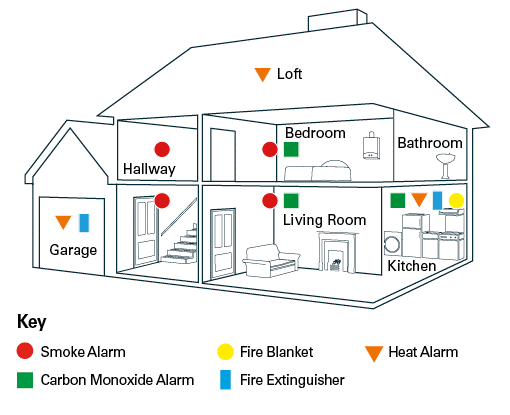
Have you ever thought about the unsung heroes of your home? No, not the fancy smart thermostat or the super-fast Wi-Fi. I'm talking about the quiet, often overlooked champions that stand guard day and night, keeping your family safe. Among these valiant protectors, the carbon monoxide alarm holds a very special, albeit sometimes misunderstood, place. It's a tiny sentinel against an invisible enemy, and like any good guardian, its effectiveness often comes down to one crucial thing: its vantage point.
The Sleepy Guardian: Protecting Your Zzz's
Picture this: everyone’s tucked in, dreaming sweet dreams, completely unaware of the world. This is precisely when your carbon monoxide alarm needs to be at its most vigilant. The golden rule, the absolute number-one priority, is to place an alarm near or within
every sleeping area. Think of it as a dedicated night light, but instead of chasing away monsters under the bed, it's sniffing out a truly silent, odorless threat. Imagine your alarm as a little hero in a cape, standing guard at the entrance to your slumber kingdom.
"Your best friend when you're dreaming? A properly placed CO alarm near your bed!"
It’s not just about one alarm; ideally, you want one in each individual bedroom. If that’s not feasible, then definitely one in the hallway right outside the bedrooms on that level. This way, if anything goes awry during the night, your family gets an early, crucial wake-up call. It's about protecting those precious moments of rest, ensuring that every sunrise brings a safe and happy start.
Must Read
Every Floor, Every Friend: The Home's Neighborhood Watch
Your home isn't just one big box; it has different levels, nooks, and crannies. And just like a good neighborhood watch needs eyes and ears on every block, your home needs a carbon monoxide alarm on every level. Yes, that includes the basement and any upper floors! This isn't just about covering all your bases; it's about understanding how gases, even the sneaky ones like CO, can travel.
Imagine CO as a mischievous ghost, flitting about from room to room. Having an alarm on each floor ensures that no matter where this spectral visitor tries to hide, there's a watchful eye ready to detect its presence. It's like having mini-detectives stationed throughout your home, each responsible for their own sector, ensuring no corner is left unprotected. A little alarm on the main floor, another in the basement, and one more upstairs – it's a team effort for your family's safety!
The Source Detective: Where CO Might Start Its Journey
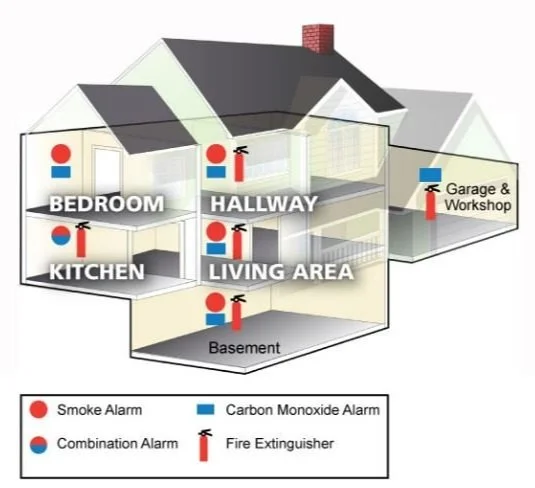
While CO can show up anywhere, it often has its favorite hangout spots – typically near where it originates. These are the places where fuel is burned: your furnace, water heater, gas dryer, or even your fireplace. And let’s not forget the attached garage, especially if you ever warm up the car before pulling out (a big no-no, by the way, with the garage door closed!).
Placing an alarm near these fuel-burning appliances and in an attached garage can give you an early heads-up. However, there’s a sweet spot here. You don't want it right on the furnace like a barnacle! That’s too close and can lead to false alarms or simply overwhelm the sensor. Think of it as observing from a respectful distance – usually 5 to 10 feet away from the appliance. This allows the alarm to "sniff out" any CO that might be escaping, without getting confused by the normal, safe operation of your household utilities. It's a delicate dance of proximity and protection.
Avoiding the "Oops!" Spots: Where Not to Place Your Hero
Even heroes have their kryptonite, or at least places where they can’t perform at their best. For your carbon monoxide alarm, there are a few "oops!" spots to avoid. Don't place it:
.jpg)
- Directly in sunlight: Too much sun can mess with its sensitive electronics.
- Near vents or fans: Imagine trying to hear a secret whispered across a windy football field. Vents can confuse the sensor, making it less effective.
- Behind curtains or furniture: Our little hero needs to "breathe" freely to detect CO. Don't muffle its voice or block its senses.
- In very humid areas like bathrooms: Excess moisture can interfere with the sensor’s ability to detect CO accurately.
- Too close to cooking appliances: Ovens and stovetops can produce small, harmless amounts of CO, leading to nuisance alarms.
Think of these as the places where your alarm might get grumpy, confused, or just plain ineffective. Give it a clear, unobstructed view and a comfortable, stable environment to do its job properly.
High or Low? The "Eye-Level" Wisdom
Here's a fun fact: unlike smoke, which rises, carbon monoxide mixes with the air. It doesn't neatly rise to the ceiling or sink to the floor. So, where on the wall should it go? Generally, the ideal placement is often at "eye level" or about 5 feet off the floor, especially if it’s an alarm that plugs directly into an outlet.

However, the most important rule of thumb is always to check the manufacturer's instructions. Some alarms are designed to be mounted higher on a wall, others on the ceiling. Follow their guidance like it's a treasure map, because they know their product best. A good rule is if it’s a combo smoke/CO alarm, place it according to the smoke alarm instructions (usually on the ceiling or high on a wall), as smoke detection is often prioritized for ceiling placement. For CO-only alarms, eye-level on a wall is a safe bet for many models.
Your Home, Your Safe Haven
Ultimately, properly locating your carbon monoxide alarms is one of the easiest and most heartwarming things you can do for your home and family. It’s a small effort that brings immense peace of mind. These little guardians, with their specific vantage points, are constantly on patrol, ensuring that the only thing breathing easy in your home is you and your loved ones. So, take a moment, check your alarms, and give your silent heroes the best possible place to shine!
