
En Libras Cuanto Es Un Kilo

Okay, picture this: I'm at a farmer's market, right? Total tourist mode. I see these beautiful, plump tomatoes, the kind that practically scream "bruschetta!" The vendor quotes a price per kilo, and I just...blank. My brain, usually a whirring engine of semi-useful knowledge, suddenly decides to take a vacation. I stammer something about "how many... things... is that?" He gives me that look. You know the one. The "bless your heart, city slicker" look. Sigh. The struggle is real.
So, yeah, that mortifying moment led me down a rabbit hole. A rabbit hole filled with conversions, metric systems, and the eternal question: Just how much is a kilo in pounds?! Don't worry, I'm here to save you from future farmer's market (or international travel) embarrassment.
Let's cut to the chase. The answer you're probably desperately searching for is:
Must Read
A Kilo is Approximately 2.2 Pounds
Yep. That's it. Boom. Mic drop. Okay, maybe not mic drop. But seriously, that's the magic number. 1 kilogram (kg) equals roughly 2.2 pounds (lbs). Memorize it. Tattoo it on your forearm. (Okay, maybe don't tattoo it. But you get the idea.)
But why 2.2? Why not a nice, round number like, I don't know, 2? Well, blame the metric system (or thank it, depending on your perspective). The metric system is all about powers of ten – clean, logical, efficient. The imperial system (pounds, inches, feet, etc.)… not so much. It’s a historical mishmash of different systems and traditions. So, we're stuck with the slightly awkward 2.2 conversion.

Quick tip: If you're doing a lot of quick conversions, just double the kilo amount and add a little bit. It won't be exact, but it'll give you a good ballpark figure. For example, 5 kilos? Double it to 10, add a bit, and you're around 11 pounds. Easy peasy!
Now, let's talk about why this matters. Besides avoiding awkward moments at the farmer's market (been there, done that, got the t-shirt... which, by the way, cost me 0.5 kilos of embarrassment), understanding this conversion is super useful in a bunch of situations.

Think about:
- Traveling: Luggage restrictions, grocery shopping, even understanding recipes in different countries.
- Online Shopping: Knowing the weight of a package before you hit that "buy" button. No one wants a surprise shipping fee!
- Fitness: Tracking your weight loss or muscle gain. (Are you team kilos or team pounds? The debate rages on!)
- Cooking: Some recipes, particularly from international sources, use kilos. Knowing the conversion saves you from culinary disaster.
Seriously, who wants to accidentally use a kilo of sugar instead of a pound? (Okay, maybe some people do. But I'm guessing your dentist wouldn't approve.)

So, next time you're faced with the kilo-to-pound conundrum, remember this: 1 kilo = approximately 2.2 pounds. You'll be a conversion champion in no time! You can impress your friends! You can finally understand those weird European recipes! The possibilities are endless!
And hey, if you do find yourself blanking out at the farmer's market, just blame it on jet lag. Works every time. (Probably.)
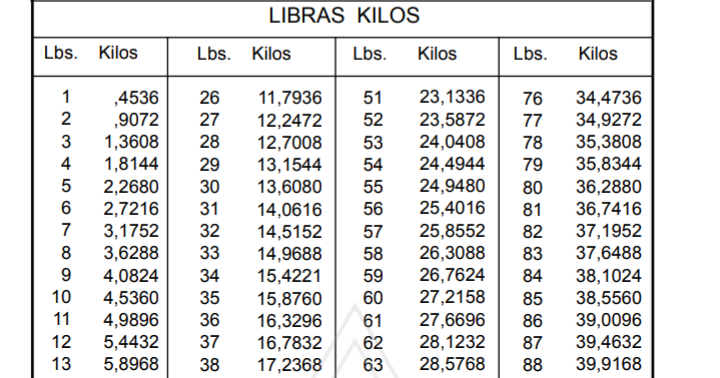
Want a more precise conversion? Use an online converter! There are tons of them out there. Just type "kilos to pounds" into Google and you'll be swimming in options. But honestly, for most everyday situations, the 2.2 rule is perfectly fine.
Now go forth and conquer the world of metric and imperial measurements! You've got this!
P.S. Anyone else find it weird that we still use the imperial system in some places? Just me? Okay then...