
A Market Is Most Efficient When
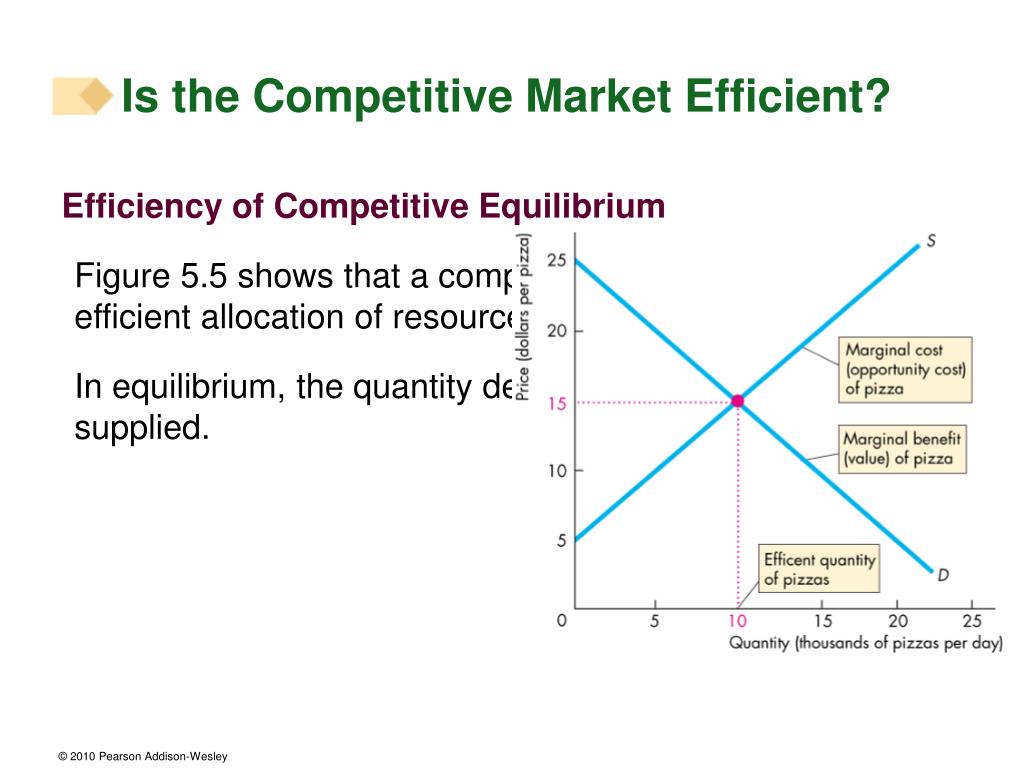
Okay, so we're chatting markets, right? Like, not the farmer's market (though I do love some fresh tomatoes!), but the economics market. The one where supply and demand do their little dance. Ever wondered when this whole shebang is, like, actually working? When it's hitting peak performance?
Information is Key, My Friend!
Think about it: a market is most efficient when everyone has access to the same information. Yep, all the juicy details. We're talking prices, product quality, risks… the whole shebang. Imagine trying to buy a used car when the seller knows it leaks oil, but you're clueless! Not exactly a fair playing field, is it?
That's called information asymmetry, and it throws a wrench in the whole "efficient market" thing. Basically, if one person has way more info than the other, they can kinda… manipulate the situation, right? It's like knowing all the answers to a test before everyone else. Advantage: you!
Must Read
No Meddling Allowed (Mostly…)
Another big one? Minimal external interference. Think government regulations, price controls, or even monopolies. Okay, some regulations are good – we don't want poisoned cereal, right? – but too much fiddling can gum up the works. Like trying to build Ikea furniture with only a spoon. Possible? Maybe. Efficient? Absolutely not!
Price controls? Oh boy. They sound good in theory (like, "let's make bread super cheap for everyone!"), but they often lead to shortages or surpluses. Suddenly, nobody wants to sell bread because it's not profitable, or there's way too much bread and it goes stale. Oops!

Perfect Competition (The Holy Grail?)
Economists talk about "perfect competition." It's kinda like the mythical unicorn of markets. Lots of buyers and sellers, no one has enough power to control the price, and everyone's selling basically the same thing. Think… commodity markets. Wheat. Oil. Stuff like that.
In perfect competition, prices reflect true supply and demand. It's like a perfectly balanced seesaw. When demand goes up, price goes up. When supply goes up, price goes down. Simple, right? (Okay, maybe not that simple, but you get the idea!). This helps to allocate resources where they are most needed.
But let's be real: perfect competition is rare. Usually, someone has some kind of advantage. A brand name, a better location, a slightly shinier widget… you name it!
:max_bytes(150000):strip_icc()/terms_m_marketefficiency.asp-Final-edeca29099ff42f0984dce267ed4c883.jpg)
Low Transaction Costs are Your Friend
Consider transaction costs. No, they're not the cost of saying "hello". They're all those little costs associated with making a trade. Brokerage fees, search costs, negotiation time… the less of this stuff, the better!
Think about buying a house. All those realtor fees, inspection costs, and paperwork? Those are transaction costs, and they can add up quickly. Lower those costs, and more people are willing to buy and sell, making the market more… well, efficient!

Rational Humans (Ha!)
And finally (and this is a big one): Rationality. Markets work best when people make logical decisions based on the information available. But… are we always rational? Nope! We're emotional creatures. We follow trends. We buy things we don't need because they're on sale (guilty!).
Behavioral economics studies all the ways we aren't rational, and how that affects markets. It's fascinating stuff, but it also reminds us that markets are driven by… well, us. And we're a wonderfully unpredictable bunch!
So, there you have it. A market is most efficient when everyone is in the know, there’s no meddling, it's perfectly competitive (sort of), transaction costs are low, and people are acting rationally (ish!). Easy peasy, right? Now, who wants more coffee?
