
Which Type Of Bond Represents A Weak Chemical Bond
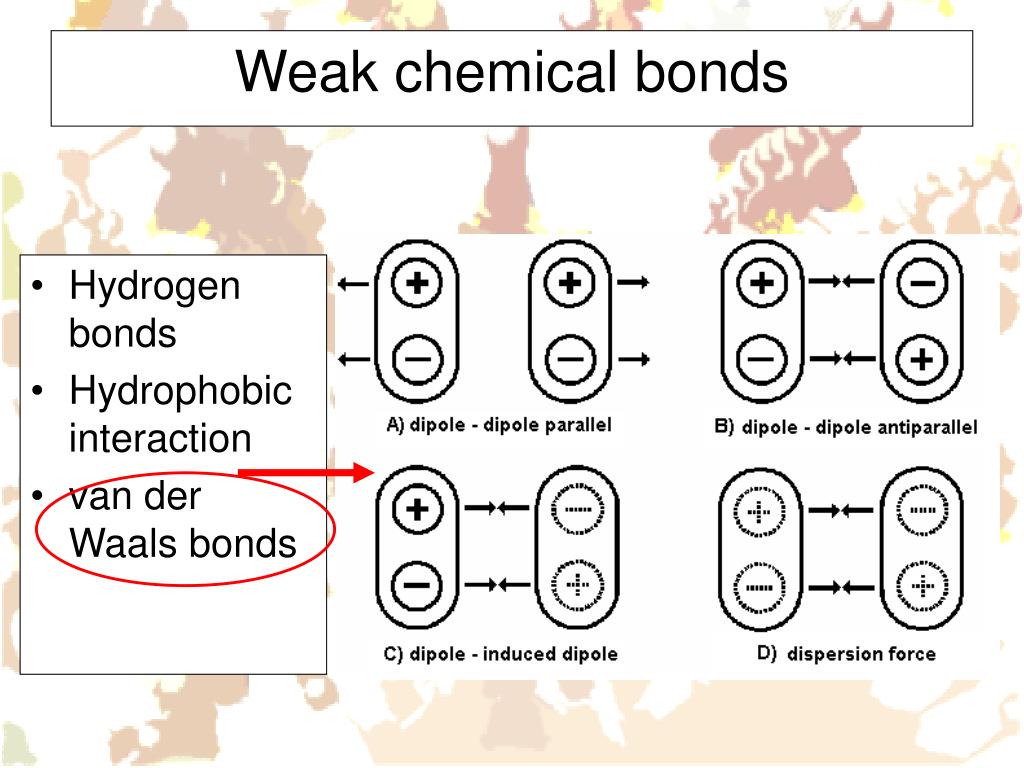
Alright, chemistry enthusiasts (and those who just accidentally clicked here), let's talk bonds. Not the kind James Bond makes, sadly. We're diving into the chemical kind. Specifically, the weak ones.
We all know some bonds are stronger than others. It's like friendships, right? Some are rock solid, ride-or-die. Others? Well, they're more like "we met once at a party" kind of bonds.
The Usual Suspects: A Bond Lineup
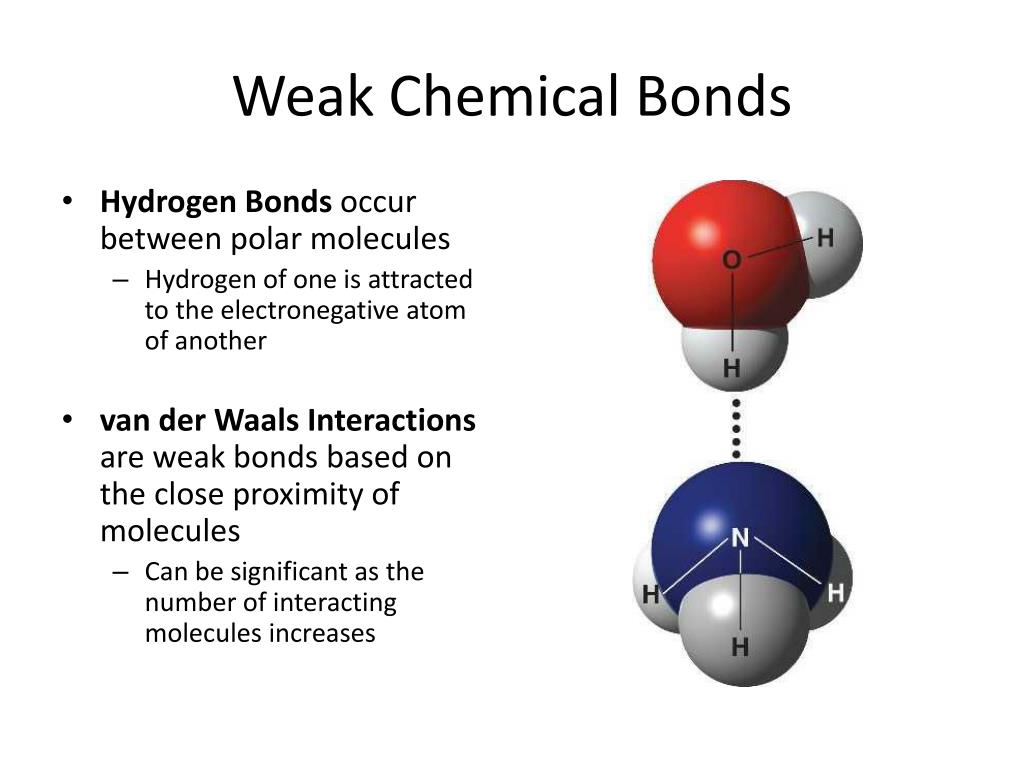
Usually, when we talk weak bonds, a few names get thrown around. Van der Waals forces are always mentioned. Then there are hydrogen bonds. And don’t forget dipole-dipole interactions.
Must Read
These are all perfectly valid answers. Textbooks will back me up. But, I’m going to be controversial today.
My Unpopular Opinion: It's All About Metallic Bonds
Okay, hear me out. I know, I know, metallic bonds usually get a pass. They're not always considered the weakest. But I have my reasons.
Think about metals. Shiny, strong… supposedly. But are they really that committed to each other? I mean, can you easily bend metal? Yep. Can you melt it with relative ease? Absolutely.
That doesn’t sound like a super strong, ride-or-die bond to me. It sounds more like a casual acquaintance. They're "friends" but willing to ditch each other for a bit of heat.

Free Electrons: The Commitment-Phobes of the Atomic World
The beauty of metallic bonds is that they involve a "sea" of electrons. These electrons are delocalized. They aren’t tied down to any one atom. They're just floating around. Sharing is caring, I guess.
But isn’t that the root of the problem? No commitment! It’s like a communal living situation. Everyone uses the same stuff, but no one really owns anything.
These electrons drift around. They barely glance at the nuclei they are supposed to hold together. It is like a party where everyone is invited but nobody actually knows each other.
Comparing to the Competition
Hydrogen bonds, those little guys, get a lot of flak. But they're responsible for some seriously important stuff. Like, you know, life.
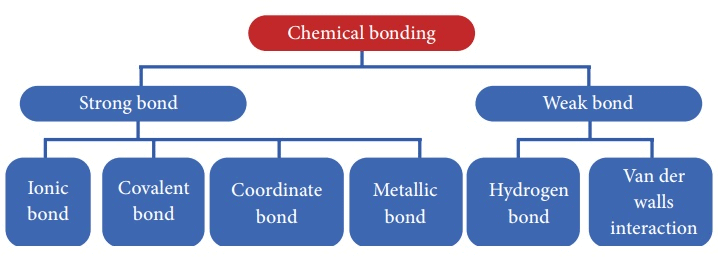
They hold water molecules together. They help DNA stay in its iconic double helix. They're crucial for protein folding. That’s some serious responsibility for a “weak” bond.
Van der Waals forces? They’re everywhere! They might be fleeting, but they're the reason geckos can climb walls. And they allow noble gases to exist in liquid form.
The Bendy Truth: Metals Under Pressure
Consider the malleability and ductility of metals. You can hammer gold into ridiculously thin sheets. You can draw copper into wires. Isn’t that proof of a rather flexible, dare I say, weak bond?
If those metallic bonds were truly hardcore, you wouldn’t be able to deform the metal so easily. It would shatter. It would resist. But it doesn’t.
They simply shift and rearrange. It's like a group of people reluctantly moving to make space on a crowded bus. There is an adjustment, but it is never a full commitment to a new structure.
Melting Point Musings: Turning Up the Heat
Sure, some metals have high melting points. Tungsten, I’m looking at you. But many metals melt at relatively low temperatures.
Think about gallium. You can melt it in your hand. Hand! That is not a bond that is holding on for dear life. It is more like a gentle, lukewarm embrace.
It shows a willingness to break up when the heat is on. Again, not the hallmark of a strong, lasting bond.
.jpg)
The Verdict: Metallic Bonds, Guilty as Charged
So, there you have it. My possibly controversial take on the weakest chemical bond.
While others might champion hydrogen bonds or Van der Waals forces, I'm sticking with metallic bonds. The free-flowing electrons, the bendable nature, the relatively low melting points (in many cases)… it all adds up to a bond that's just not that into you.
Of course, it is all relative. Everything in chemistry is! But next time you're holding a piece of metal, remember its somewhat fickle atomic relationships. Don’t expect too much.
Now, if you’ll excuse me, I'm going to go melt some chocolate. It’s got those weak bonds holding it together… for now.