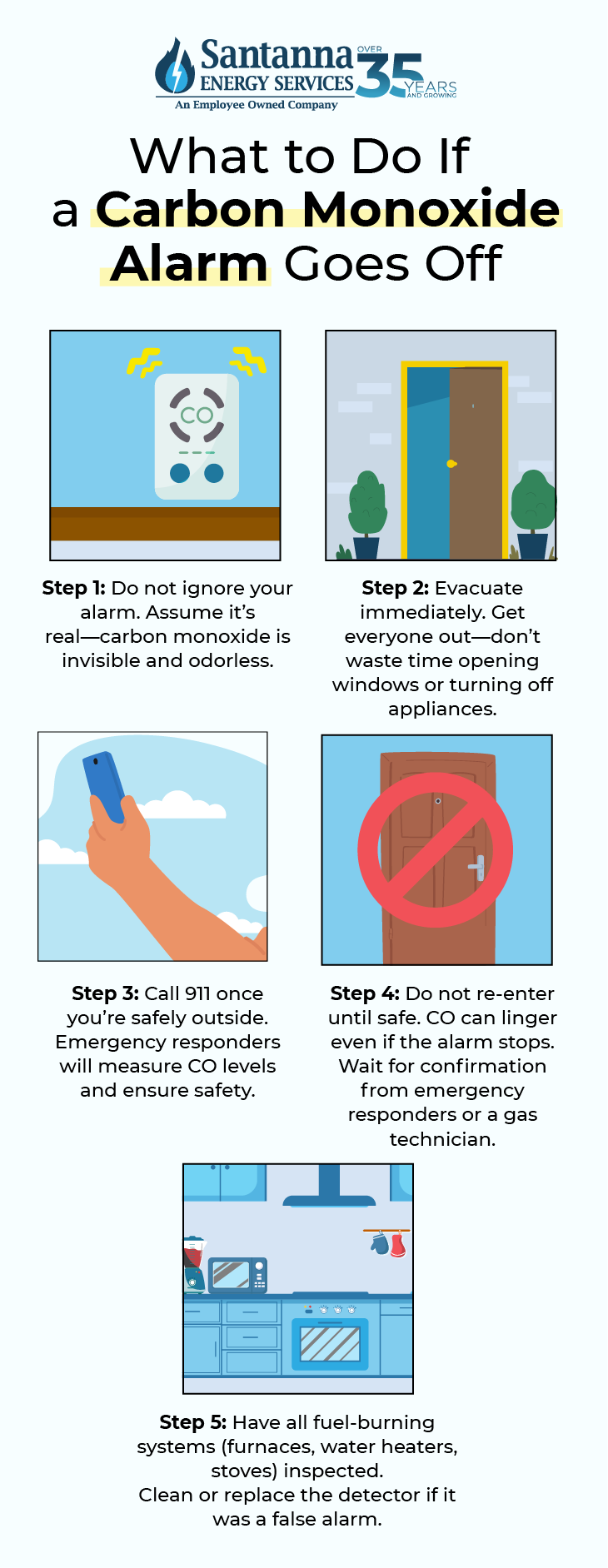
What To Do When Carbon Monoxide Alarm Goes Off

Alright, let's talk about something that might sound a little serious at first, but honestly, knowing what to do about it is like having a secret superpower! We're diving into the world of carbon monoxide (CO) alarms, and while no one wants theirs to go off, understanding the proper steps is incredibly useful. It's a popular topic for a good reason: CO is an invisible, odorless, tasteless gas, making its alarm system our most important sentinel. Being prepared isn't just smart; it gives you serious peace of mind.
This knowledge is a gift for everyone. For beginners, perhaps first-time homeowners or renters, it's about understanding a fundamental safety device and feeling confident in a crucial situation. Think of it as learning the emergency exit plan before the plane takes off – super important! For families, it's about protecting your loved ones, especially children and the elderly who are more vulnerable to CO poisoning. Having a clear family action plan can prevent panic and ensure everyone's safety. And for hobbyists, like RV owners, campers, or DIY enthusiasts working with fuel-burning tools in a garage, this information is vital for recognizing risks in varied environments and ensuring portable detectors are used correctly. It's about staying safe whether you're at home or out exploring.
Now, let's look at a few scenarios. Your CO alarm might be battery-operated, a plug-in unit, or hardwired into your home's electrical system. While they might look different, their purpose is the same: to warn you. You might wonder, "What if it's just a false alarm?" or "What if it's only chirping?" A chirping sound usually means low battery, an easy fix. But if it's a full, continuous alarm, you must treat it as a real emergency every single time. Another variation could be where the CO is coming from – maybe a faulty furnace, a blocked chimney, a gas stove, or even a car left running too close to a vent. The source can vary, but the initial response should always be consistent.
Must Read
So, what are the simple, practical steps to take when that alarm blares? This is your superpower in action:
- Don't ignore it, even for a second! Your life could depend on it.
- Evacuate immediately: Get everyone, including pets, out of the house. Don't waste time trying to find the source or open windows first. Just get out!
- Call 911 or your local emergency number: Do this from a safe place outside. Explain that your carbon monoxide alarm is going off. Even if you feel fine, medical professionals should assess anyone who was exposed.
- Stay outside: Do not re-enter your home until emergency responders (fire department, gas company) tell you it's safe. They have the equipment to properly test CO levels.
- Seek medical attention: If anyone in your household is experiencing symptoms like headache, dizziness, nausea, or shortness of breath, mention this to the 911 operator and seek medical evaluation.
- Don't restart appliances: After the all-clear, let professionals identify and fix the problem before restarting any fuel-burning appliances.
Understanding these steps isn't about dreading the sound of an alarm; it's about feeling empowered and confident, knowing exactly how to protect yourself and your loved ones. There's real value in that preparedness. It turns a potentially terrifying situation into a manageable one, ensuring everyone stays safe and sound. And that, truly, is something worth knowing!