
Which Compound Is A Secondary Amine
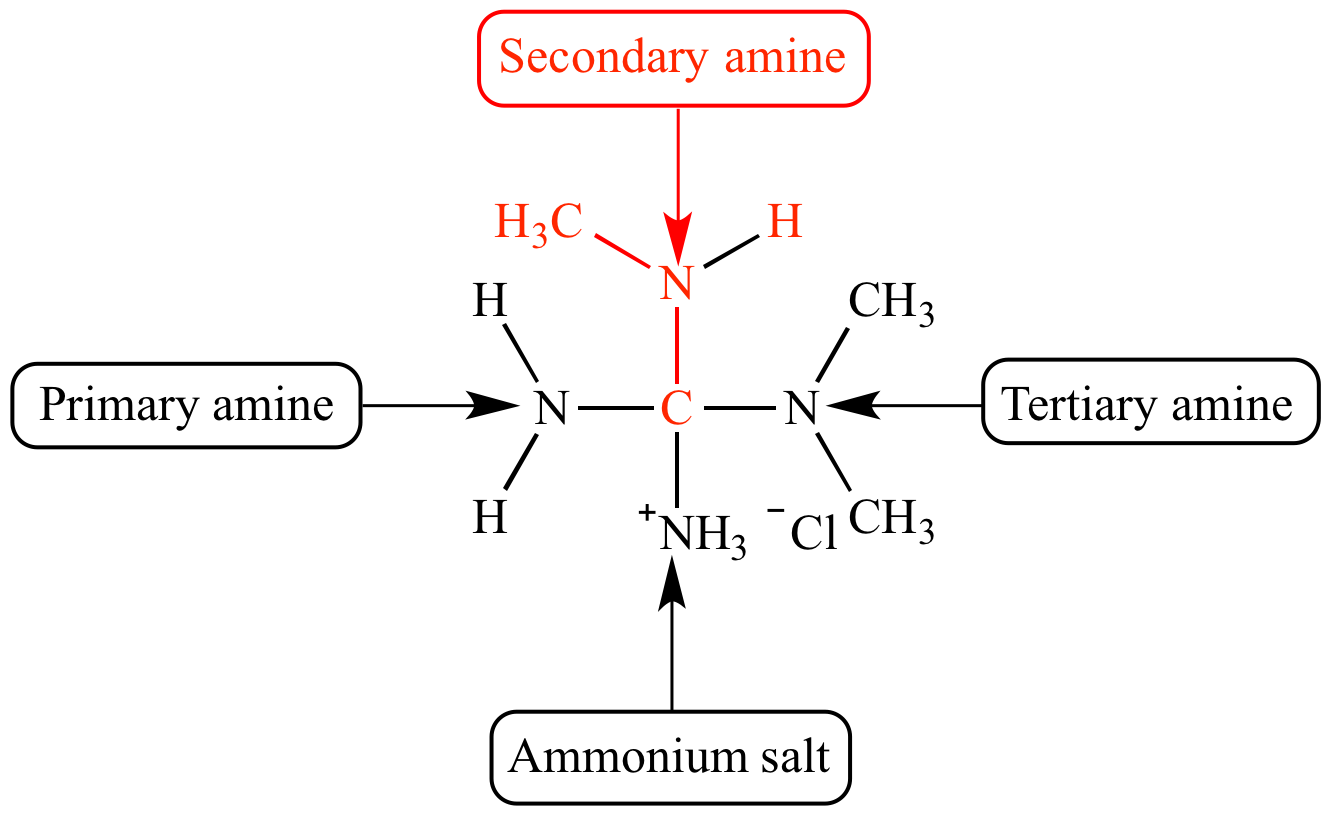
Alright, let's dive into the fascinating, utterly captivating world of... amines! Don't run away screaming just yet! I promise, we'll keep it light and breezy. Today, we're cracking the code on a particular kind of amine, the oh-so-special secondary amine.
What's an Amine Anyway?
First things first, what is an amine? Imagine nitrogen, that element we all know and (hopefully) love. Nitrogen is naturally a bit of a social butterfly. It likes to bond with things! Amines are basically nitrogen atoms hanging out with carbon atoms. Think of nitrogen as the cool kid at the party, and carbon is one of its best friends. They're joined at the hip (or, well, the bond). The cool kid, nitrogen, has at least one carbon friend.
But wait, there's more! Nitrogen can have up to three carbon buddies. And that's where things get interesting and where our secondary amines step into the spotlight!
Must Read
Primary, Secondary, and Tertiary: The Amine Family Tree
Think of amines as a family. We've got primary amines, secondary amines, and tertiary amines. They’re all related, but each one has its own distinct personality – determined by how many carbon 'friends' are directly attached to the nitrogen.
Primary Amines: The Lone Wolf (Kinda)
A primary amine is like a nitrogen atom who's only got one carbon buddy. It’s a bit of a loner, relatively speaking. Picture it: one nitrogen, one carbon, and two hydrogen atoms also tagging along for the ride. They’re simple, straightforward, and easy to spot. They are written as R-NH2.
Secondary Amines: The Dynamic Duo
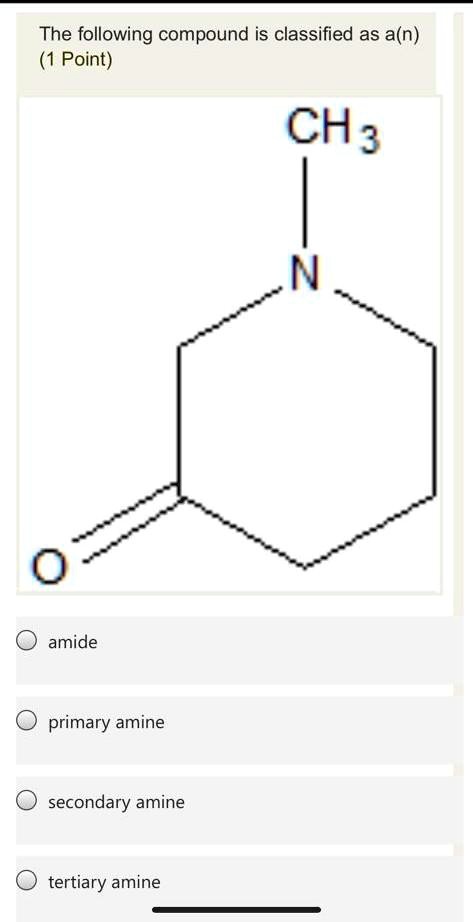
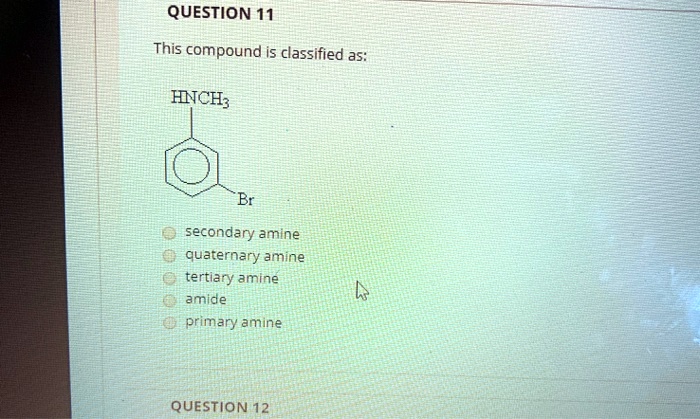
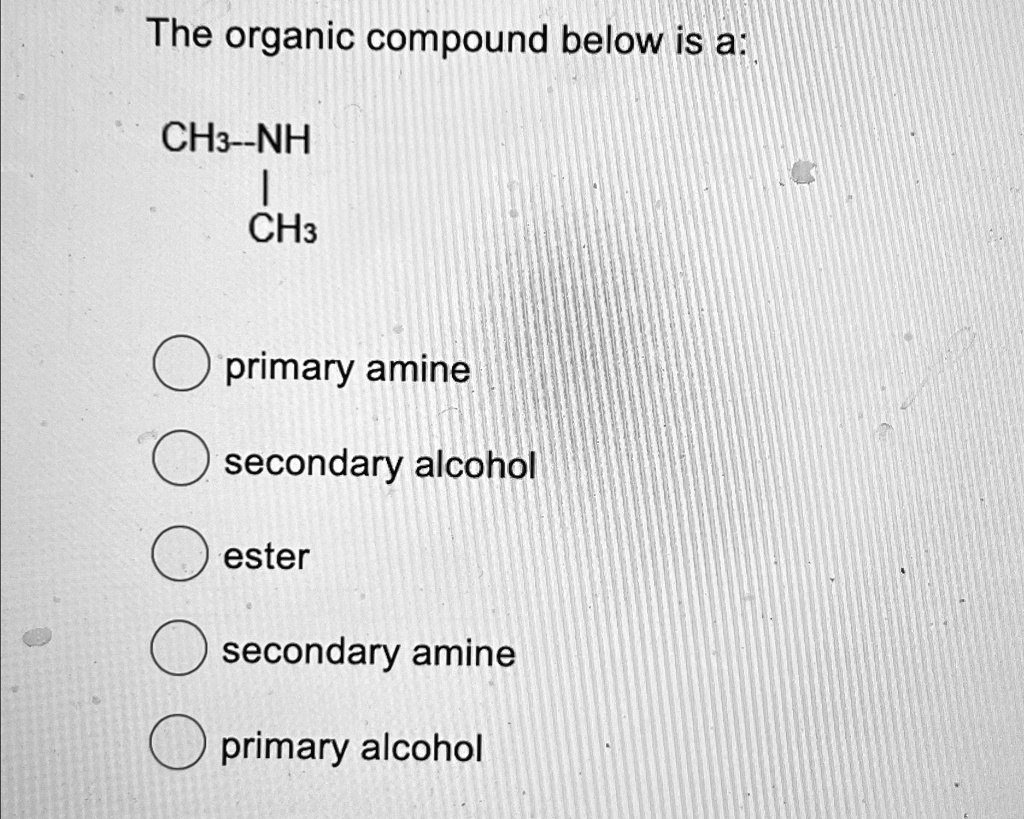
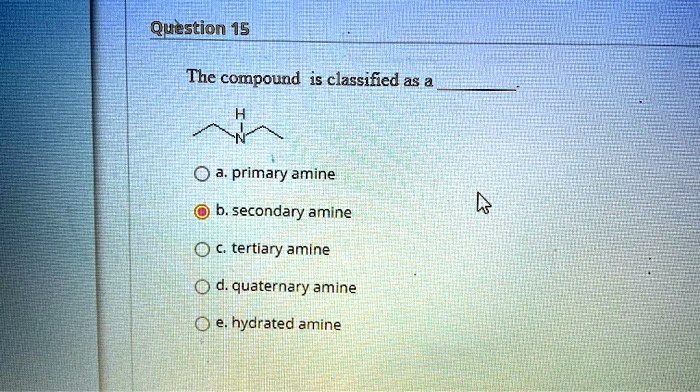
Now, here’s where the magic happens! A secondary amine is a nitrogen atom that's hanging out with two carbon atoms. It’s like nitrogen found a best friend, and they're inseparable! They're like the dynamic duo of the amine world. This means the nitrogen is bonded to two carbon groups (often abbreviated as 'R' groups) and one hydrogen atom. So the general formula for a secondary amine is R2NH.
Let's put it into everyday terms. Imagine you're at a party. A primary amine is the person who knows the host but doesn't really know anyone else. They are chatting happily with the host (the carbon), but not making many other connections. A secondary amine is someone who knows two people at the party and is actively engaged in conversation with both! They're more sociable, more involved.
Tertiary Amines: The Social Butterfly
And finally, there's the tertiary amine. This is the nitrogen atom who's become super popular and is now friends with three different carbon atoms! They're the social butterflies of the amine world, flitting from carbon to carbon. So, the general formula for tertiary amine is R3N.
How to Spot a Secondary Amine in the Wild
So, how can you identify a secondary amine when you see one? Here are a few tips:
- Look for a nitrogen atom (N).
- See if that nitrogen is directly connected to two carbon atoms (C).
- If it is, and there's still one hydrogen (H) attached to that nitrogen, bingo! You've got a secondary amine!
It's like a secret code, once you know what to look for, secondary amines are easy to spot. It's a little like spotting the double agent in a group of spies. They've got connections in two places, which makes them, in a way, more powerful than the single-agent or the triple threat!
Why Should You Care About Secondary Amines?
Okay, I know what you're thinking: "This is all very interesting, but why should I, a normal, everyday person, care about secondary amines?" Well, buckle up, because here's the deal:
Secondary amines are found in all sorts of places, from drugs and pharmaceuticals to dyes and polymers. They play a crucial role in many chemical reactions. In fact, some pretty important molecules contain these types of amines.
So, the next time you're reading about some fancy chemical compound, and you see the term "secondary amine," you'll know exactly what it means! You'll be able to impress your friends with your vast knowledge of organic chemistry (or, at least, you'll know a little bit more than they do).
And isn't that what life's all about? Learning new things, expanding your horizons, and becoming a master of amine identification?
Okay, maybe not the last one. But hopefully, you now have a slightly better, and maybe even slightly enthusiastic, understanding of what a secondary amine is. Now go forth and amine!