What Are The Colored Balls On Power Lines
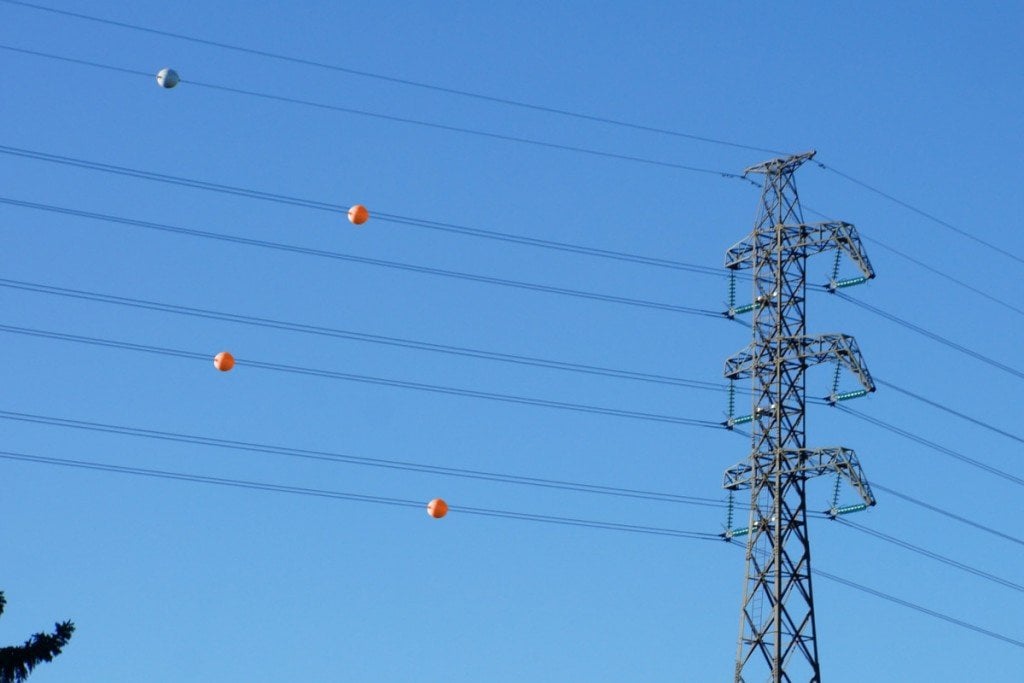
Ever found yourself gazing skyward, perhaps while stuck in traffic or just enjoying a quiet afternoon, and spotted those curious, brightly colored spheres strung along power lines? They look a bit like oversized Christmas ornaments for giants, or maybe even alien beacons. If you've ever wondered, "What are those things for?" you're not alone! This common urban and rural sight often sparks a moment of delightful curiosity, revealing a hidden layer of engineering and safety in our everyday landscape.
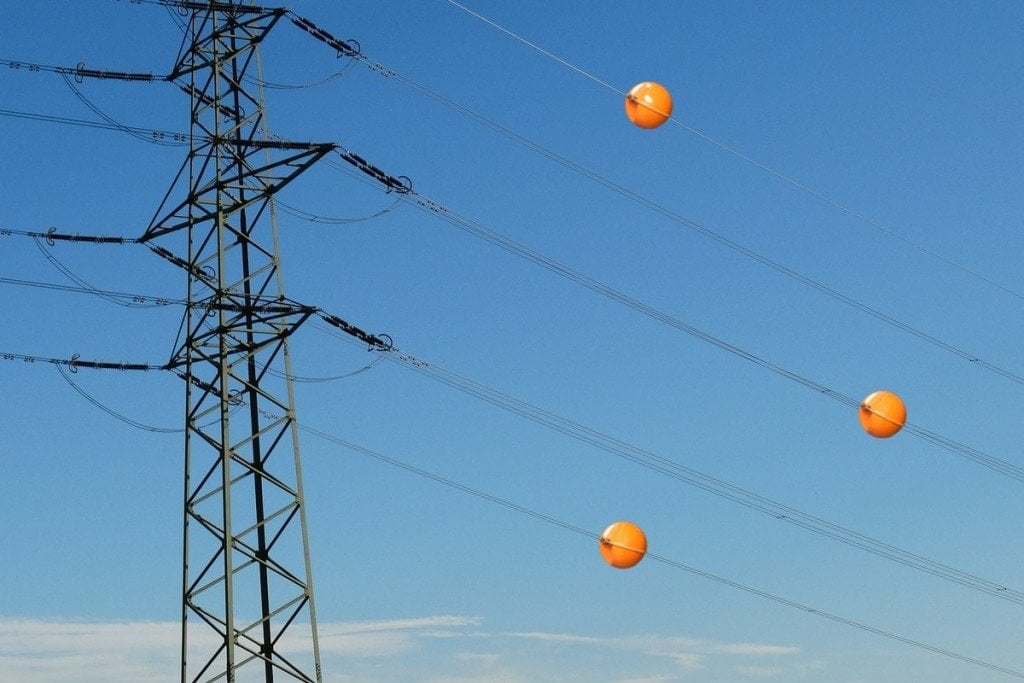
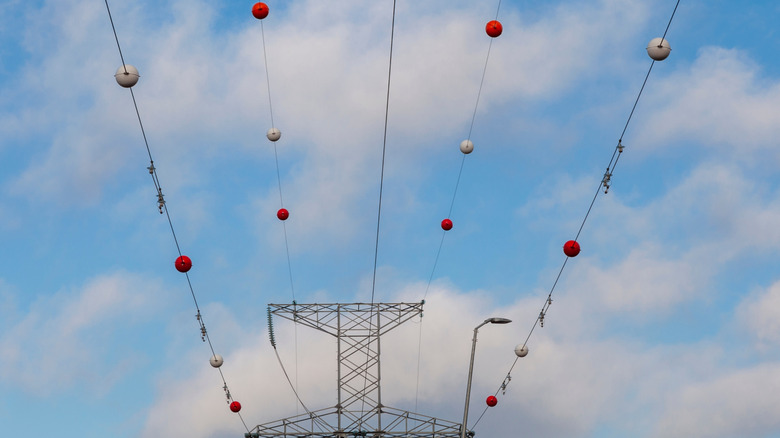
Far from being decorative, these unassuming balls, often red, orange, white, or yellow, serve an absolutely critical purpose for our safety and the smooth operation of vital services. Their primary job is to make power lines visible to aircraft. Imagine a helicopter performing an emergency rescue, an agricultural plane dusting crops, or a small private aircraft flying at a lower altitude. Without these markers, the thin power lines, especially against a complicated background of trees or sky, would be nearly impossible to spot until it's too late. Colliding with power lines is an incredibly dangerous event, risking lives, causing widespread power outages, and potentially devastating infrastructure.
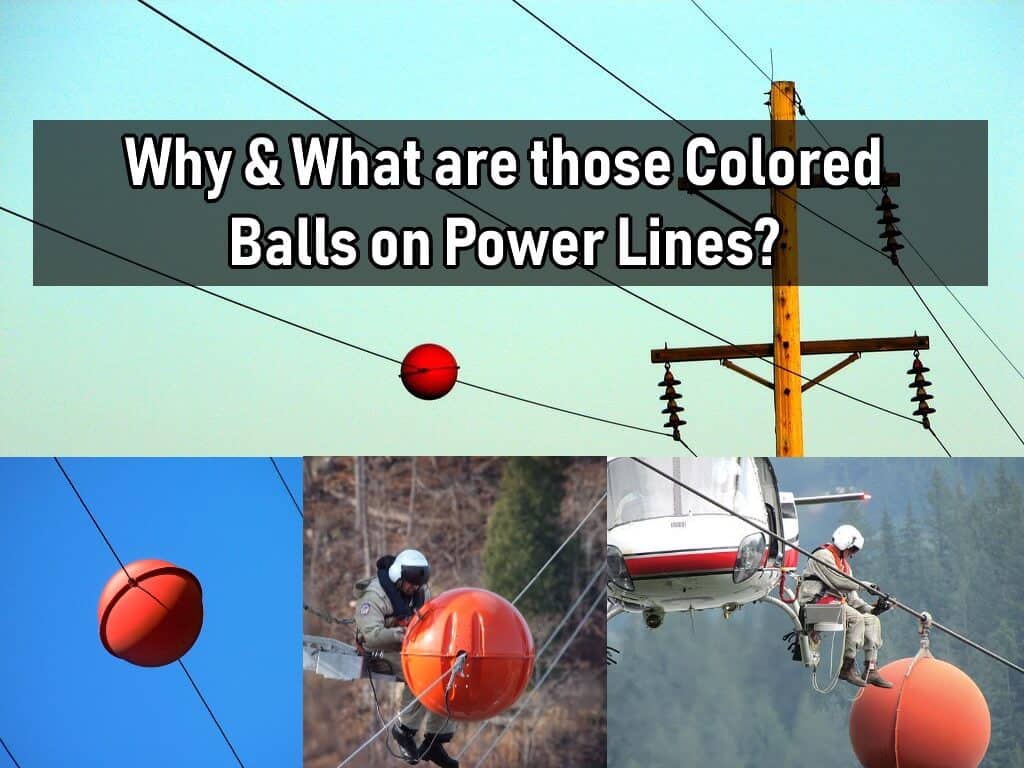
These aerial visibility markers are particularly crucial in areas where low-flying aircraft are expected. You'll commonly see them near airports, helipads, mountain passes, deep valleys, or across wide river crossings – essentially any location where power lines span open areas and could pose a hazard. They're also often found in proximity to communication towers or meteorological stations. Made from lightweight, weather-resistant materials like fiberglass or high-density polyethylene, they typically range from 20 to 36 inches in diameter, ensuring they catch the eye from above without adding undue stress to the lines themselves.
Must Read
Understanding their function can actually enhance your appreciation for the complex systems that underpin our modern world. To "enjoy" these markers more effectively, first, become a keen observer. Next time you're driving or traveling, notice where these balls are located. Are they near a large body of water, a busy highway interchange, or a remote agricultural field? Each placement tells a story about potential aerial activity and the proactive measures taken to prevent accidents. It's a subtle reminder of the constant vigilance required to maintain our power grid and ensure public safety.
Most importantly, while it's fascinating to observe them, always remember that these markers are on high-voltage power lines. Therefore, a practical tip for appreciating them is always to do so from a safe distance. Never attempt to touch, tamper with, or approach power lines. Teach children about the dangers. Instead, let your observation spark a sense of wonder and gratitude for the silent guardians that help keep our skies safe and our lights on. The next time you spot those colorful spheres, you'll know you're looking at a brilliant, life-saving piece of engineering, adding another layer of understanding to the world around you.