Solar Farm Lease Rates Per Acre In Illinois

Ever driven through Illinois? Seriously, take a moment. Beyond Chicago's gleaming towers, what do you see? Fields, right? Endless, majestic seas of corn and soybeans stretching to the horizon. It's beautiful, but also... kinda uniform. For generations, that's been the rhythm of the land here: plant, grow, harvest. Rinse, repeat. My grandma, bless her heart, would always say, "The land provides." And it did, mostly. But sometimes, you'd hear whispers about tough seasons, commodity prices being, well, commodities, and the sheer back-breaking work it takes.
Now, imagine driving past one of those familiar fields, but instead of green stalks, you see... a shimmering expanse of dark, glassy panels, tilted perfectly toward the sun. Woah. What's that about? That, my friends, is a solar farm. And while you might immediately think "clean energy!" (which, yay!), if you're a landowner, or even just someone who appreciates a good deal, your next thought is probably: "How much are they paying for that?" Ding ding ding! We're talking about solar farm lease rates per acre in Illinois.
Let's be real. Farming is hard. It's a gamble with weather, pests, and markets. But what if you could lease out a chunk of your less-than-prime acreage – maybe that wet spot no one likes, or a field that's just not producing like it used to – and get a steady, predictable check, year after year, for twenty, thirty, even forty years? No tilling, no spraying, no harvesting, just... sun-gazing panels. Sounds pretty tempting, right?
Must Read
The Sunny Side of Illinois Land: What Are We Talking About?
So, you're curious about the actual numbers. And you should be! Because this isn't pocket change we're discussing. Solar developers, those folks who want to blanket a piece of Illinois with panels, are looking for land, and they're willing to pay for it.
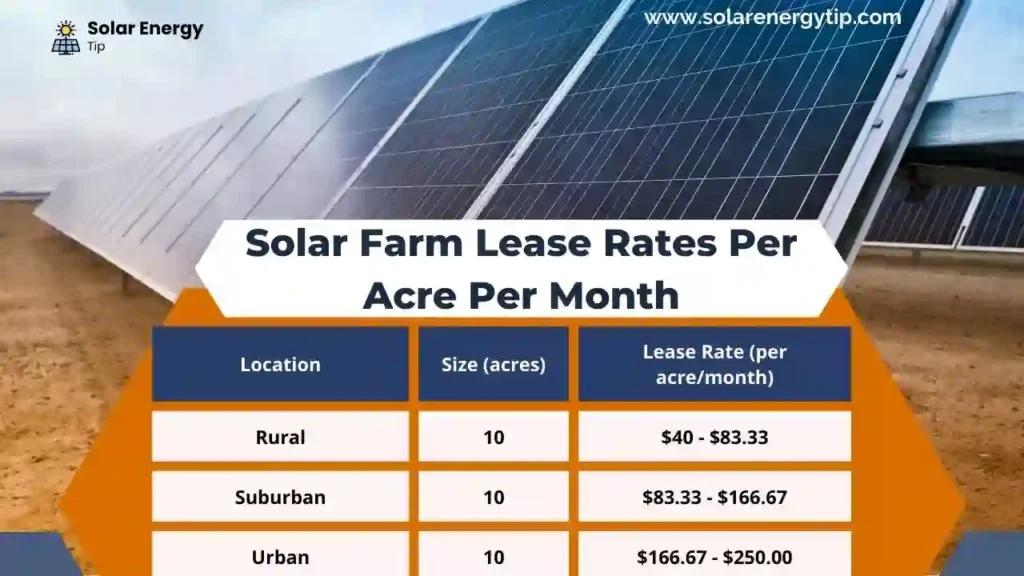
Generally, in Illinois, you're looking at lease rates that can range anywhere from $500 to $1,500 per acre, per year. Whoa, did your eyebrows just go up? Mine too! But here's the kicker: that's just a general range, and it can absolutely vary. Sometimes it's less, sometimes it's significantly more, especially for prime locations. Pretty neat, huh?

What Makes Those Rates Go Up (or Down)?
You didn't think it was as simple as "here's your flat rate," did you? Come on, this is real life! A bunch of factors play into how much moolah a developer is willing to shell out.
- Location, Location, Location: Just like real estate, this is huge. Is your land close to a substation or existing transmission lines? That's a big win for the developer because it means less infrastructure cost for them. If your land is way out in the boonies with no easy grid access, the offer might be lower. Proximity to urban centers demanding renewable energy can also boost value.
- Grid Capacity: Is there enough capacity on the local power grid to handle a new solar farm? If not, the developer might face expensive upgrades, which could impact what they can offer you.
- Land Quality: Believe it or not, they often prefer less productive agricultural land. Why take prime corn acreage out of production when there's perfectly good, less fertile ground available? This can be a sweet spot for landowners with marginal fields.
- Developer Competition: Are there multiple solar companies vying for land in your area? Cha-ching! Competition often drives up offers. It pays to know who else is sniffing around.
- Lease Term & Escalators: Solar leases are long-term commitments, often 20-30 years, with options to renew. A longer, more secure term might command a better initial rate. Plus, don't forget to ask about escalation clauses! You don't want to be getting the same $1,000/acre in 2050 that you started with in 2024. Inflation is real, folks! A common escalation is 1-2% per year.
- Decommissioning: What happens when the lease is up? Who pays to remove all those panels and infrastructure and return the land to its original state? A solid decommissioning plan and bond are absolutely non-negotiable. Don't let anyone tell you otherwise.
Is It All Sunshine and Rainbows?
Mostly, yeah! For many Illinois landowners, especially those with an eye towards stable income and reducing the intense labor of traditional farming, solar leases are a game-changer. It's a way to diversify income, secure your family's financial future for decades, and contribute to cleaner energy – which, let's be honest, feels pretty good.
However, it's a big decision. You're committing your land for a long time. So, if a solar developer comes knocking (and they very well might!), here's my friendly, unsolicited advice:
- Do your homework. Research the developer.
- Get professional advice. A lawyer specializing in renewable energy contracts is your best friend here. Don't sign anything without one! Seriously, it's worth the investment.
- Talk to neighbors. See what they're being offered.
- Understand the entire package. It's not just the per-acre rate. Look at taxes, liability, access roads, and especially that decommissioning clause.
The Illinois landscape is slowly but surely changing, adding those gleaming, energy-generating panels to its familiar tapestry. For many, it's not just a new view, but a new chapter in how the land provides. And hey, getting a steady, decent check for letting the sun do its thing? That's a future worth looking into. Wouldn't you agree?