
Short Tons To Metric Tons
Ever looked at a news report about a massive cargo ship, or perhaps an update on global commodity prices, and seen weights tossed around like "tons" and thought, "Wait, which ton are we talking about here?" If so, congratulations, you're officially part of the curious club! And guess what? Unraveling this little mystery isn't just for number crunchers; it's a fantastic way to make your life a tiny bit more interesting, more global, and honestly, a whole lot more fun.
We're diving into the delightful world of Short Tons versus Metric Tons. Sounds super technical, right? Don't worry, we're going to make it feel like you just unlocked a new superpower for understanding the world around you.
So, What's a Short Ton Anyway?
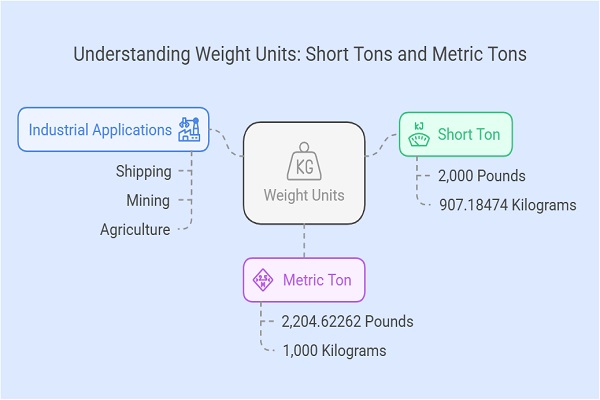
Let's start close to home, especially if you're in the United States. When you hear "ton" casually mentioned here, chances are we're talking about a short ton. And what is it? It's exactly 2,000 pounds. Think about that for a second. That's a lot of potatoes, or maybe a small car!
Must Read
It’s part of the imperial and US customary systems, which means it’s beloved in a few places, but not universally. It’s practical, it’s familiar, and it gets the job done when you're keeping things local. But what happens when the conversation goes international?
And the Metric Ton, Our Global Friend!
Now, let's jet-set across the globe to pretty much… well, everywhere else! Most of the world operates on the metric system, and their "ton" is what we call a metric ton (or sometimes a tonne, with an 'e', to avoid confusion).

A metric ton is defined as 1,000 kilograms. And here's where it gets interesting: 1,000 kilograms is approximately 2,204.62 pounds. See the difference? A metric ton is a little heavier than a short ton. Not a huge difference, but significant enough to matter when you're dealing with literally tons of stuff!
The beauty of the metric system, of course, is its elegance and simplicity. Everything is based on powers of ten, making conversions within the system a breeze. So, a metric ton fits right into that wonderfully logical framework.
The "Aha!" Moment: The Conversion Superpower
Alright, so we have 2,000 pounds for a short ton, and roughly 2,204.62 pounds for a metric ton. How do we jump between them? This is where your new superpower comes in!
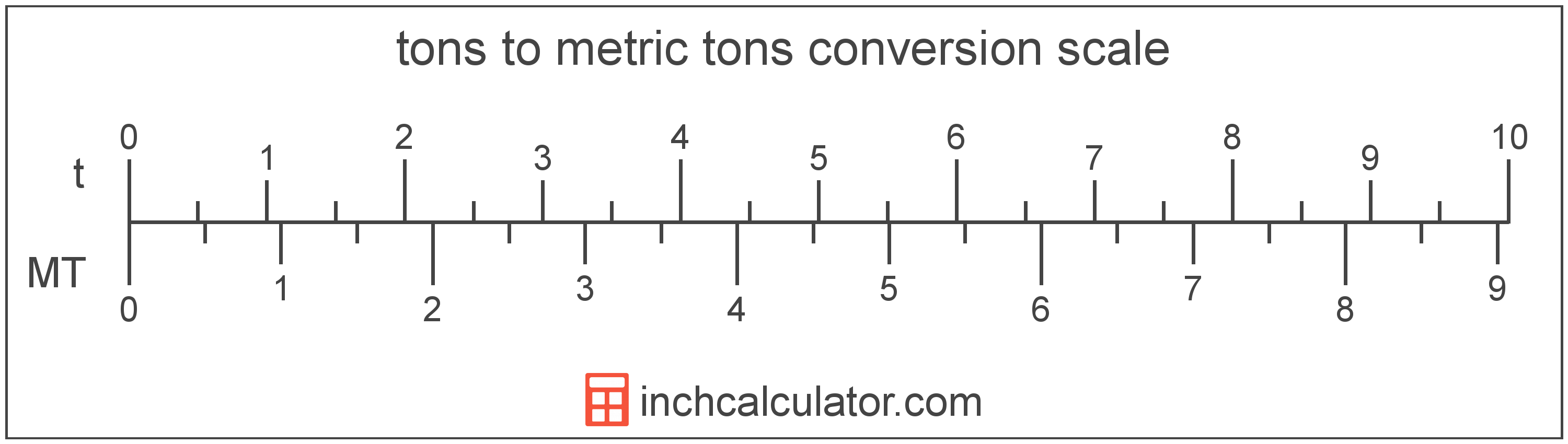
To convert a short ton to a metric ton, you simply multiply by approximately 0.907. So, if you have 10 short tons of cargo, it's roughly 9.07 metric tons. Easy peasy!
And going the other way? To convert a metric ton to a short ton, you multiply by approximately 1.102. So, 10 metric tons would be about 11.02 short tons. See? It's just a little bit of multiplication and suddenly, you're fluent in both "ton" languages!
This isn't about memorizing complex formulas. It's about knowing there's a relationship and having that quick mental shortcut. Or, let's be real, a quick Google search when you need the exact number! But knowing why you're searching is the real fun.
Why Does This Make Life More Fun? (Seriously!)
You might be thinking, "Okay, this is neat, but fun?" Absolutely! Here's why:
- Travel Smarts: Imagine you're planning a trip abroad and looking at baggage allowances or cargo shipping. Understanding if they're quoting short or metric tons can save you from unexpected fees or give you a clearer picture of what you can actually bring. You'll feel like a savvy global traveler!
- News Comprehension: Next time you read about, say, global steel production, a massive ship's capacity, or the weight of an asteroid, you'll instantly have a more accurate mental image. Is it a 2,000-pound ton or a 2,204-pound ton? That extra 200 pounds per ton adds up quickly on a large scale, giving you a better grasp of the true magnitude.
- Bragging Rights (lightly!): You'll be the one in the room who truly understands the difference. When someone says, "That's a ton of bricks!" you can internally (or externally, if you're feeling cheeky) clarify which ton. It's a small but mighty piece of knowledge that expands your understanding of global systems.
- Problem-Solving Power: Learning little conversions like this boosts your overall problem-solving muscles. It teaches you that there are different ways to measure the same thing and that a bit of curiosity can unlock clearer understanding.
- Connecting with the World: In an increasingly interconnected world, understanding different systems of measurement helps bridge gaps. It's a subtle way of appreciating global standards and the nuances that exist between cultures.
It’s not just about the numbers; it’s about the context the numbers provide. It's about feeling more clued-in, more informed, and yes, more powerful in your everyday interactions with the world's data.

Embrace the Little Learnings!
So, the next time you encounter a "ton," pause for a second. Ask yourself: Is this a short ton or a metric ton? And if it matters, you now have the tools to figure it out!
Learning these small, seemingly niche facts isn't just about accumulating trivia. It's about cultivating a mindset of curiosity and discovery. It's about showing yourself that you're capable of understanding complex information and making the world a little less confusing, one conversion at a time.
Go forth, curious reader, and embrace the joy of measurement! Who knows what other fascinating little facts are waiting for you to uncover, ready to make your world richer and more vibrant? Keep learning, keep asking questions, and keep making those connections. Your brain will thank you for the fun!