
Where Should I Place Carbon Monoxide Detectors

Okay, so picture this: I recently decided to upgrade my old, wheezing clothes dryer. You know the type – it sounded like a small, asthmatic dragon attempting a breakdance. New, shiny, gas dryer arrives, gets hooked up, and immediately, my brain goes, "Wait a minute... gas appliance... carbon monoxide... where is that detector again?"
My partner, bless their pragmatic heart, just pointed to the one we had chillingly in the hallway, looking utterly nonplussed. "There," they said, as if it was obvious. And honestly, for a hot second, I thought, "Yeah, fair enough. It's in the house."
But then the little worry-gnome in my head started poking around. Is "in the house" good enough? Is there a best spot? Is there a worst spot? Turns out, my friends, placement is absolutely, unequivocally, a thing when it comes to those little life-saving marvels.
Must Read
I mean, who knew these silent guardians were so particular? It’s not just a case of "slap it on the wall and call it a day," apparently. And trust me, after a deep dive into the fascinating (and slightly terrifying) world of CO detector placement, I'm here to spill the beans so you don't have to navigate the confusing depths of manufacturer manuals alone. (Though, ahem, you still should read yours.)
The Golden Rules: Where to Absolutely Put 'Em
Let's kick things off with the non-negotiables. Think of these as your CO detector's VIP sections:
-
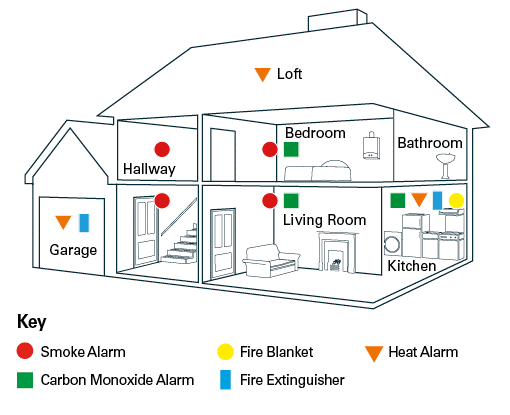
Every. Single. Level. Yes, really. If you've got a basement, a main floor, and an upstairs, you need at least one on each. Carbon monoxide can travel, but you want to catch it as close to your living spaces as possible. Don't skimp here, folks!

Carbon Monoxide Detector Placement In Kitchen at Paul Liu blog -
Near Sleeping Areas: This is arguably the most crucial one. CO is called the "silent killer" because it's odorless, colorless, and can overwhelm you while you're asleep, leaving you unable to wake up or react. So, put one outside each separate sleeping area. If you have multiple bedrooms grouped together, one in the hallway serving those rooms is a good call. If you have a lone bedroom far off, it needs its own buddy.
-
Near or in an Attached Garage: If you've got a garage attached to your house, especially if you ever start your car in there (even for a second!) or store gas-powered tools, a CO detector is a must-have. Fumes can easily seep into your living space. Just make sure it’s not inside the garage itself, where exhaust fumes might trigger false alarms. Place it on the wall shared with the house, inside the house, often near the door connecting the two.
Think about it: you want to detect CO where it's most likely to be a problem, and where you're most vulnerable. Makes sense, right?

The "Nope, Don't Even Think About It" Zones
Now, just as important as knowing where to put them is knowing where not to put them. This is where my little hallway detector might have been doing its best, but not its most optimal work.
-
Too Close to Fuel-Burning Appliances: Remember my new dryer? Yeah, putting a detector right next to your furnace, water heater, gas stove, or fireplace is a recipe for annoying false alarms. These appliances can emit small, harmless bursts of CO during startup or normal operation, which can set off your detector unnecessarily. Give them some breathing room – at least 15-20 feet away is a good general guideline.
-
In Direct Sunlight or Near Vents/Fans: Extreme temperature fluctuations can mess with the sensor. Similarly, strong drafts from windows, doors, or ceiling fans can affect how CO reaches the detector, potentially delaying an alert. We want accurate, timely detection, not a confused little gadget!
Smoke and Carbon Monoxide Detector Tips | Batten Safe -
Behind Furniture or Curtains: This one's a no-brainer. If something's blocking the sensor, it can't detect anything. Keep it clear and unobstructed!
-
In Extremely Dusty, Dirty, or Humid Areas: Basements or laundry rooms can sometimes be a bit grimy. Dust and dirt can clog the sensor, making it less effective. High humidity (like in a bathroom right after a hot shower) can also interfere. Keep them in cleaner, drier spots.
-
Right in Front of the Stove/Oven: Cooking fumes, especially from gas stoves, can contain tiny amounts of CO. While usually harmless, putting a detector right in the splash zone of your cooking could lead to nuisance alarms. Besides, who wants an alarm going off every time you make pasta?

Carbon Monoxide Detector Placement (January 2021 update)
Wait, What About Height?
Ah, the age-old debate! Unlike smoke, which rises, or propane, which sinks, carbon monoxide actually mixes pretty evenly with the air. So, there's no "perfect" height where it's definitively concentrated. Most manufacturers recommend placing them on a wall at eye-level, or about 5 feet from the floor. Some models are designed to plug into an outlet lower down. The most important thing is to follow the specific instructions that came with your detector. Seriously, they designed it for a reason.
So, after all that, where did my hallway detector end up? Well, it moved to a more strategic spot outside the sleeping areas, and I added a new one to the main floor! Because when it comes to invisible, odorless threats, being a little extra is totally worth it.
Stay safe out there, my curious comrades!