
Where Do You Place Carbon Monoxide Detectors
The Great Carbon Monoxide Detector Conundrum
Ah, the humble carbon monoxide detector. A small, often overlooked gadget. It sits there, quietly judging your life choices. But where, oh where, do you actually put it?
This isn't just a simple "plug it in" situation. Oh no. This is an existential crisis. A domestic dilemma of epic proportions. You know it's important.
You want to keep your loved ones safe. You've read the instructions. Or, rather, you've attempted to read the instructions. They are often less a guide and more a cryptic puzzle.
Must Read
The "Official" Advice: A Labyrinth of Logic
So, you crack open the manual. First, it says "near sleeping areas." Sounds logical, right? But then, it adds a dash of delightful confusion.
Some manuals insist on "high up" because carbon monoxide is lighter than air. Others decree "low down" because it mixes with air. Wait, what?
Are we talking about the same gas here? It feels like trying to catch smoke with a sieve. The advice swirls around your brain like a confusing fog.
Then comes the spatial reasoning test. "Not within five feet of a cooking appliance." Okay, noted. "Not within X feet of a window or vent." Got it.
But also, "ensure proper air circulation." How does one achieve this magical balance? It's like a domestic game of Twister. You twist your brain into knots.
Is it a bird? Is it a plane? No, it's a carbon monoxide molecule, and it's playing hide-and-seek with your detector!
The Unspoken Truth: Our "Unpopular" Opinion
Let's be honest with ourselves for a moment. Most of us aren't living in perfectly cubic, open-plan homes. We have corners. We have quirky layouts. We have... stuff.
The perfect spot, according to the manual, often doesn't exist. It's an idealistic fantasy. A marketing dream for a house that no one actually owns.
So, here's our slightly rebellious, utterly pragmatic, and dare we say, sensible take. The "unpopular" opinion, if you will.
The best place for your carbon monoxide detector? It's somewhere. Just somewhere that makes a lick of sense to you. And that you remember to check once in a while.
We're not advocating for throwing caution to the wind. Not at all. We just suggest a dash of realism. A pinch of practicality.
Bedroom Battles: High, Low, or Just There?
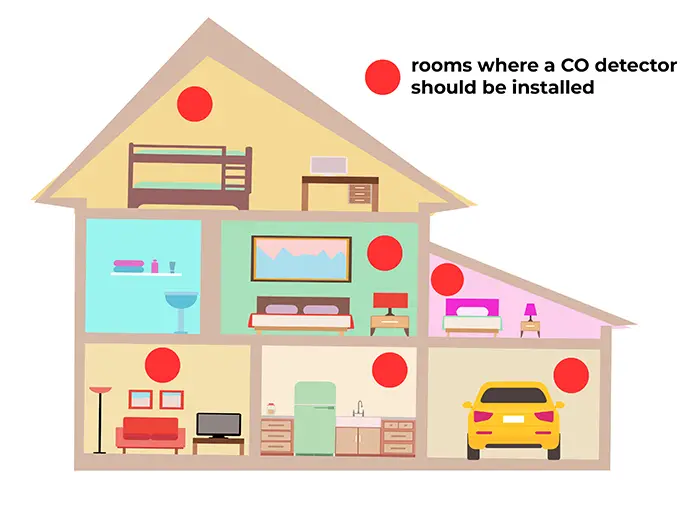
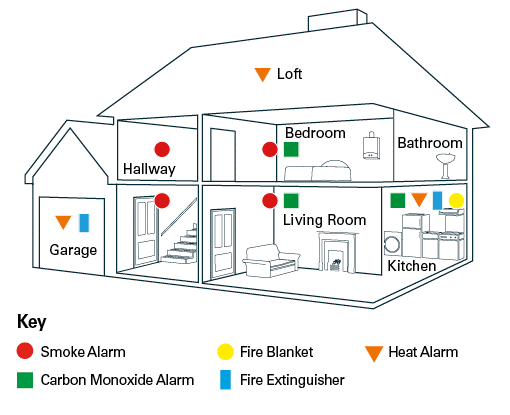
Consider the bedroom. You spend a good chunk of your life in there. It's a prime location for a detector. But where?
Do you put it on the ceiling, silently judging your dreams? Or perhaps near the floor, discreetly monitoring your socks?
What if you have bunk beds? Does the top bunk get its own detector? The bottom bunk? The landing strip for midnight snacks?
Our advice? Pick a wall. Any wall. A wall that's not directly behind a curtain. A wall where it's not going to get knocked off by an errant pillow fight.

High enough that tiny hands can't reach it. Low enough that you don't need a stepladder to test it. This feels like a sweet spot, doesn't it?
Kitchen Quandaries: Too Close, Too Far?
The kitchen. A hub of activity. Also, a hub of potential carbon monoxide sources. Your stove, your oven, maybe even a gas dryer nearby.
The manual screams, "Keep it away from cooking appliances!" Fair enough. You don't want false alarms every time you burn toast.
But also, "place near potential sources." It's like a culinary riddle. Be near, but not too near. A relationship status for your detector.
Maybe on the wall opposite the stove? Or near the doorway leading out of the kitchen? A strategic outpost, watching over the culinary chaos.
The goal is to catch any nefarious fumes before they make a grand tour of your entire home. A good watchman, not a busybody.
The Living Room Lull: Center Stage or Hidden Gem?
Your living room. Where families gather. Where snacks are devoured. Where movies are watched with popcorn-stained fingers.
It's often a large, open space. Does this mean the detector needs to be centrally located? Like a watchful eye in the middle of your ceiling?
Or can it be tucked away, near a window or a hallway? A quiet guardian, blending into the decor, yet ever vigilant.
Again, common sense triumphs. Find a spot that feels right. A place where it won't be forgotten. A place where it can hear the whispers of rogue carbon monoxide.
Perhaps near the main hallway. Or on a wall that faces the most used seating area. A silent sentinel, protecting your binge-watching sessions.
Basement Blues and Utility Room Utopia
Don't forget the dungeons of your dwelling! The basement, the utility room, the garage. These are often forgotten zones. Yet, they house furnaces, water heaters, and cars.
These are the true potential culprits. The dark horses of carbon monoxide production. So, a detector down here is non-negotiable.
Again, the high vs. low debate might flare up. Is it near the ceiling, above the furnace? Or near the floor, where Fido naps?
Our vote? If it's a finished basement with sleeping areas, treat it like a bedroom. If it's purely utility, place it near the potential sources but with a bit of breathing room.
And absolutely, positively, one in the garage if it's attached to your house. Especially if you, or someone else, occasionally forgets to turn off the car.

Because that's a mistake we've all secretly feared. A quick, easy check ensures peace of mind. No need for a doctoral thesis on air currents.
The Real Takeaway: Just Get One (or Three!)
Ultimately, the most important thing about carbon monoxide detectors is not their precise, laser-calibrated placement. It's having them.
It's making sure they have fresh batteries. It's remembering to test them once a month. It's knowing that silent, invisible threat has a watchful enemy.
So, next time you're staring blankly at your detector, manual in hand, feeling overwhelmed by contradictory advice, take a deep breath.
Trust your gut. Find a spot that feels reasonably sensible. A spot where you'll see it, remember it, and where it has a fighting chance to do its job.
Don't let the perfection paralysis stop you. A detector in a "good enough" spot is infinitely better than no detector at all.
Go forth, brave homeowner! Place that detector with confidence. Give a nod to common sense. And enjoy the peace of mind that comes with being a responsible, yet not overly stressed, adult.
Because when it comes to safety, sometimes the best solution is the one that actually gets done. And maybe, just maybe, makes you crack a little smile.