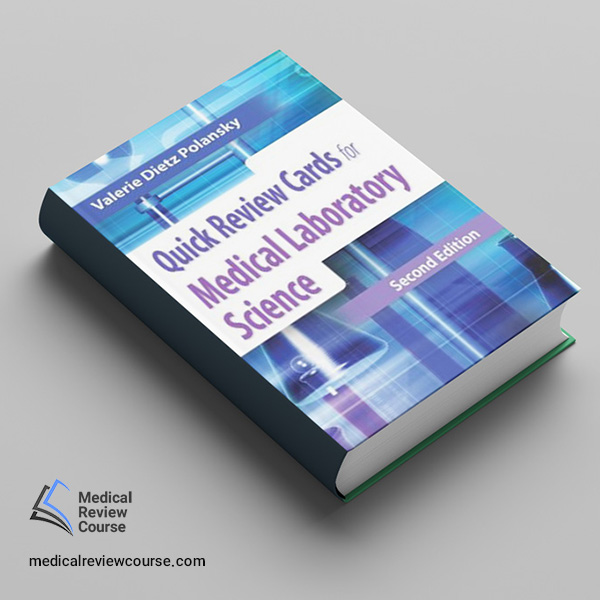
Quick Review Cards For Medical Laboratory Science

Ever feel like the vast world of medical laboratory science is a giant, intimidating textbook just waiting to fall on your head? You're not alone! That's why quick review cards, those bite-sized bursts of knowledge, are becoming increasingly popular for students and professionals alike. Think of them as the cheat codes to understanding complex concepts, but instead of cheating, you're actually learning!
But these aren't just for med lab gurus. The beauty of quick review cards lies in their adaptability. Whether you're an artist looking to understand the science behind pigments, a hobbyist curious about how your body works during exercise, or simply a lifelong learner wanting to expand your horizons, these cards can be a game-changer. They offer a structured, digestible way to grasp key scientific principles, making even complex topics feel accessible.
What kind of information can be packed onto these little gems? The possibilities are endless! Imagine flashcards focusing on different blood cell types, complete with illustrations and concise descriptions of their functions. Think about cards detailing common lab tests, outlining the procedure, normal ranges, and clinical significance. You could even create a deck dedicated to staining techniques, complete with vibrant images showing the characteristic appearances of various microorganisms. For example, one card might feature a picture of a Gram-positive bacteria and explain the underlying principles of the Gram stain. Another could detail the different types of antibodies and their role in immunology testing. Or, for the visual learner, a card could illustrate the steps involved in a complete blood count (CBC).
Must Read
Feeling inspired to give it a try? Creating your own quick review cards is easier than you think! Start by identifying a specific area you want to learn about. Break down the topic into smaller, manageable chunks. Use concise language and focus on the most essential information. Don't be afraid to use visuals! Diagrams, charts, and even simple drawings can make your cards more engaging and memorable. Experiment with different layouts and formats. Some people prefer index cards, while others opt for digital tools like flashcard apps. The key is to find what works best for your learning style.
Here are some tips for creating effective quick review cards at home:
- Focus on one concept per card: Avoid cramming too much information onto a single card.
- Use active recall: Cover up the answer and try to recall it from memory.
- Spaced repetition: Review the cards at increasing intervals to reinforce learning.
- Make it personal: Add your own notes, examples, and mnemonics to make the information more relatable.
Ultimately, the joy of quick review cards lies in their ability to demystify complex subjects and make learning fun and engaging. They transform daunting textbooks into a deck of manageable, bite-sized challenges, empowering you to explore the fascinating world of medical laboratory science, one card at a time. So grab some index cards, fire up your favorite flashcard app, and get ready to unlock a whole new level of understanding!
![[Download Book] Quick Review Cards for Medical Laboratory Science](https://image.isu.pub/240625102919-fa19c93f1f727b2cd7b52b9eb98b92d3/jpg/page_1_social_preview.jpg)