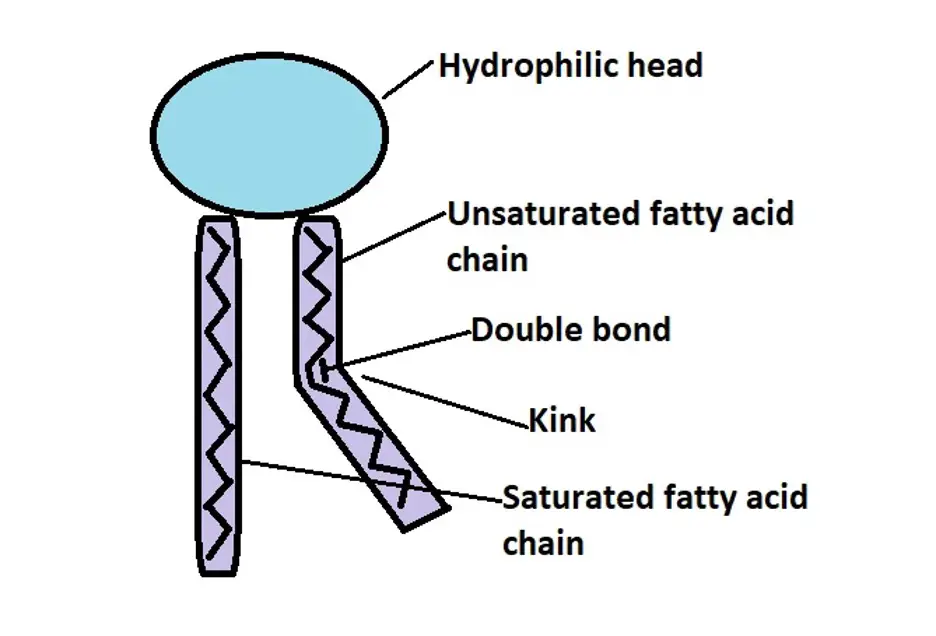
Label The Different Components Of A Phospholipid.
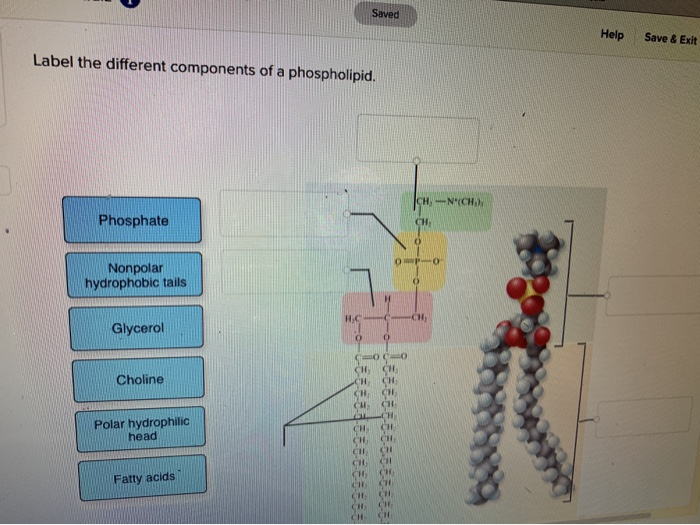
Alright, buckle up, buttercups, because we're diving headfirst into the wonderfully wacky world of phospholipids! Now, I know what you're thinking: "Phospho-whatchamacallits?! Sounds like something a mad scientist would cook up in a lab!" And you're not entirely wrong. They are kind of magical, but they're also super important, and once you get to know them, you'll be seeing them everywhere (metaphorically, of course... unless you have a super-powered microscope handy!).
Think of a phospholipid as the coolest, most versatile LEGO brick in the cellular universe. It's got a few key parts, each with its own personality and job to do. Let's meet the crew!
The Head Honcho: Phosphate Group
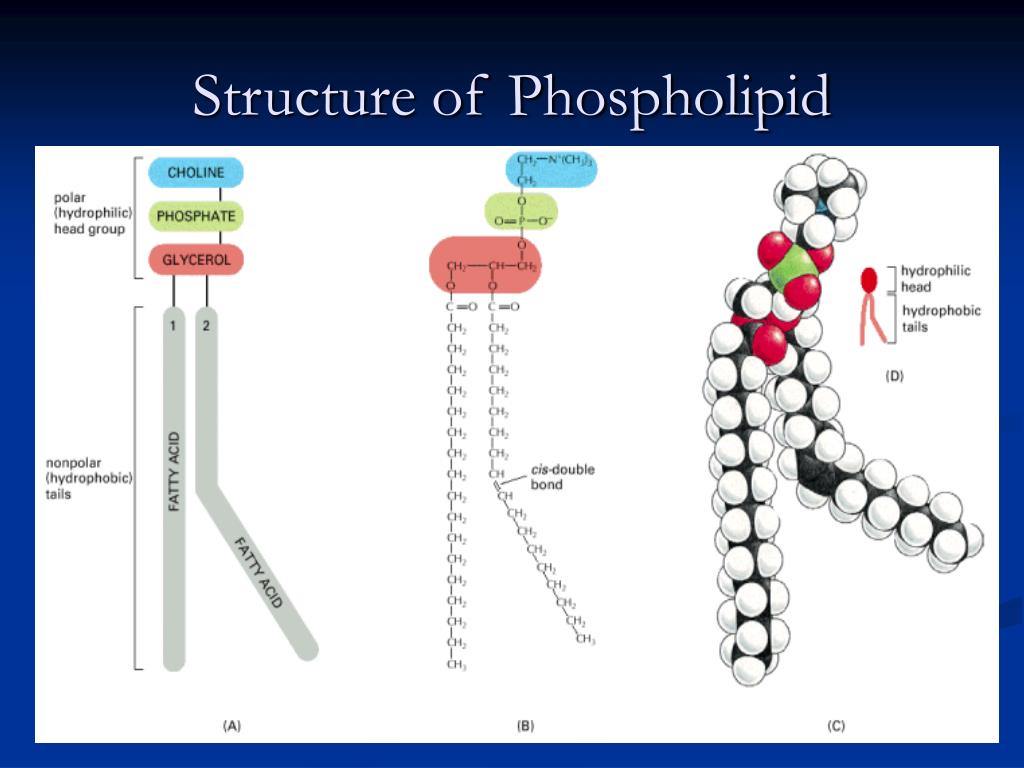
First up, we have the head of the operation: the phosphate group. This little guy is like the social butterfly of the phospholipid. He’s got a negative charge, which makes him super attracted to water – we call this being hydrophilic. Think of it like this: the phosphate group is that friend who always wants to go swimming at the beach, no matter how cold the water is. They just LOVE water! They can't get enough.
Must Read
And because our phospholipid likes to be clear with its title, this phosphate group is normally bound to another little molecule, say an alcohol. It’s like adding sprinkles to an already awesome ice cream sundae. It just makes the whole thing even better!
The Backbone: Glycerol (the unsung hero)
Connecting everything together, we have glycerol. Now, glycerol might not be the flashiest character, but it’s the backbone (literally!) of the whole operation. Glycerol is a three-carbon molecule that basically acts like a tiny, sturdy little platform. Everything else hangs off it. It’s like the reliable friend who always drives, never complains, and makes sure everyone gets home safe. Bless you, glycerol!
The Fatty Tails: Hydrophobic Hideaways
Now for the fun part: the fatty acid tails! These are the long, wiggly, hydrophobic (water-fearing) bits of the phospholipid. Picture them as two shy cats hiding under a table whenever a water gun fight breaks out. They despise water! This is crucial to their function.
Typically, there are two of these tails attached to the glycerol. One tail is usually saturated, meaning it's straight and rigid like a perfectly ironed pair of pants. The other tail is often unsaturated, which means it has a bend or kink in it, like a slinky that's been stretched a little too far. This seemingly small difference has a huge impact on how phospholipids pack together, which we'll touch on later.
Putting It All Together: A Water-Loving, Water-Hating Hybrid
So, we have our water-loving phosphate head, our dependable glycerol backbone, and our water-fearing fatty acid tails. Now, what happens when you stick all these pieces together? Magic! (Okay, fine, it's not technically magic, but it's still pretty cool.)
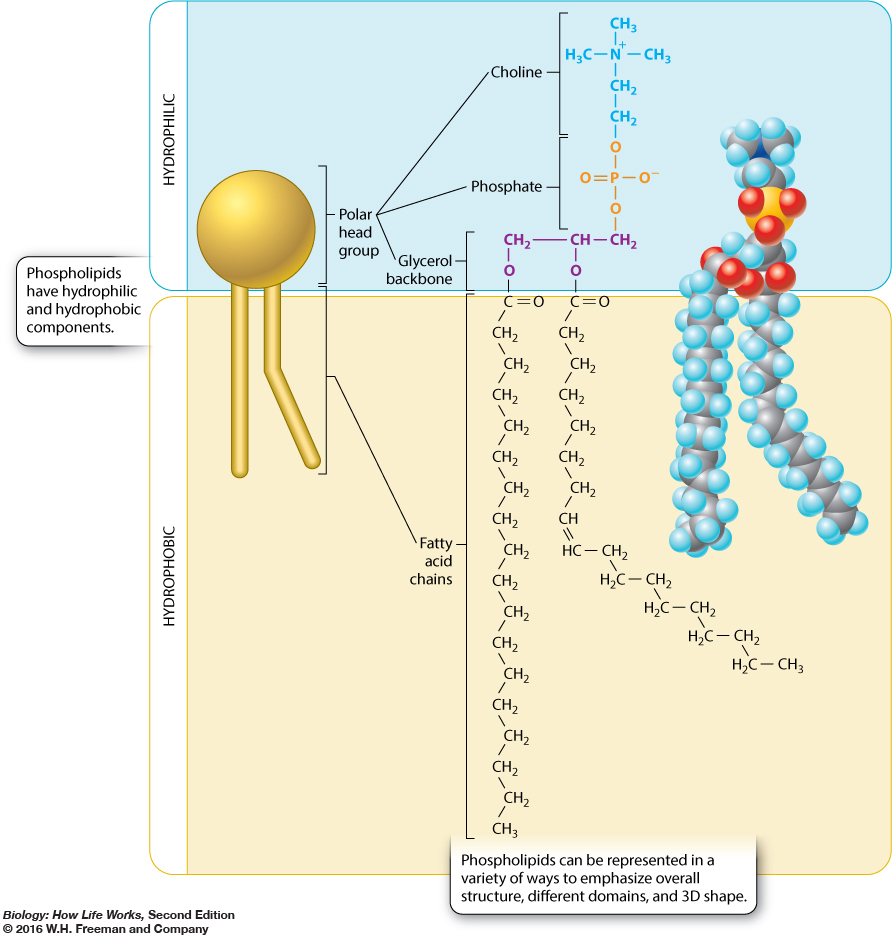
This unique combination of hydrophilic and hydrophobic properties makes phospholipids amphipathic, which is just a fancy way of saying "having both water-loving and water-fearing parts." It’s like being a superhero with two distinct powers! This amphipathic nature is the key to their awesomeness.
Because of this duality, when phospholipids are surrounded by water, they spontaneously arrange themselves into structures like micelles (tiny balls with the tails tucked inside) or, more importantly, lipid bilayers (two layers of phospholipids arranged tail-to-tail, with the heads facing outwards towards the water). Think of a sandwich, with the bread (hydrophilic heads) representing the watery environment and the filling (hydrophobic tails) representing the oily inside.

These lipid bilayers are the foundation of all our cell membranes! They act like a protective barrier, keeping the good stuff in and the bad stuff out. Without phospholipids, our cells would just dissolve into a soupy mess. So, the next time you're enjoying a delicious avocado (rich in fats!), remember those amazing phospholipids working hard to keep you alive and kicking. They're the unsung heroes of your cellular universe!
Remember, phospholipids are not just building blocks; they are the architects of life, structuring and protecting every cell in your body. Go give one a high-five (in your imagination, of course)!