
Is 15 A Composite Or Prime Number
Hey friend! Ever find yourself staring blankly at a number, wondering if it's a secret agent in disguise (a prime number, of course!) or just a regular Joe (a composite number)? Today, we're cracking the case of the number 15. Is it prime? Is it composite? Let's dive in, shall we?
Prime Time: The Exclusive Club
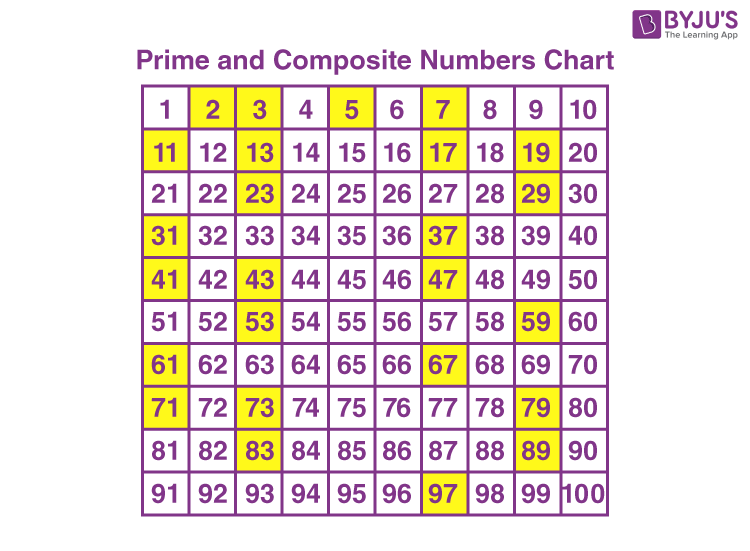
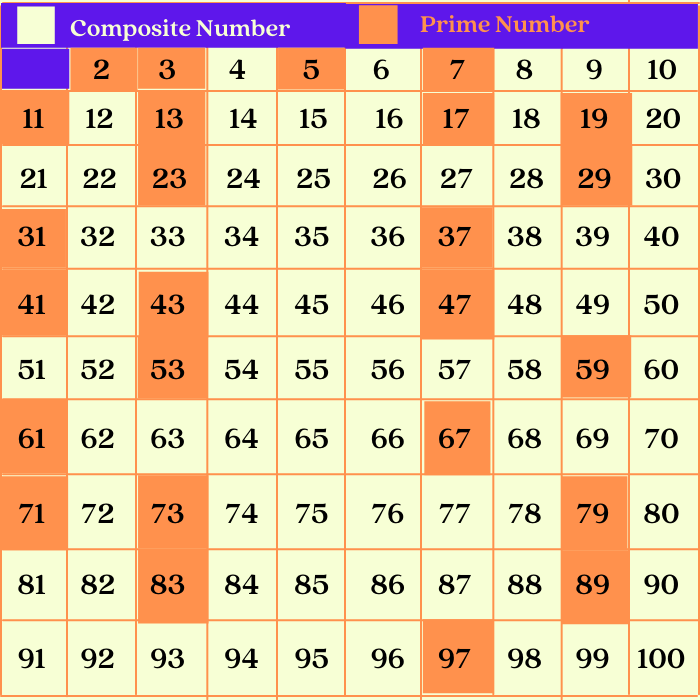
First, let's quickly recap what these terms even mean. Think of prime numbers as the VIPs of the number world. They're super exclusive. They can only be divided evenly by two numbers: 1 and themselves. That's it! No other secret admirers allowed. Examples? 2, 3, 5, 7, 11… They're all fiercely independent.
Imagine a bouncer at a club only letting in people who perfectly match their ID (divisible by 1 and themselves!). Strict, right?
Must Read
Composite Crew: The Party Animals
Now, composite numbers? They're the life of the party! They're perfectly happy being divisible by more than just 1 and themselves. They're social butterflies, always making new friends (factors). Think of 4 (divisible by 1, 2, and 4), 6 (divisible by 1, 2, 3, and 6), and so on. The more the merrier for these guys!
They're like the people who bring extra chips and dip to the party. Always willing to share! They're divisible by more than 1 and themselves, meaning they have more than two factors.

So, What About 15? The Big Reveal!
Okay, drumroll please… 🥁 Is 15 prime or composite? Let's put on our detective hats and investigate.
We know 15 is divisible by 1 and 15 (every number is!). But is there anything else? Hmmm…
Aha! 15 is also divisible by 3! And 5! Boom! Case closed.

15 is divisible by 1, 3, 5, and 15. That's four factors! Way more than just the required two for prime numbers.
Therefore, 15 is a composite number! It's officially part of the party crew.
Why This Matters (and Why It Doesn't… Too Much!)
You might be thinking, "Okay, cool. But why does any of this matter?" Well, understanding prime and composite numbers is actually fundamental to lots of mathematical concepts, like factoring, fractions, and even cryptography (secret codes!).
![Is 15 a Prime Number or Composite Number [Why & Why not Detailed Guide]](https://images.examples.com/wp-content/uploads/2024/03/Is-15-a-Prime-Number.png)
But honestly? Even if you never use this information again, knowing a little bit about numbers is just plain interesting. It's like understanding a tiny piece of the universe's code. Plus, you now have a fun fact to bust out at your next party. "Did you know 15 is a composite number?" Instant conversation starter! (Okay, maybe not instant. But still!)
Factor Fun: Let's Break it Down
Since we're on a roll, let's quickly break down 15 into its prime factors. This is called prime factorization, and it's like taking a composite number and finding out which prime numbers multiplied together make it.
For 15, the prime factors are 3 and 5. Because 3 * 5 = 15. Ta-da! We've successfully deconstructed 15 into its prime building blocks.
This is useful for simplifying fractions and other more advanced calculations.
Parting Words and a Big Number Hug
So, there you have it! 15 is officially a composite number, a social butterfly of the number world. You've now added another cool fact to your repertoire and maybe even learned something useful along the way.
Remember, whether you're a prime number (strong and independent) or a composite number (a social connector), you're important and valuable in your own way. Just like in math, diversity makes the world a much more interesting place! Now go forth and conquer, my friend, armed with the knowledge that 15 is, indeed, composite! Keep exploring, keep learning, and keep smiling!