
Index Of Refraction For Diamond
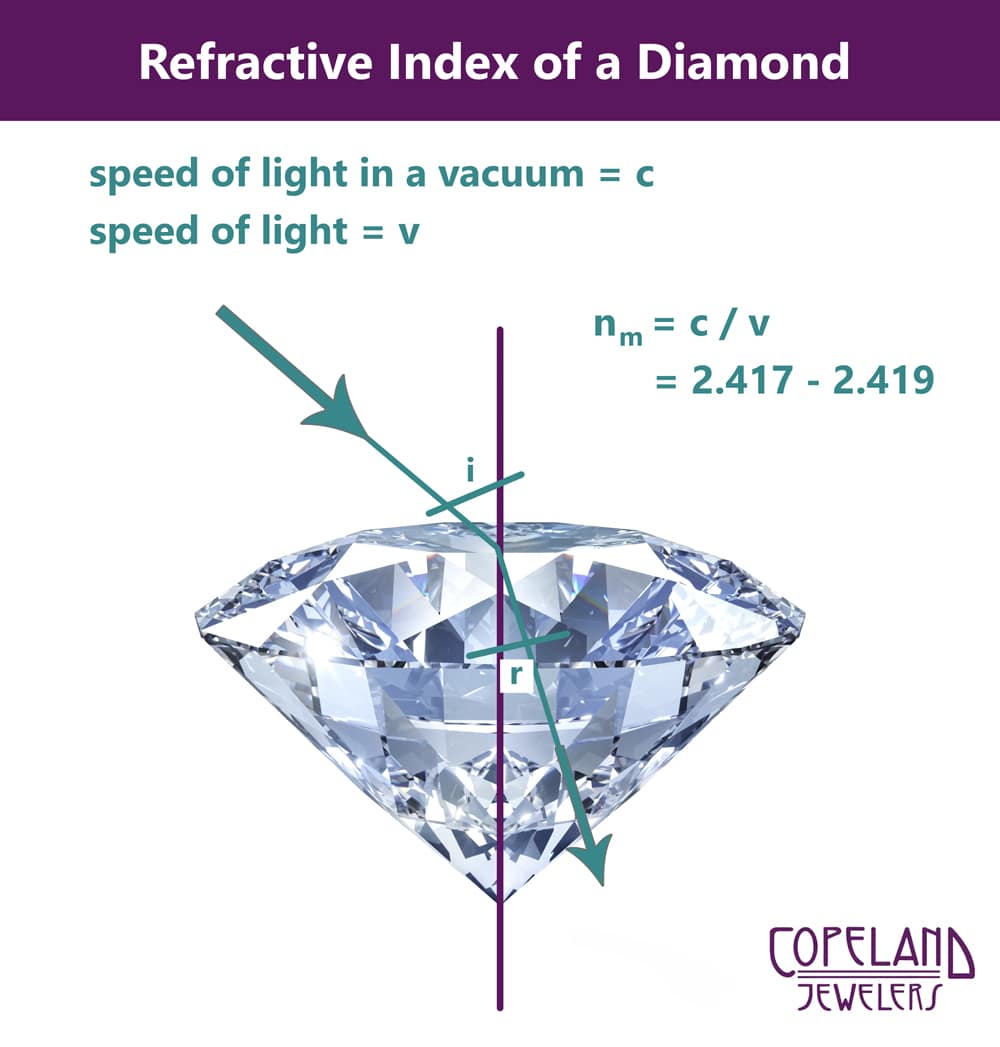
Have you ever stared at a diamond and wondered what makes it so sparkly? It's more than just good polishing! A big part of the magic comes down to something called the index of refraction. It’s a fancy term, but the idea is surprisingly simple.
Think of light like a bunch of tiny, speedy race cars. When light travels through air, it zooms along at top speed. But when it hits something like a diamond, it suddenly slows down.
That "slow down" effect is what the index of refraction measures. It's basically a ratio: how much slower light travels in a material compared to how fast it travels in a vacuum (empty space). Diamonds have a really high index of refraction.
Must Read
What's so special about a high index?
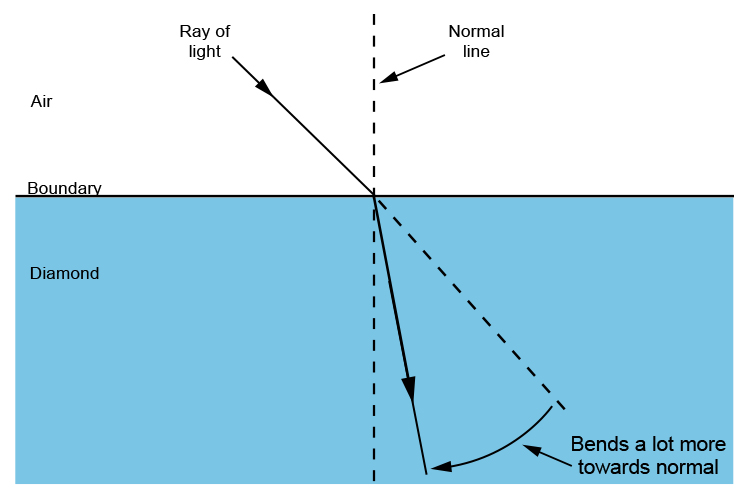
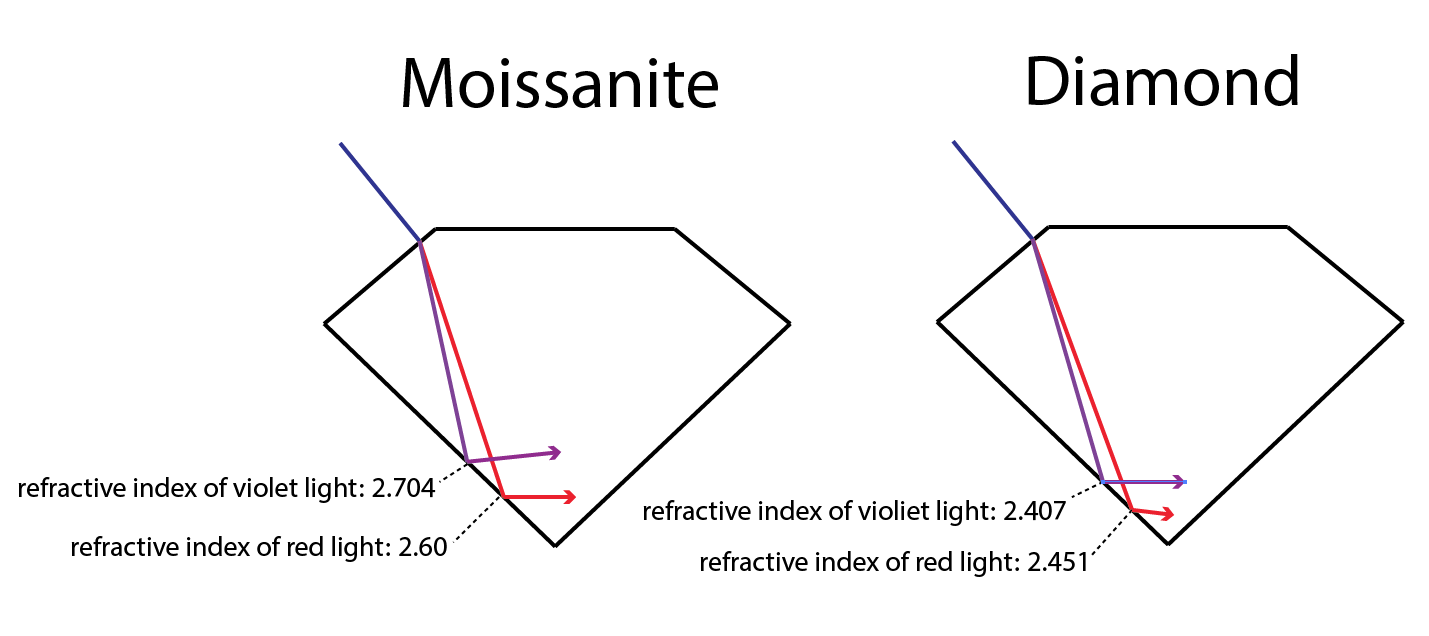
A diamond's high index of refraction (around 2.42) is what makes it a light-bending superstar! It means light gets significantly slowed and bent as it enters the gem. This bending is called refraction.
Imagine tossing a ball straight into a swimming pool. It keeps going. Now, toss it at an angle. It changes direction! Light does the same thing when it enters a diamond at an angle.
And all that bending and slowing down creates a dazzling display. That’s where the sparkle comes from! It's like a tiny, internal funhouse mirror for light.
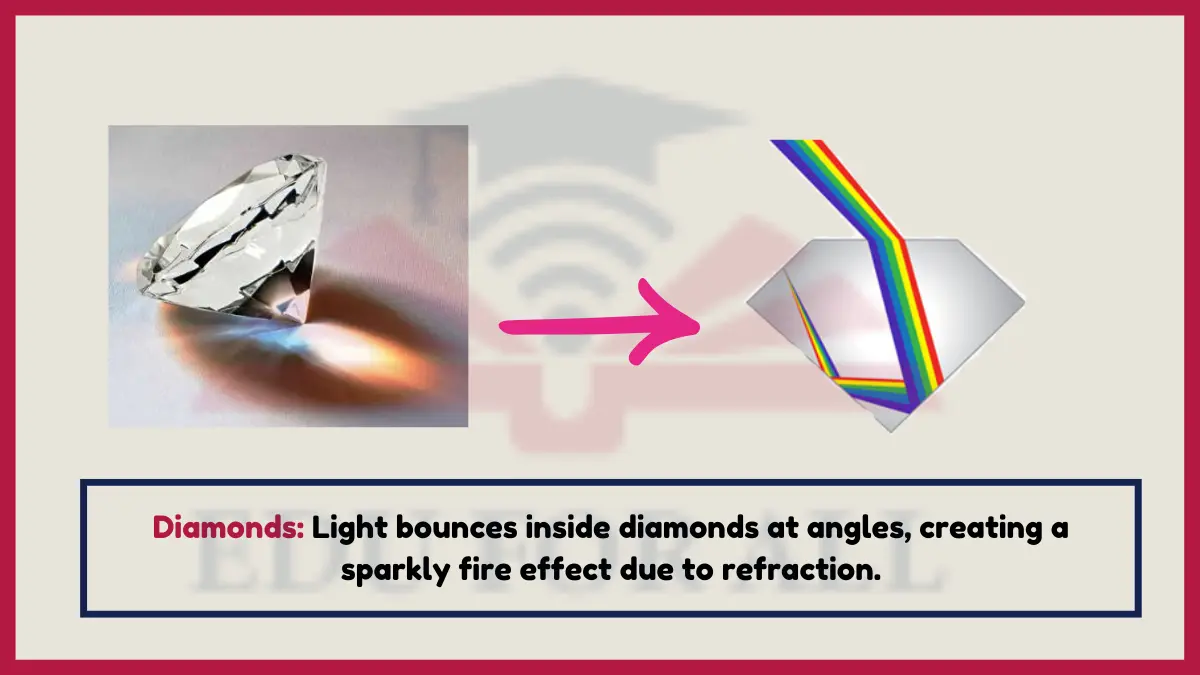
The Bouncing Act: Total Internal Reflection
Diamonds aren't just good at bending light in. They're also great at keeping it trapped! This is due to something called total internal reflection.
Think of it like this: light enters the diamond, bends, and then hits another internal surface. If the angle is steep enough, instead of escaping, it bounces right back inside! It's like a secret, light-only disco happening inside the gem.
This bouncing around happens multiple times before the light finally exits. Each bounce adds to the brilliance. That's why well-cut diamonds sparkle so intensely.
Cut Matters!
The cut of a diamond is crucial for maximizing total internal reflection. Expert cutters carefully calculate the angles of each facet. This ensures that light bounces around as much as possible before exiting.
A poorly cut diamond might let too much light escape from the bottom. This makes it look dull and lifeless. But a well-cut diamond is a masterpiece of light management!
The cut utilizes the index of refraction to its full potential. It transforms a rough stone into a fiery beacon.
Why Diamonds Shine Brighter
So, why do diamonds shine more than, say, a piece of glass? Glass also refracts light, but its index of refraction is much lower (around 1.5). This means less bending and less internal reflection.
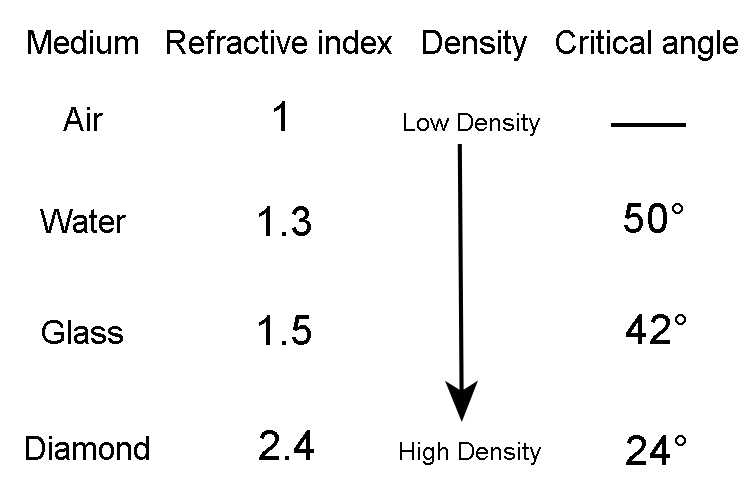
Compared to glass, diamonds bend the light more and trap it for longer. This creates that intense sparkle we all adore. It's like comparing a gentle stream to a raging waterfall of light!
The combination of a high index of refraction and skillful cutting makes all the difference. The result is a gem that captures and unleashes light in a breathtaking way.
More Than Just a Pretty Face
The index of refraction isn't just about making things pretty. It has important applications in science and technology too! It's used in lenses, fiber optics, and many other optical devices.
Understanding how light behaves as it passes through different materials is essential for creating all sorts of innovations. From microscopes to telescopes, we rely on refraction every day.
Diamonds, with their extreme refractive properties, continue to inspire and intrigue scientists and engineers. They serve as a reminder of the amazing ways light can interact with matter.
Go Explore!
Next time you see a diamond, take a closer look. Think about the amazing journey of light as it enters, bends, bounces, and finally emerges. That index of refraction is the key to all the fun!
It's a simple concept that unlocks a world of beauty and wonder. So, go out there and explore the fascinating world of light and refraction!
You might just find yourself falling in love with the science behind the sparkle. Maybe even start your own gem collection!
"Diamonds are a girls best friend" - Marilyn Monroe