
How To Open A Door Lock Without A Key

Ever had that heart-stopping moment? You know, the one where you reach for your keys, and... poof... they’re nowhere to be found? Or worse, they’re sitting smugly on the coffee table inside the very room you’re locked out of? Don't worry, friend, we've all been there. It’s a classic move by the universe to test our patience, and maybe, just maybe, our inner MacGyver.
Before we dive into our secret agent training, let’s get something super important straight: this article is for emergencies at your own place! We're talking about getting into your own bathroom when little Timmy locked himself in (again!), your bedroom where your phone is singing its alarm, or a simple privacy lock on a utility closet. We are not advocating for breaking into Fort Knox, your neighbor’s prize-winning petunias shed, or anywhere you don't belong. Got it? Good! Now, let’s unlock some knowledge!
The Credit Card Tango: For Spring Latches
This is probably the most famous "no key" trick, straight out of a movie scene! It works wonders on doors with a spring latch – that little angled piece of metal that springs out when the door is open. Think bedroom doors, older apartment doors, or internal office doors.
Must Read
What you need: A sturdy, flexible piece of plastic. An old loyalty card is perfect; you don’t want to bend your actual credit card and ruin your chances of ordering late-night pizza. A laminated ID card can also work in a pinch!
How to do it:
- First, identify the gap between the door and the frame.
- Wedge your plastic card into this gap, above the latch, with the card angled downwards towards the doorknob.
- Now, here’s the crucial bit: apply pressure, wiggling the card downwards and towards the door frame. You're essentially trying to "ramp" the angled latch back into the door.
- At the same time, jiggle the doorknob and maybe even push or pull the door slightly. With a bit of finesse and a prayer to the Lock Gods, you should feel the latch retract and the door spring open!
It might take a few tries, so don't give up! Persistence is key (pun absolutely intended!).

The Bobby Pin/Paperclip Ballet: For Simple Pin Tumblers or Privacy Knobs
Feeling a bit like a spy? Good, because this one will make you feel like James Bond… or at least like you’ve watched a lot of YouTube tutorials. This method is often effective for those interior doors with a small hole on the outside of the doorknob – these are typically privacy locks.
What you need: A bobby pin (the wavy kind is best!) or a sturdy paperclip. Two, if you’re feeling ambitious.
How to do it:
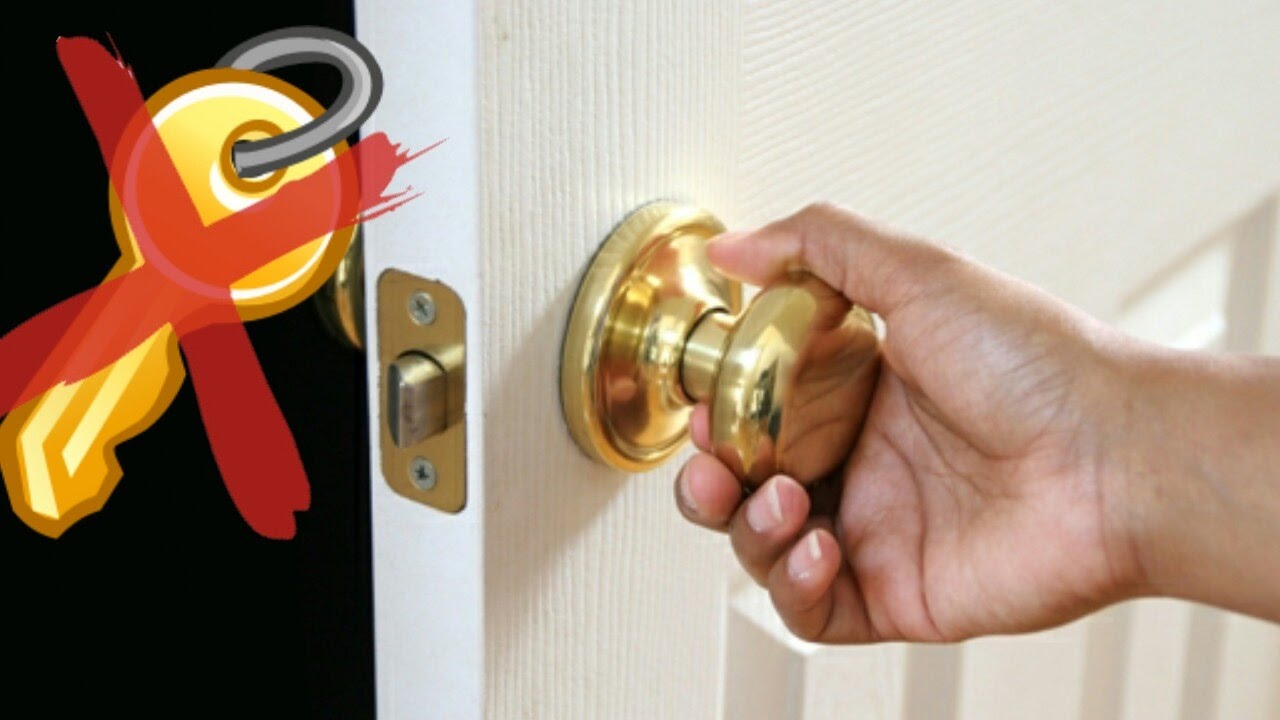
- First, unravel your bobby pin or paperclip. You want one piece straight and one bent into a slight hook at the end (this will be your "pick"). If you have a second, bend it into an "L" shape (this will be your "tension wrench").
- For privacy locks with a hole: Simply insert the straight part of the bobby pin (or paperclip) into the small hole on the doorknob. Push it straight in firmly. You’re usually pushing a release button or lever inside. You should hear a click, and the door should open! Voilà!
- For more basic pin tumbler locks (like older interior doors): This is where the two tools come in. Insert the "L" shaped tension wrench into the bottom of the keyhole and apply slight, consistent turning pressure in the direction you'd turn the key. Then, insert your hooked "pick" into the top part of the keyhole. Gently feel around for the pins and try to "set" them one by one by lifting them until you hear a tiny click. This takes practice and a gentle touch, so don't get discouraged if it doesn't work right away!
Remember, this isn't for high-security locks. If it's your front door, please call a professional locksmith – they’re the real superheroes!
The Screwdriver/Coin Stealth: Another Privacy Knob Trick
This method is super similar to the bobby pin trick for privacy knobs but uses a slightly different tool.
What you need: A flathead screwdriver (the smaller the better) or a coin (like a dime or a penny).
How to do it:
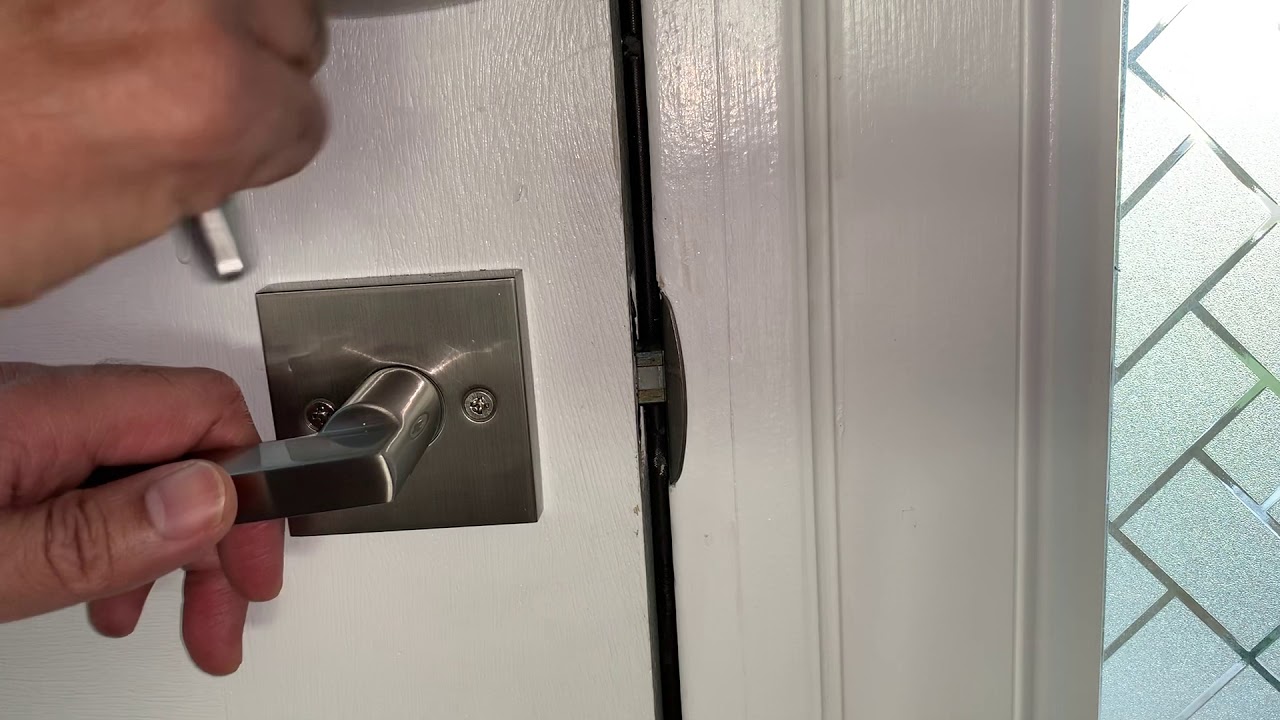
- Look for that small hole on the exterior doorknob.
- Insert the flathead screwdriver or the edge of your coin into this hole.
- Twist or push firmly. Just like with the bobby pin, you’re hitting an internal release mechanism.
Often, these holes are actually designed for this very purpose – quick unlocking in case of an emergency (or a mischievous toddler!). So, no need to feel like you're doing anything dodgy here!
The Good Old "Jiggle & Push"
Sometimes, the simplest solution is the best. Locks can get sticky, mechanisms can be temperamental, or maybe, just maybe, you didn't quite turn the handle enough when you thought you locked it.
What you need: Your own two hands, a bit of shoulder, and a positive attitude.

How to do it:
- Firmly push or even give a gentle shoulder nudge to the door, right near the lock.
- While pushing, jiggle the doorknob up, down, and all around.
- Try twisting the knob with a bit more force than usual.
You’d be surprised how often this "classic move" actually works. It’s the door equivalent of turning your TV off and on again when it freezes!
A Final Friendly Word (Seriously!)
While these tricks can be lifesavers in a pinch, remember to always prioritize safety and legality. If you're dealing with a high-security lock, a damaged door, or if you're ever in doubt, the smartest and safest thing to do is call a professional locksmith. They have the right tools and expertise to get you in without causing damage.
So, there you have it! A few clever tricks up your sleeve for those "oops, keys are inside" moments. No need to panic, no need to climb through a window (unless you really want to tell that story at parties). With a little patience, a plastic card, or a bobby pin, you can often outsmart that stubborn door. You’re smarter than that lock, my friend! Now go forth and conquer... responsibly, of course! And don't forget where you put those keys next time!