
How To Calculate Electrical Energy Consumption

Ever stared at your electricity bill like it’s some ancient scroll written in a forgotten language, wondering how on earth you managed to power a small city last month? You’re not alone! It’s one of those mysteries of modern life, right up there with "where did that sock go?" or "why did I open the fridge again?" But fear not, intrepid energy detective! Calculating your electrical energy consumption isn't rocket science, and it can actually be quite fun – like solving a mini puzzle that saves you cash.
Think of it this way: your appliances are like tiny, electricity-munching pets. Some are fluffy kittens, barely sipping juice, while others are full-grown lions, roaring through the kilowatts. And just like you want to know what your pet is eating, you probably want to know what your gadgets are devouring. Let’s demystify that electricity bill together, without breaking a sweat or needing a degree in advanced physics.
The Big Reveal: It's Simpler Than You Think!
At its heart, calculating energy consumption boils down to one simple idea: how much power something uses and for how long it uses it. Imagine you have a tiny engine. The "power" is how strong that engine is, and "time" is how long you leave it running. The more powerful the engine or the longer it runs, the more fuel it burns. Easy peasy!
Must Read
The basic formula looks like this:
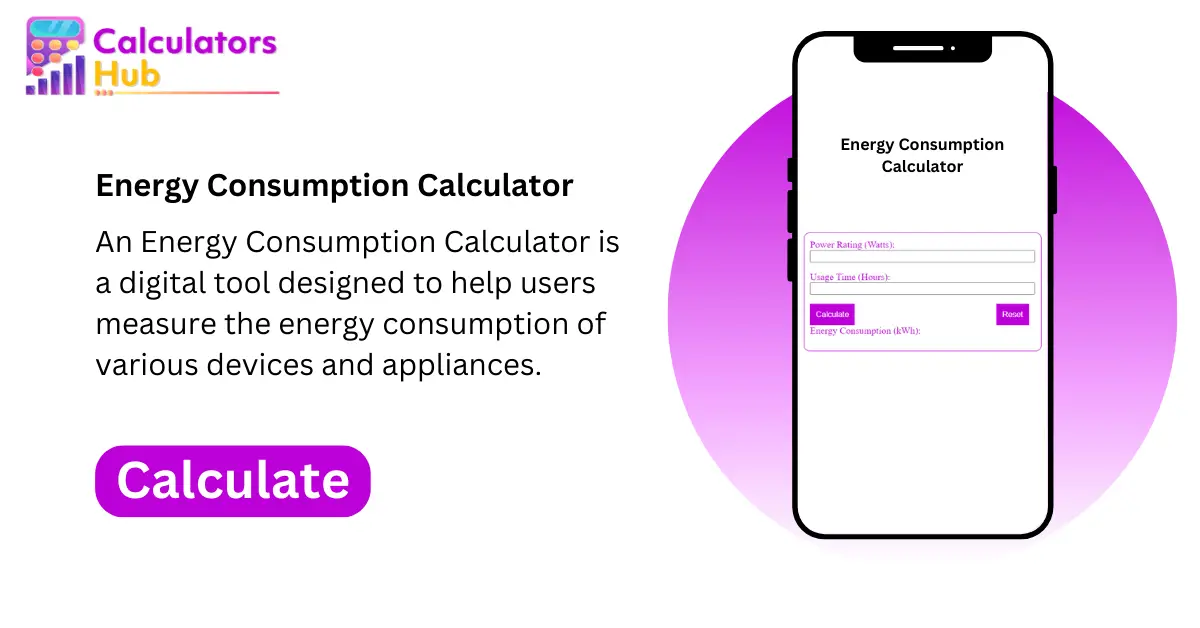
Power (Watts) x Time (Hours) = Energy (Watt-hours)
Don't let the technical terms scare you. We'll break them down. Think of Watts as the appliance's "thirst level" and Hours as "how long it's been guzzling."

Step 1: Unmasking the Power Hogs (Watts)
Every appliance has a Power Rating, usually measured in Watts (W) or Kilowatts (kW). This is like its muscle power or how much effort it puts in. A little LED light bulb might be a 9W featherweight, while your hairdryer could be a 1500W beast, flexing hard for a few minutes. Your fridge? It's probably a steady, low-level hummer, often around 100-200W, but it runs all the time!
Where to find this magical number?
- Look at the appliance itself: Many have a sticker or label on the back or bottom.
- Check the user manual: If you still have it, bless your organized soul!
- A quick Google search: " [Appliance Name] wattage" usually does the trick.
- Wattage meter (kill-a-watt): For the truly dedicated energy sleuths, these gadgets plug into your outlet and tell you exactly what an appliance is drawing in real-time. Super handy!
Step 2: Clocking the Time (Hours)
This is where your inner detective skills come into play. How long is that light on? How many hours a day do you game on that powerful PC? How long does your AC blast? This can be an average or an educated guess. If you're like me, you might just have to feel it out. "Hmm, the TV is probably on for about 4 hours in the evening, plus 2 hours of background noise during the day."
For something like a refrigerator, remember it doesn't run constantly. It cycles on and off to maintain temperature. A good rule of thumb for fridges is to estimate it's actively running for about 8 hours out of 24, though this can vary wildly based on how often you open it (and stare blankly inside).
Step 3: The Magical Conversion (to kWh)
Once you have your Watts and Hours, multiply them together. You’ll get Watt-hours (Wh). But your electricity bill speaks a different language: Kilowatt-hours (kWh). "Kilo" just means a thousand. So, to get from Watt-hours to Kilowatt-hours, you simply divide by 1000.
Watt-hours / 1000 = Kilowatt-hours (kWh)
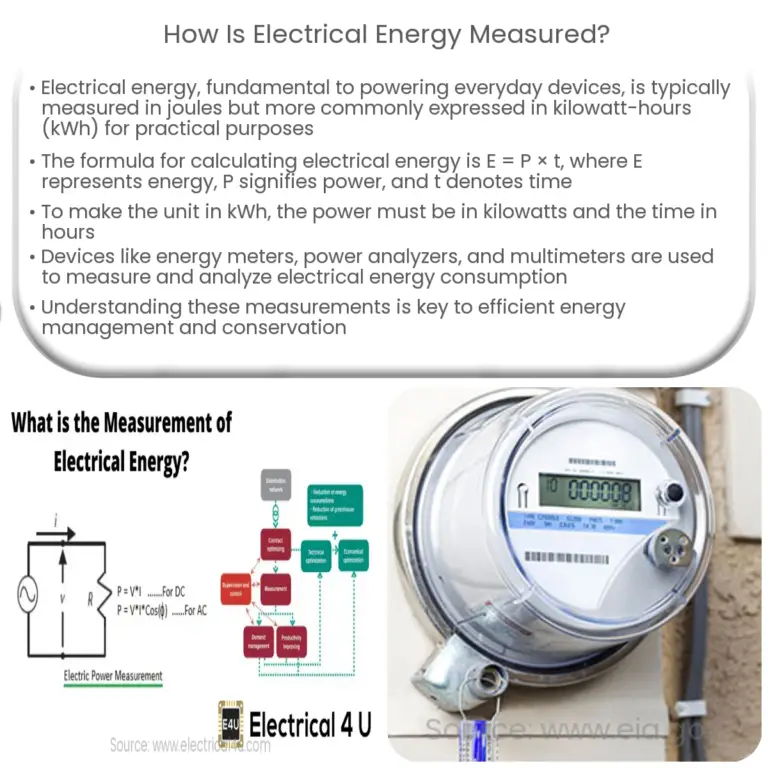
So, if your 100W light bulb is on for 10 hours, that's 100W x 10h = 1000 Wh. Divide that by 1000, and voilà! That's 1 kWh. Easy, right?
This kWh is the unit your power company uses to charge you. Think of it as the "scoop" of electricity you're buying.
Step 4: The Dollar Sign Finale (Cost)
The final step is to figure out the actual cost. Your electricity bill will show you the rate per kWh. It might vary by time of day or season, but there's usually an average rate. Let's say it's $0.15 per kWh.
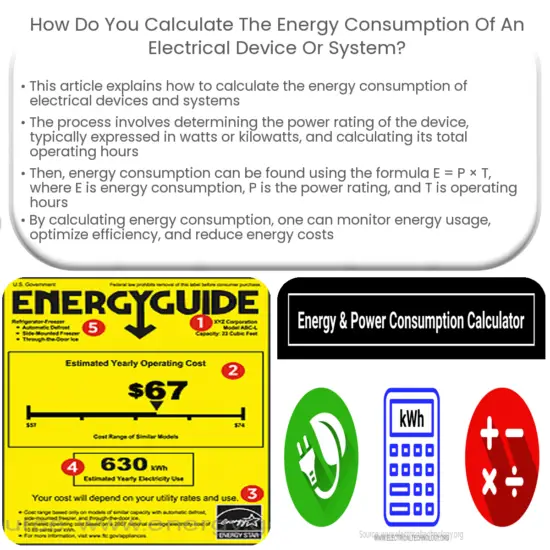
Total kWh x Rate per kWh = Cost
Using our light bulb example: 1 kWh x $0.15/kWh = $0.15. So, that light bulb costs you 15 cents for 10 hours of illumination. Not bad for a light bulb, but imagine a dozen of them, plus a gaming PC, plus the fridge, plus the AC... It adds up faster than spilled glitter!
Why Bother, You Ask?
Beyond satisfying your inner detective, understanding your energy consumption is like having a superpower. You can spot the hidden energy vampires, those old appliances secretly sucking juice while you sleep. You can make informed decisions about buying new, more efficient gadgets. You can even predict your bill before it arrives, which is a surprisingly soothing feeling.
Next time that mysterious bill arrives, you won’t just sigh and pay it. You’ll have a newfound understanding of where your money is going, and more importantly, where you can reel it back in. Go forth, energy consumer, and conquer that meter!