
What To Do If Your Carbon Monoxide Alarm Beeps
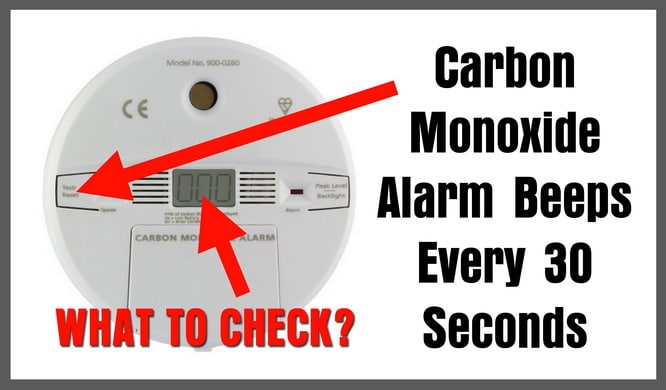
Alright, picture this: You’re chilling, maybe binging your favorite show, or perhaps attempting to conquer that laundry mountain, when suddenly… BEEP-BEEP-BEEP! Your carbon monoxide alarm decides it’s time to throw a sonic tantrum. Your heart jumps, your cat probably judges you, and you’re left thinking, "Uh oh, what fresh alarm-related nightmare is this?!"
Don't panic! Well, okay, maybe a tiny bit of "oh no!" is natural. But mostly, don't panic. This isn't a pop quiz, and you're not going to fail. We're going to walk through this together, like two incredibly calm, incredibly witty friends. Consider me your friendly neighborhood alarm-whisperer.
First Things First: Your Alarm is YELLING!
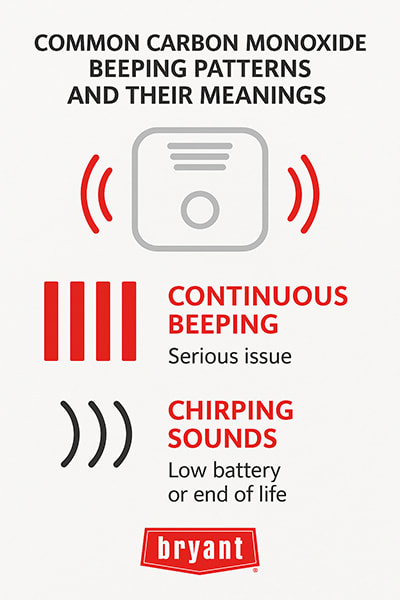
If your carbon monoxide (CO) alarm is letting out a loud, continuous, or specific pattern of beeps (check your manual, but usually it's a series of four beeps followed by a pause), it’s not asking for a cookie. It's not suggesting you redecorate. It's telling you, in no uncertain terms, that it might have detected the presence of carbon monoxide. And that, my friend, is a signal to take seriously.
Must Read
Think of it like your house itself is yelling, "Heads up! Something's not right!" You wouldn't ignore your house, would you? It’s where all your snacks live!
Step 1: Get Out, Pronto! (Seriously, Like, Yesterday)
This is the golden rule, the absolute numero uno, the don't-pass-go-don't-collect-200-dollars step. As soon as that alarm goes off with its serious "I mean business" beep, you need to get everyone out of the house immediately. That means you, your significant other, the kids, your dog, your grumpy parrot – the whole crew. Leave the door open if you can, to help air things out, but don't dawdle.

Carbon monoxide, often called the "silent killer," is a colorless, odorless, tasteless gas. You can't see it, smell it, or taste it. It’s like an invisible ninja, but way less cool and way more dangerous. So, don't try to be a detective and sniff around. Just vroom, out the door! Safety first, always.
Step 2: Dial "Oh Snap!" (Also Known as 911)
Once you're safely outside and a good distance from your home (think neighbor's yard, not just your porch), the next move is to call your local emergency services. In many places, that's 911. Explain that your carbon monoxide alarm is beeping and you've evacuated the house. They are the experts, the superheroes with the fancy detection equipment, and they'll know exactly what to do.
And here's a playful aside: even if you feel a bit silly calling for what turns out to be nothing, remember: better safe than sorry! Nobody ever got in trouble for being too cautious when it comes to invisible, deadly gases. You're basically a proactive safety champion!

Step 3: Patience, My Friend (Don't Be a Hero!)
Resist the urge to pop back inside, even for "just a second" to grab your phone charger or that half-eaten bag of chips. Carbon monoxide poisoning can happen quickly and without obvious symptoms until it's too late. Symptoms can include headaches, dizziness, nausea, and shortness of breath – basically, feeling like you're coming down with a really bad flu. Which, for the record, is not a fun party trick.
Wait for the professionals to give you the all-clear before you re-enter your home. They have the right gear to determine if there's an actual CO leak and to find the source. Let them do their thing!
But Wait, What Even IS Carbon Monoxide?
Okay, super quick science lesson without the boring bits: CO is produced when fuels (like gas, oil, wood, charcoal, propane, kerosene) don't burn completely. Think furnaces, water heaters, gas ranges, fireplaces, and even your car running in an attached garage. A faulty appliance or poor ventilation can lead to dangerous levels of CO building up indoors.

It essentially sneaks into your bloodstream and prevents your red blood cells from carrying oxygen properly. Not a great look for your cells, or for you!
"Is it Just a Low Battery?" (The Million-Dollar Question)
Ah, the classic curveball! Many CO alarms also chirp when their battery is low or when they've reached the end of their lifespan (usually 5-7 years). However, these chirps are typically different from the emergency CO alarm pattern. A low battery usually means a single chirp every 30-60 seconds. An "end-of-life" signal can vary, but it's usually distinct from the urgent, continuous alarm for actual CO.
If your alarm is giving the full-blown, "we have CO!" alert pattern, always assume it's CO first. Don't try to troubleshoot the battery in that moment. Get out, call for help, then worry about replacing batteries once you're safely back inside and everything is clear.
Prevention is Your Superpower!
Being prepared means you're already halfway to superhero status!
- Test your alarms regularly: Most have a "test" button. Push it once a month!
- Replace batteries: Do it twice a year, maybe when you change your clocks for daylight saving time. Easy reminder!
- Replace the entire unit: CO alarms don't last forever. Check the "replace by" date on the back of your unit.
- Professional checks: Have fuel-burning appliances (furnace, water heater, etc.) inspected annually by a qualified technician.
You Got This!
So, there you have it! If your carbon monoxide alarm decides to get chatty, you now know exactly what to do. It might feel a bit scary in the moment, but by taking swift action, you're protecting yourself and your loved ones. You're not just a resident; you're a quick-thinking, safety-savvy, alarm-beating champion!
Now go forth, enjoy your home, and rest easy knowing you're prepared for anything. And maybe give that alarm a little mental pat on the back for doing its job. It's got your back, and now you know you've got this!