
How Do You Say Papa In Spanish

Ever wondered how to say "Papa" in Spanish? It's a simple question, but delving into the nuances of family terms in different languages is surprisingly rewarding! It offers a glimpse into the culture, the relationships, and even the sounds that shape a family's bond. Plus, if you're learning Spanish, even the smallest vocabulary additions can make a big difference in your understanding and fluency.
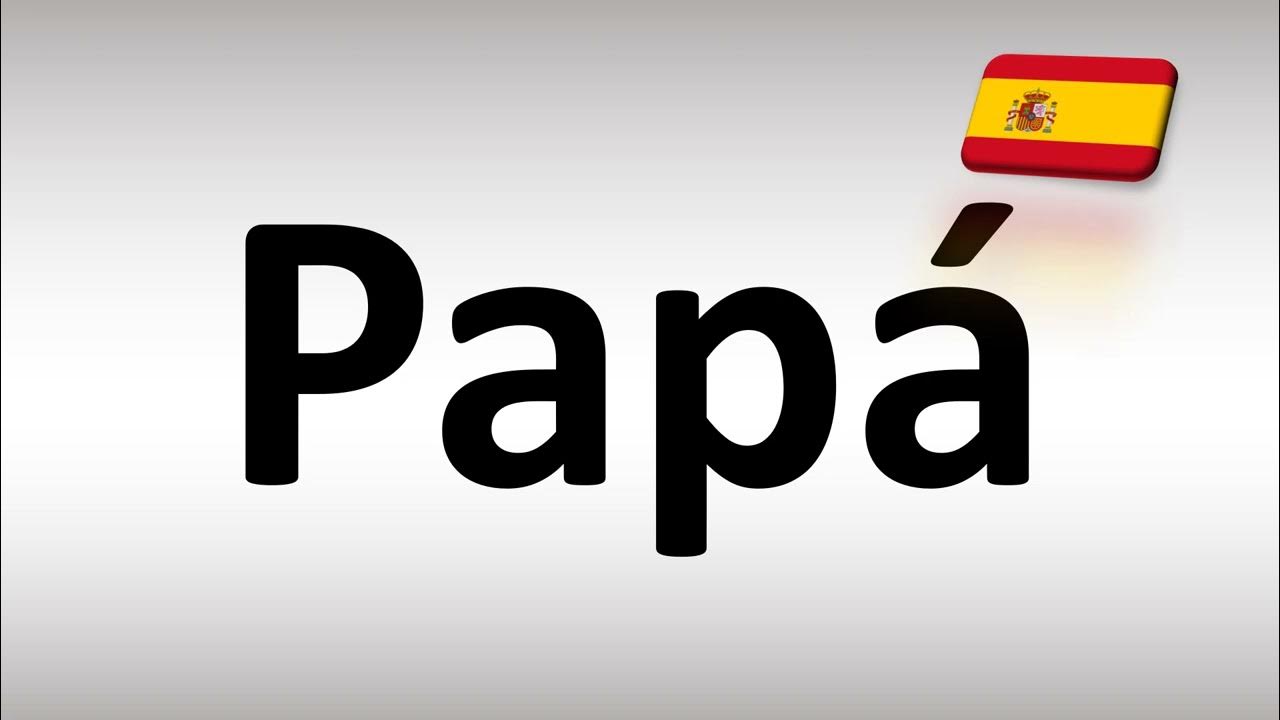
The most straightforward and commonly used translation of "Papa" in Spanish is, well, "Papá." Yes, it's almost the same, but that little accent mark over the second "a" is crucial. Without it, "papa" means "potato"! Imagine the confusion! So, pronunciation is key.
Why bother learning this seemingly simple word? Because language learning isn't just about memorizing complex grammar rules. It's about connecting with people and cultures on a more personal level. Knowing how to address a father figure in Spanish allows you to understand family dynamics in Spanish-speaking communities, appreciate literature and films from those cultures, and even connect with Spanish-speaking friends or family members more deeply.
Must Read
Think about how often "Papa" (or "Dad," "Father," etc.) comes up in daily conversation. We talk about our fathers, grandfathers, and father figures all the time! Being able to express these relationships in another language broadens your communication skills considerably. In education, learning family vocabulary, including "Papá," is often one of the first steps in Spanish classes, especially for younger learners. It’s relatable, easy to visualize, and provides a foundation for more complex sentence structures later on. For example, a child might learn to say, "Mi papá es alto," meaning "My dad is tall."
But "Papá" isn't the only option. Just like in English, there are variations and informal terms. For instance, you might hear "Papi," which is similar to "Daddy" or "Dad." It's often used as a term of endearment, especially by children or spouses. "Viejo" can also be used, though it's more informal and can even be slightly playful, similar to calling someone "old man" in English (use with caution!). It's always best to observe how native speakers use these terms to understand the connotations and appropriateness in different contexts.
So, how can you explore this further? Here are a few simple ideas:
- Listen to Spanish songs: Pay attention to how family members are addressed in the lyrics.
- Watch Spanish-language films or TV shows: Observe how characters interact with their fathers.
- Use language learning apps: Many apps include lessons on family vocabulary and pronunciation.
- Talk to a native speaker: Ask them about the different ways to say "Papa" and the nuances of each term.
Learning how to say "Papá" is more than just memorizing a word; it's about opening a window into a different culture and strengthening your connection with the Spanish language. So, embrace the accent mark, explore the variations, and enjoy the journey!


