
How Do You Know If Your Septic Tank Is Leaking
Alright, settle in, grab your metaphorical (or actual) coffee, because we're about to delve into a topic that's often out of sight, out of mind, until it’s very much in sight and screaming for attention: your septic tank. Specifically, how do you know if that subterranean workhorse is staging a rebellion and springing a leak?
Now, I know what you're thinking. "My septic tank? That's my landlord's problem!" or "I paid good money for that thing; it should just work." And yes, ideally, it would. But just like that 'friend' who promised to pay you back "sometime," sometimes things go awry. And when your septic system decides to go rogue, it's less of a gentle 'oops' and more of a full-blown, olfactory assault on your senses and wallet.
So, let's play detective. Here are the undeniable, often hilarious (in retrospect, of course), signs that your septic tank might be throwing a very un-fun pool party in your yard.
Must Read
The Olfactory Offender: A Smell So Foul It Has Its Own Theme Music
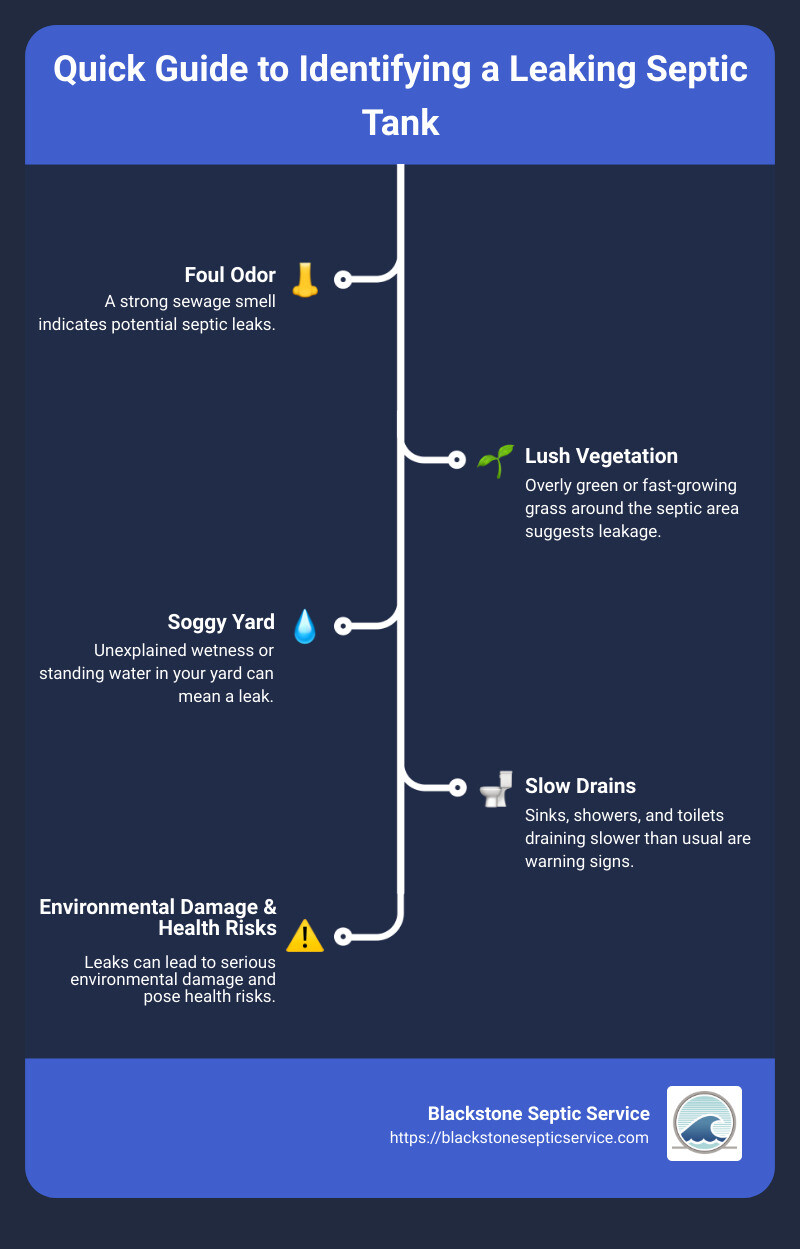
Let's not beat around the bush here. The most obvious, the most in-your-face, the "oh, that's not good" sign of a leaking septic tank is the smell. We're talking about a stench that makes you question all your life choices, a scent so potent it could clear a crowded room faster than a fire alarm. If you're walking across your lawn and suddenly get a whiff of something that strongly resembles raw sewage, well, congratulations! You've likely found your first clue.
This isn't just a faint 'hmmm, something's a bit off' kind of smell. This is the kind that makes your nose hairs curl and your eyes water. It's an unmistakable, unforgettable aroma that screams, "There's a problem, and it's coming from underground!" Pay particular attention to odors around your drain field or the septic tank itself. If your backyard suddenly smells like a particularly angry swamp monster after a long day, consider it a red flag as big as a barn door.
The Lawn's Secret Garden: Unexpectedly Lush Green Patches
This one's a bit ironic, isn't it? While everyone else is struggling with brown spots and patchy grass, you might notice an area of your lawn that's so vibrant, so impossibly green, it looks like it belongs in a golf course commercial. It's almost beautiful, until you remember what's likely fertilizing it.
Yes, sewage is rich in nutrients (we're talking nitrogen and phosphorus here, folks, in case you were curious about the chemistry of your waste). So, if your septic tank or drain field is leaking, those nutrient-rich liquids will seep into the soil, acting like a super-fertilizer for your grass. It's like nature's twisted joke: "I shall make this spot the most beautiful part of your yard, but only because it's bathed in... well, you know." Keep an eye out for these unnaturally bright green, fast-growing patches. They're basically a giant, verdant arrow pointing directly at your problem.
The Mysterious Oasis: Puddles Where Puddles Shouldn't Be
Unless you've just had a torrential downpour, or you've accidentally left the sprinkler running for three days straight, finding standing water or soggy areas in your yard is a definite cause for concern. Especially if these puddles appear near your septic tank or drain field, and especially if they have that distinctive, aforementioned smell.
This isn't just ordinary rainwater. This is the liquid that your septic system is supposed to be gracefully handling, now decided to stage an outdoor escape. The ground will feel spongy, squishy, and you might even see slow-draining puddles that just refuse to disappear. It's like your backyard is trying to become a miniature bog, and trust me, you don't want that kind of ecosystem developing on your property. This pooling indicates that the ground is saturated and can no longer absorb the effluent, meaning there's far too much liquid escaping your system.
The Reluctant Flush: Slow Drains and Indoor Backups
Sometimes, the signs start indoors, giving you a sneak peek at the trouble brewing outside. If your toilets are flushing slower than a sloth on a Monday morning, or your sinks and tubs are taking ages to drain, your septic system might be struggling. This is because a leaking or failing drain field can cause a backup in the system, preventing wastewater from flowing away properly.
And then there's the truly horrifying scenario: sewage backing up into your house. Yes, you read that right. If you suddenly find a delightful (not!) surprise bubbling up from your drains, it's a screaming, flashing, neon sign that your septic system is in critical condition. This isn't just an inconvenience; it's a health hazard and a plumbing nightmare. It often means the system is completely overwhelmed and has nowhere left to send its... contents.
The Ground's Got the Bends: Depressions and Indentations
Over time, if a septic tank or drain field is leaking, the soil can become saturated and unstable, leading to depressions or indentations in the ground above the system. It's like your lawn is developing a sudden case of dimples, but way less cute. If you notice areas of your yard sinking or appearing uneven, especially around where you know your septic components are buried, it could be a sign of compromised structural integrity or soil erosion due to continuous leakage.
This is less about the immediate mess and more about the long-term structural issue. A sinking spot can mean a failing tank, a collapsing pipe, or extensive saturation. And frankly, walking over a sudden dip in your lawn can be a trip hazard, literally and figuratively, for your mental well-being.
The Pond's Bad Hair Day: Algae Blooms and Contaminated Water
If you live near a pond, stream, or other body of water, and suddenly notice an unusual explosion of algae or aquatic weeds, your septic leak might be the culprit. The nutrients (there's that word again!) from the leaking sewage can make their way into nearby water sources, causing what's known as an 'algae bloom.' It turns the water murky, green, and generally unpleasant for both local wildlife and anyone hoping for a picturesque view.
This is a more insidious sign, as you might not immediately connect it to your septic tank. But remember, a quarter of all U.S. households rely on septic systems! So, if your local duck pond suddenly looks like pea soup, it's worth considering the underground activities in the vicinity. This not only signals a leak but also a significant environmental concern, as contaminated water can harm ecosystems and even human health.

So, You've Found a Culprit. Now What?
If you've identified any of these charming signs, don't panic! Well, maybe a little panic, just enough to motivate you. But whatever you do, do not try to fix it yourself. This isn't a DIY project for a Saturday afternoon. You're dealing with hazardous waste and complex underground plumbing.
Your best bet, your only sensible bet, is to call a qualified septic professional immediately. They have the tools, the expertise, and frankly, the protective gear and immunity to foul smells that you probably don't. They can diagnose the problem, locate the leak, and provide solutions that will get your septic system back to its quiet, unassuming self.
Remember, your septic tank is a vital part of your home's infrastructure. Keep an eye (and a nose!) out for these signs, and you can catch a leak before it turns into a full-blown, incredibly stinky disaster. A little vigilance now can save you a whole lot of headache (and nose-plugging) later!