
Hottest Temperature Ever Recorded In The Us
Alright, settle in, grab your favorite iced beverage – maybe even stick your head in the freezer for a bit – because we're about to talk about heat. Not just "oh, it's a bit toasty today" heat, or "my car seatbelt just branded me" heat. No, we're talking about the kind of heat that makes you question your life choices, melts your resolve, and probably evaporates your socks just by looking at them.
You know how we all complain about summer? How the AC just can't keep up, and you feel like you're constantly living in a sauna designed by a vengeful deity? Well, buckle up, buttercup, because the hottest temperature ever recorded in the U.S. makes your worst summer day look like a delightful stroll through an arctic wonderland.
The Day the Earth Sizzled
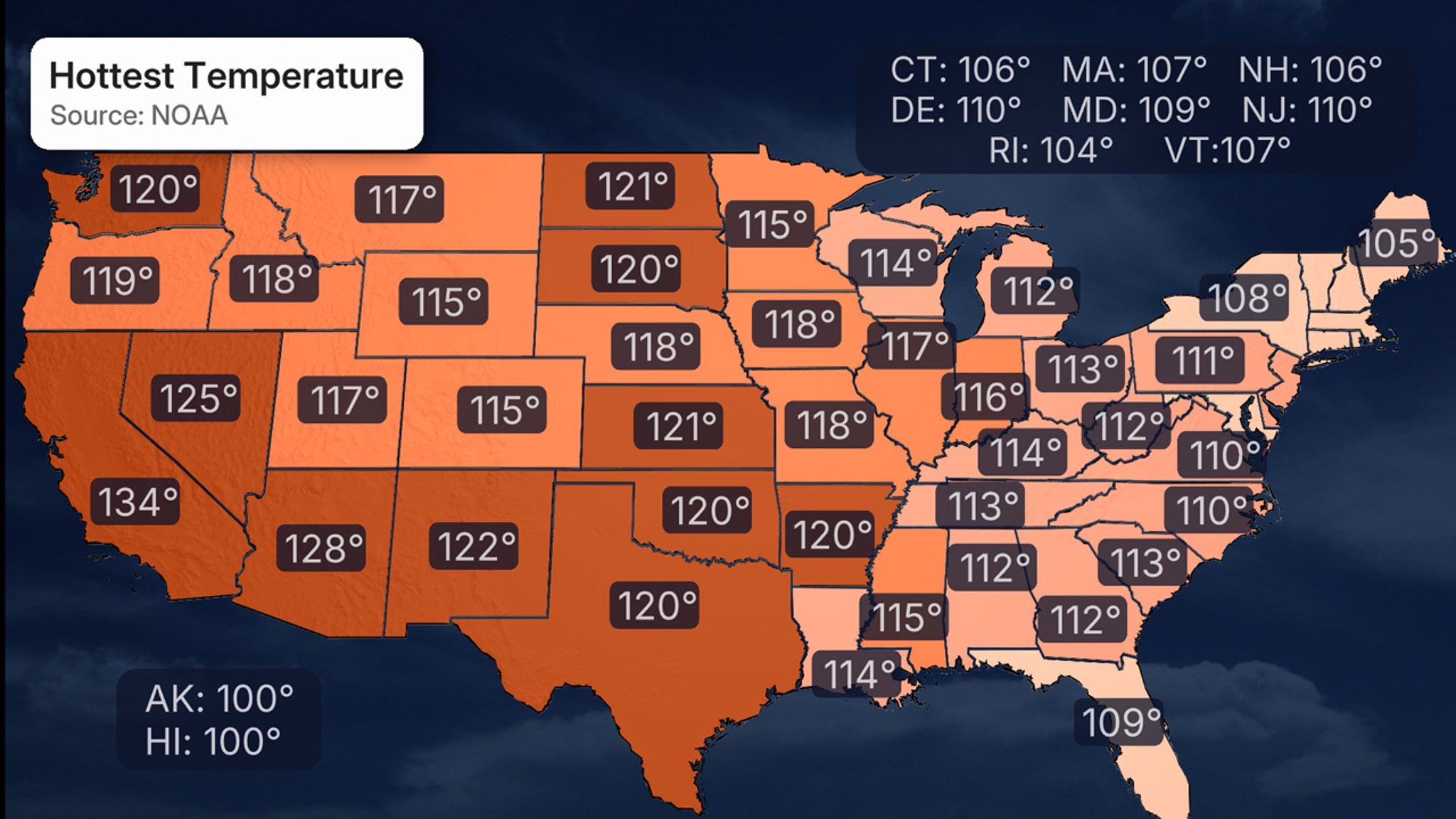
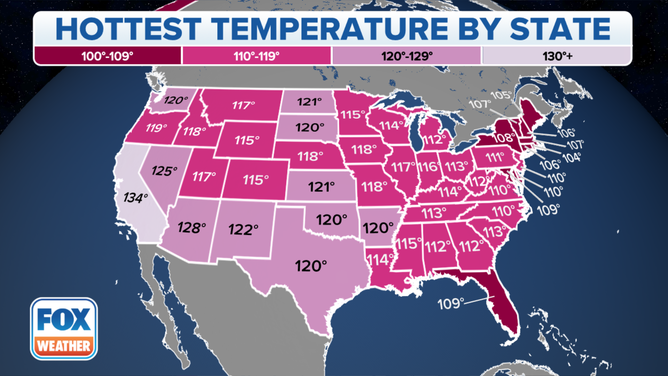
Let's cut to the chase, shall we? The mercury didn't just climb; it shot up like a rocket fueled by pure solar rage. On July 10, 1913, in a place aptly named Furnace Creek, nestled deep within California’s Death Valley, the temperature hit an astonishing, mind-boggling, reality-defying 134 degrees Fahrenheit (56.7 degrees Celsius). Yes, you read that right. One hundred and thirty-four degrees. That's not just hot; that's "I think my eyeballs are sweating" hot.
Must Read
Imagine it. No, really, try to imagine it. That's a temperature hot enough to cook a medium-rare steak on the hood of a car in about five minutes flat. Hot enough to make you spontaneously combust into a pile of confused, dehydrated dust. It's the kind of heat where stepping outside feels less like a breath of fresh air and more like opening a blast furnace with your face.
Why Death Valley? Because of Course.
Now, why Death Valley, you ask? Well, it's not called Pleasant Valley or Slightly Warm Valley Where We Have Delightful Picnics. Death Valley is a geological masterpiece of extreme. It's a long, narrow basin, 282 feet below sea level – making it the lowest point in North America. It's surrounded by tall, steep mountains that trap the heat like a giant, natural convection oven. The air is ridiculously dry, and clear skies mean the sun just bakes the ground all day long, turning the place into a giant solar collector. It's basically Mother Nature's personal hot plate.
When you hear the name Furnace Creek, you might think it's just a quaint, old-timey name. But oh no, my friend. It’s a descriptive warning label. A public service announcement masquerading as a place name. "Come to Furnace Creek!" it says. "Experience what it feels like to be a tiny crumb in a very large, very hot toaster!"
The Day Before Air Conditioning Was Cool
Think about this: 1913. No central air conditioning. No personal fans small enough to clip to your shirt. Heck, probably not even decent refrigerators to make ice. People in Furnace Creek that day were likely just... existing. Trying to prevent their organs from becoming slow-cooked pot roast. Their primary coping mechanism was probably "deep, existential dread" followed by "find shade, any shade." It makes you appreciate the hum of your AC unit just a little bit more, doesn't it?

For a long time, this record was actually a bit controversial. Another claimed record of 136°F from Libya in 1922 was often cited as the world's hottest. But, in 2012, meteorologists did some serious detective work and debunked the Libyan record, citing sensor issues and human error. So, guess what? Death Valley's 134°F isn't just the hottest temperature ever recorded in the U.S. – it’s currently recognized by the World Meteorological Organization as the hottest air temperature ever reliably recorded on Earth! Talk about a claim to fame! Or, perhaps, infamy.
Visiting the Inferno
Despite being literally named Death Valley and holding the record for the hottest place on Earth, people still visit! Thousands flock there every year, especially in the "cooler" months (which still means it's pretty darn warm). But some thrill-seekers do venture in during the summer, armed with gallons of water, specialized gear, and a healthy dose of perhaps questionable judgment.

If you ever find yourself drawn to this extreme landscape, heed the warnings. The park rangers aren't kidding when they say "travel prepared." They mean it. Don't go for a casual hike at noon in July. You'll become a modern art installation made of crispy human. Stick to air-conditioned cars, stay hydrated like your life depends on it (because it does!), and perhaps bring a small, personal cloud of mist for good measure.
So, the next time you're sweating through your shirt, complaining about the heat wave, just take a moment. Picture 134°F in Furnace Creek, Death Valley, on a long-ago July day. And then, politely thank your ceiling fan, your ice maker, and whoever invented the concept of air conditioning. Because those folks in 1913 were living through a historical, scorching moment that, frankly, none of us are truly equipped for. Unless you're a lizard. Or a rock. Or possibly a very determined ghost.
