
Find The Measure Of The Angle Indicated
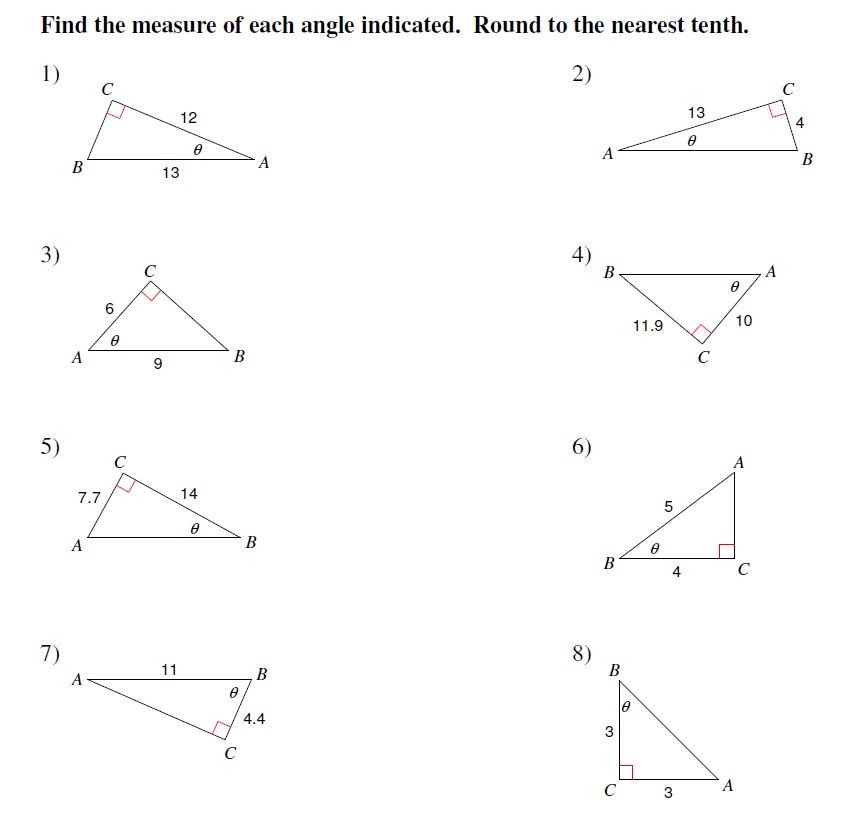
Alright, buckle up buttercups, because we're about to embark on a thrilling adventure! An adventure where we become angle-finding ninjas! Our mission? To find the measure of the indicated angle!
Meet Our Angular Friends
First, let's get acquainted with our cast of characters. We've got angles – those pointy things formed where two lines meet. Think of it like two roads merging into one slightly confusing intersection.
Some angles are small and sweet, like a tiny kitten's paw. Others are wide and grand, like a bald eagle's wingspan. But they all have one thing in common: we can measure them!
Must Read
The Mighty Degree
And how do we measure these angular marvels? With a magical unit called the degree! One full circle, if you can imagine spinning around until you're dizzy, is a whopping 360 degrees.
So, half a circle? That's a cool 180 degrees. A quarter of a circle? That's a right angle, a perfect 90 degrees! It's like slicing a pizza, except instead of pizza, we're dealing with angles.
Angle Clues and Secrets!
Now, the fun part! Finding those angles! It's all about detective work and using the clues given to us.
Often, we'll be given a diagram with some angles already labeled. These are our witnesses, ready to spill the beans on the missing angle's identity! Think of it like a math-themed whodunit!
Straight Line Shenanigans
One of our most reliable clues comes from the trusty straight line. A straight line is always 180 degrees.
If you have two angles that sit right next to each other on a straight line, like two grumpy cats sharing a sunbeam, they're called supplementary angles.

And guess what? Those supplementary angles always add up to 180 degrees! It's like a mathematical marriage made in heaven (or at least, on a straight line).
Let's say one angle is 60 degrees. To find the other angle, all we do is subtract 60 from 180. Voila! The missing angle is 120 degrees! Elementary, my dear Watson!
Right Angle Revelations
Another important clue comes from the right angle. Remember, that's the angle that's exactly 90 degrees, like the corner of a perfectly square picture frame.
If you have two angles that nestle together to form a right angle, they're called complementary angles. These are like two puzzle pieces that fit perfectly to complete a corner.
And, you guessed it, complementary angles always add up to 90 degrees! It's like a mathematical handshake of perpendicularity!
So, if one angle is 30 degrees, the other angle must be 60 degrees to make a perfect 90-degree right angle! It's all about teamwork, angle-style!
Vertical Angle Ventures
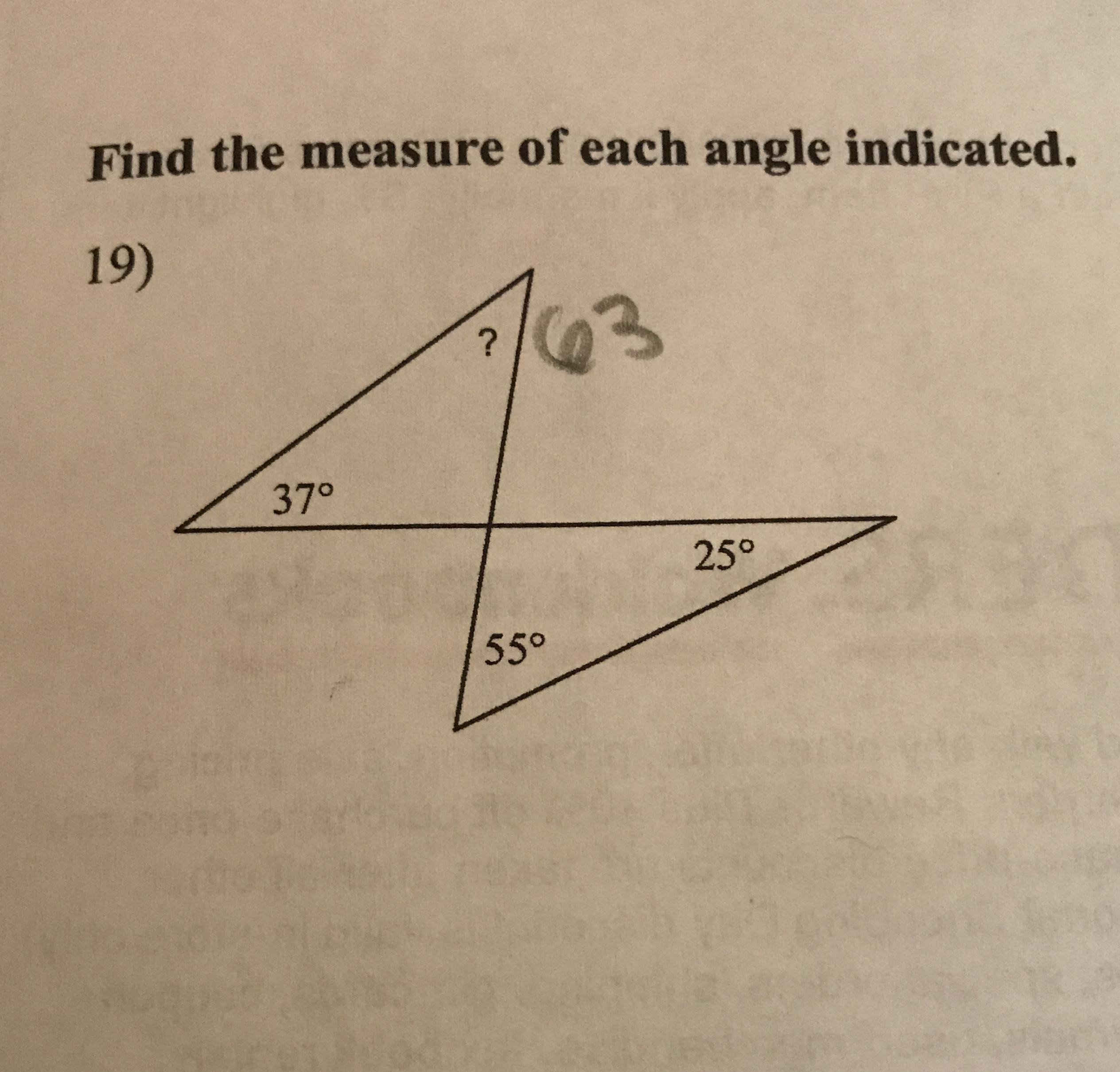
Now, for a bit of angle magic! Imagine two straight lines crossing each other, like crossing swords (safely, of course!).
Where those lines intersect, they form four angles. The angles that are directly opposite each other, like two people facing each other across a table, are called vertical angles.
And here's the super cool part: vertical angles are always equal! They're like twins, identical in every angular way!
If one vertical angle is 45 degrees, the angle directly opposite it is also 45 degrees! It's like a mathematical mirror reflecting the angle perfectly!
Let's Practice!
Okay, enough talk! Let's put our newfound angle-finding skills to the test!
Imagine we have a straight line, and one angle on that line is 75 degrees. What's the measure of the other angle?
Remember, angles on a straight line add up to 180 degrees! So, we subtract 75 from 180, and we get 105 degrees! Hooray! We found the missing angle!

Now, let's say we have a right angle, and one of the angles that forms the right angle is 20 degrees. What's the measure of the other angle?
Right angles are 90 degrees! So, we subtract 20 from 90, and we get 70 degrees! Another angle conquered! We're on a roll!
And finally, imagine two lines crossing each other. One of the angles formed is 110 degrees. What's the measure of the vertical angle opposite it?
Vertical angles are equal! So, the vertical angle opposite the 110-degree angle is also 110 degrees! Easy peasy, lemon squeezy!
Advanced Angle Acrobatics!
Feeling confident? Great! Let's take things up a notch! What if we have more than two angles?
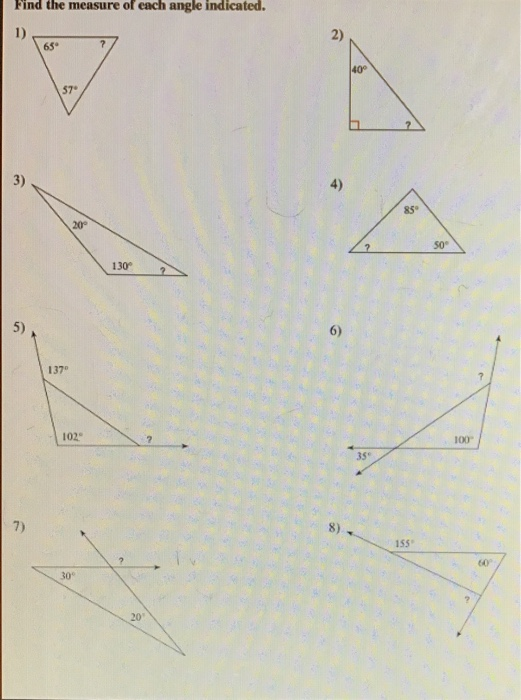
Well, the same principles apply! Look for straight lines, right angles, and vertical angles to find clues. Break the problem down into smaller, more manageable pieces!
Sometimes, you might need to use a little bit of algebra to solve for the missing angle. Don't be scared! Algebra is just a fancy way of saying "find the missing number"!
If you know that two angles add up to 90 degrees, and one angle is represented by 'x' and the other by '2x', you can set up an equation: x + 2x = 90.
Combine the 'x' terms to get 3x = 90. Then, divide both sides by 3 to find that x = 30. So, one angle is 30 degrees, and the other is 60 degrees (2 * 30)! You're basically angle-decoding superheroes at this point!
Angle-Finding Tips & Tricks!
Here are a few extra tips and tricks to help you on your angle-finding journey:
- Draw it out! If you're having trouble visualizing the angles, draw a diagram! A picture is worth a thousand angles, or something like that.
- Label everything! Label all the angles you know, and use a variable (like 'x') to represent the angle you're trying to find.
- Look for patterns! Are there any straight lines? Right angles? Vertical angles? Identifying these patterns can unlock the secrets of the missing angles!
- Don't give up! Angle-finding can be challenging, but it's also incredibly rewarding. Keep practicing, and you'll become an angle-finding master in no time!
The Angle-Finding Finale!
So there you have it! A whirlwind tour of the wonderful world of angle-finding! Remember, it's all about using the clues, applying the rules, and having a little bit of fun along the way!
Whether you're calculating the angle of a ramp for a skateboarding trick, or determining the optimal angle for a solar panel, understanding angles is a valuable skill to have.
So go forth, my angle-finding friends, and conquer those angles! The world is your angular oyster! You've got this! You are now officially angle whisperers. Go make Pythagoras proud!