Examples Of Contact And Noncontact Forces
Ever wonder what makes things move? Or stop moving? It's all about forces! And trust me, it's way more exciting than it sounds. Understanding forces isn't just for physicists; it helps you understand the world around you, from why your phone falls to the ground to how a car accelerates. Today, we're diving into the fascinating world of contact and non-contact forces. Think of it as unlocking a superpower – the ability to see the invisible forces that shape our reality!
So, what's the point of learning about forces? Well, for starters, it helps you predict what will happen in certain situations. If you push a box, will it move? How fast? Understanding the forces involved helps you answer these questions. Plus, recognizing these forces can make everyday tasks easier and safer. Imagine knowing exactly how much force to apply when tightening a screw, or understanding why wearing a seatbelt is so important in a car crash. It's all about practical knowledge!
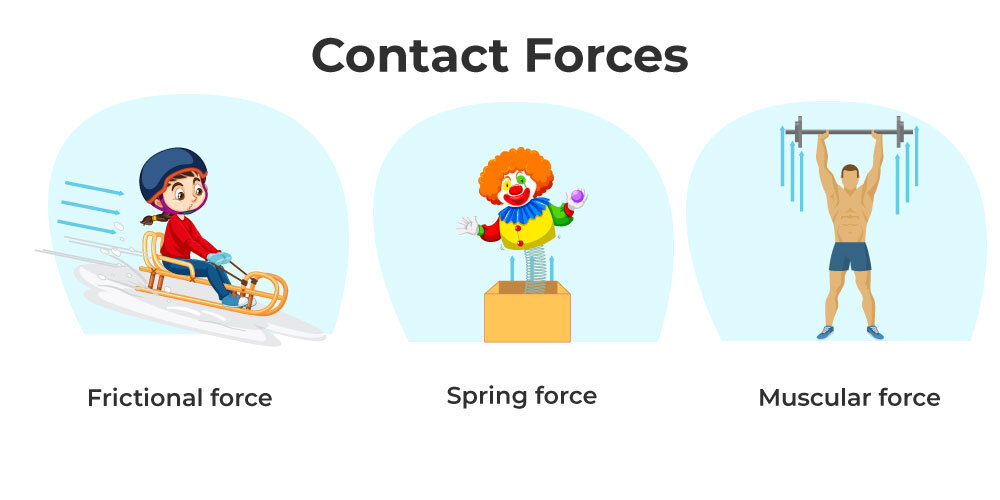
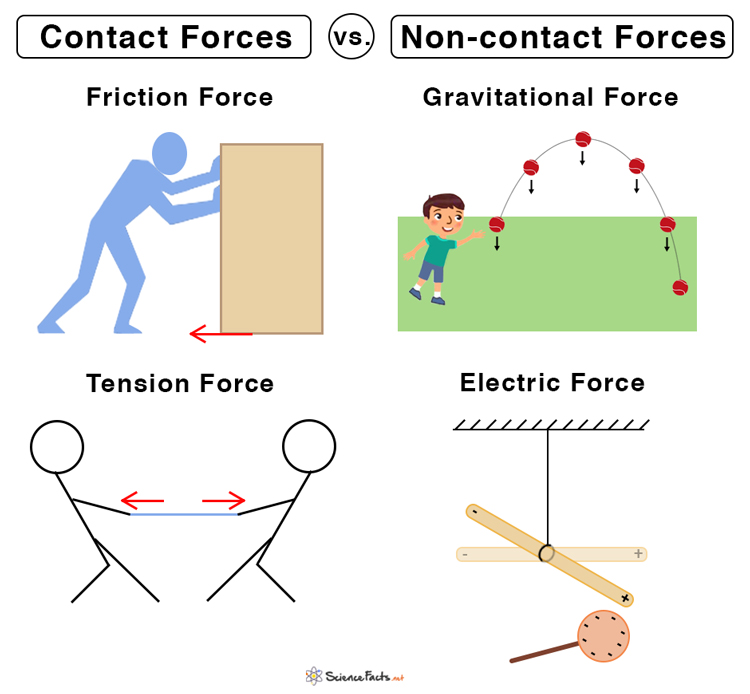
Let's kick things off with contact forces. As the name suggests, these forces require physical contact between objects. Think of it like a handshake – you need to physically touch someone to shake their hand. A classic example is applied force. When you push a shopping cart, you're applying a force directly onto it. Another common contact force is friction. This force opposes motion when two surfaces rub against each other. Without friction, you wouldn't be able to walk! Your shoes would simply slip on the floor. Imagine trying to ice skate without friction... it wouldn't be skating at all! We also have tension, the force transmitted through a string, rope, cable, or wire when it is pulled tight. Think of a tug-of-war – the tension in the rope is what allows the teams to pull against each other.
Must Read
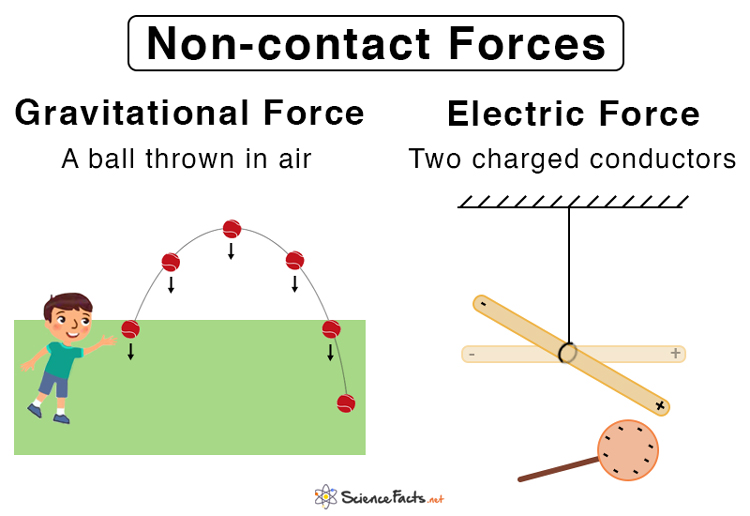
Now, let's explore the mysterious realm of non-contact forces. These forces can act on an object without physically touching it! Sounds like magic, right? The most familiar example is gravity. This force pulls everything towards each other, which is why apples fall from trees and why you stay on the ground. The bigger the objects, the stronger the gravitational pull. That's why the Earth's gravity keeps us all firmly planted. Then there's magnetic force. This force acts between magnets, causing them to attract or repel each other. You've probably played with magnets before, feeling the push and pull without them even touching. Finally, we have electric force, which acts between electrically charged objects. Static electricity, like when you rub a balloon on your hair, is a perfect example of this force in action.
So there you have it – a quick and easy guide to contact and non-contact forces! By understanding these fundamental forces, you can gain a better understanding of the world around you and even impress your friends with your newfound knowledge. From pushing a door to feeling the pull of gravity, forces are constantly at work, shaping our everyday experiences. Keep an eye out for them, and you'll start seeing the world in a whole new, more forceful way!