
Does Ice Weigh The Same As Water
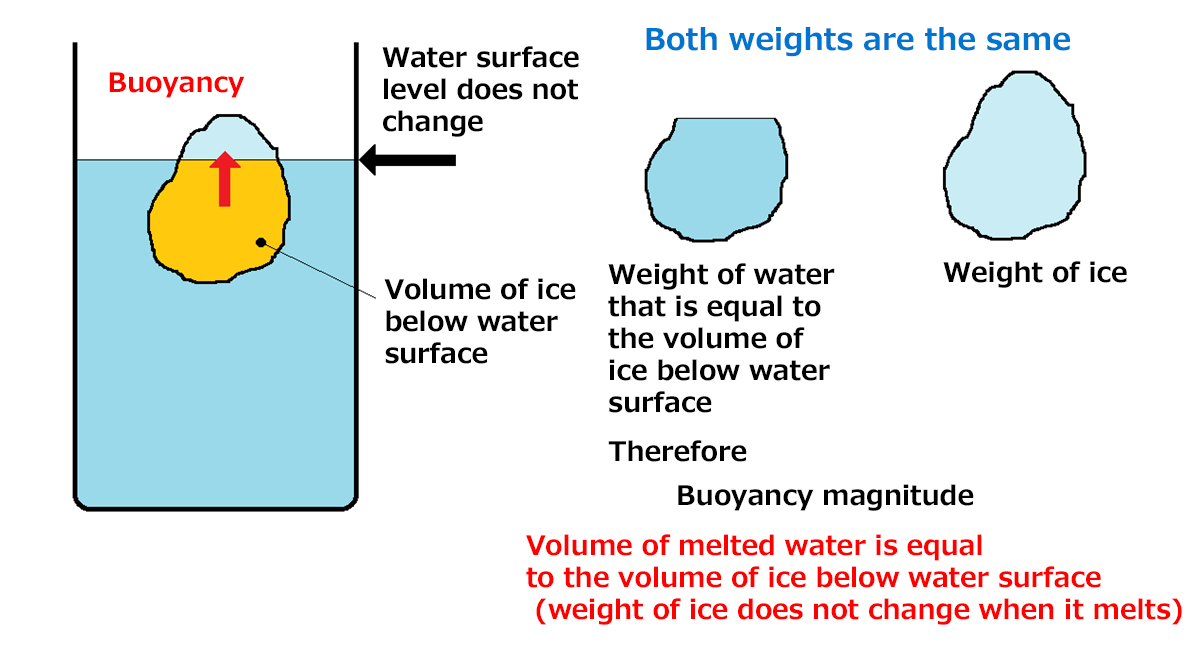
Ever wondered if ice weighs the same as the water it came from? It's a question that sounds simple. But trust me, it can lead to some seriously fun kitchen experiments. Get ready to dive into the cool, watery world of weight and volume!
The Great Ice vs. Water Weigh-Off
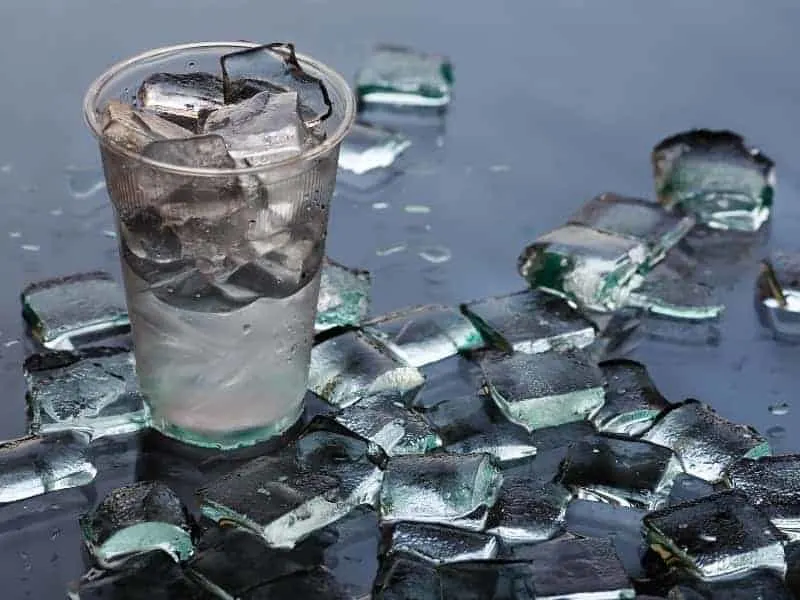
Okay, so here's the thing. Imagine you fill a glass with water. Then, you freeze it into ice. Do you think the resulting ice cube weighs the exact same as the water you started with? Prepare for a bit of a brain-bender.
Most people instinctively say yes. But there's a twist! The reality is a little more nuanced and way more interesting. This is where science gets surprisingly playful.
Must Read
Why This Question Rocks
Seriously, why is this such a captivating question? First, it challenges our basic assumptions. We think we know about water and ice. But do we really?
Second, it's super easy to test yourself! All you need is water, a container, and a freezer. Instant kitchen science lab!
Third, it introduces the fascinating concept of density. This fancy word is key to understanding the whole ice-water weight puzzle.
Density: The Secret Ingredient
Think of density as how much "stuff" is packed into a certain space. Imagine a tiny box filled with feathers. Now, imagine the same box filled with rocks. Which one is heavier?
The rocks, of course! They have a higher density because they contain more mass within the same volume.
Water and ice have different densities. And that's where things get really interesting, and yes, affects the weight.
The Ice Exception
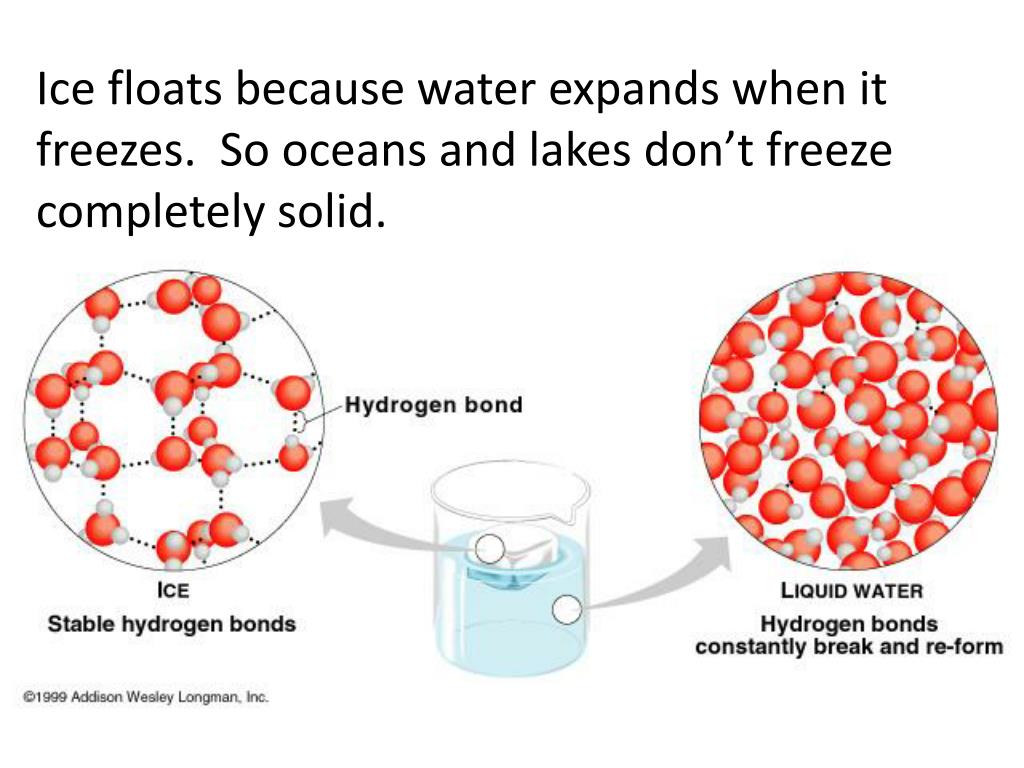
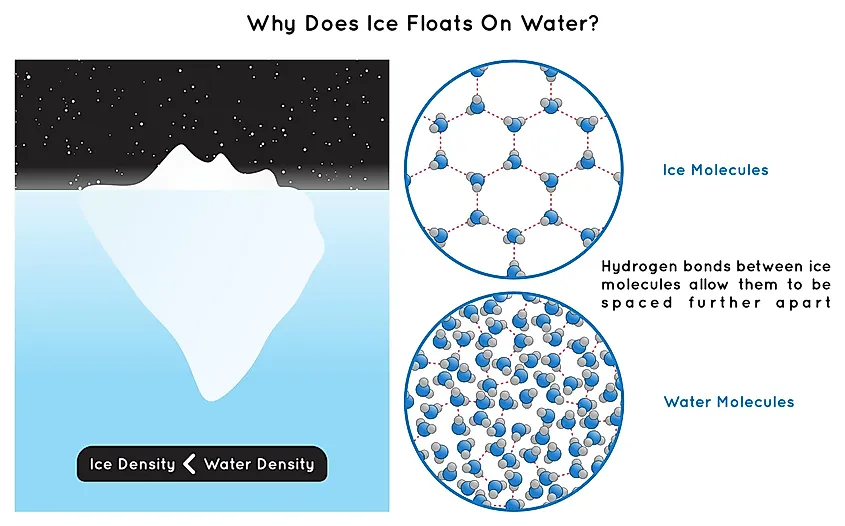
Water is weird. In most substances, the solid form is denser than the liquid form. Think of a metal. A solid metal is denser than a melted one.
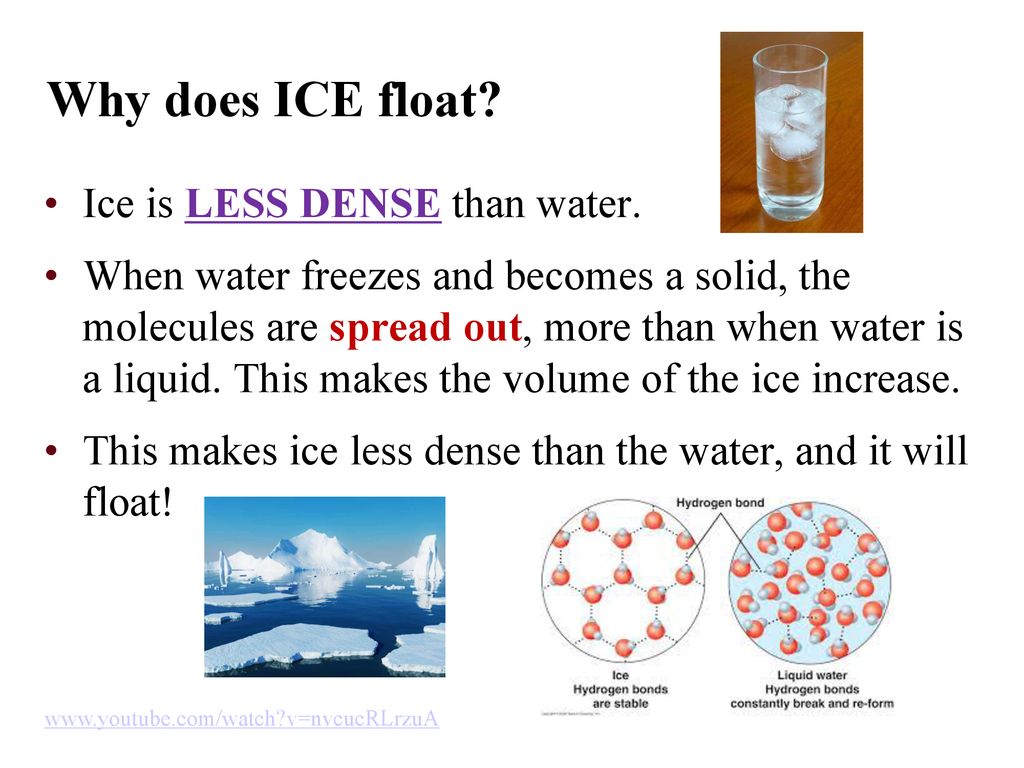
But water defies this rule! Ice is actually less dense than liquid water. That's why ice floats.
So, does this difference in density mean a difference in weight? Time for a closer look.
So, What's the Verdict? The Weighty Truth!
Okay, drumroll please... The weight of the ice is the same as the weight of the water it was before being freezed!
Even though ice is less dense and expands in volume, the total number of water molecules remains the same. This means that the weight stays the same.
It expands and therefore occupies more space, but its weight remains consistent. It's important to distinguish between density and the amount of matter.
The Fun Part: Trying It Yourself
Here's the best part: you don't have to take my word for it! Grab a kitchen scale and conduct your own experiment. It's a perfect activity for a rainy day!
Carefully measure the weight of the water before freezing. Then, freeze it completely. Weigh the ice. What do you find?
Compare the weight of the water with that of the ice.
Why Should You Care?
Beyond the sheer fun of it, this little experiment highlights the wonders of science. It shows us that things aren't always as they seem. It teaches us to question, explore, and experiment!
Understanding density has implications far beyond your kitchen. It affects everything from climate patterns to the behavior of oceans. It's pretty powerful stuff.
So, the next time you're making an ice-cold drink, take a moment to appreciate the fascinating science happening right in your glass. And maybe, just maybe, impress your friends with your newfound knowledge. You'll be known as the Ice Expert in no time!
Bonus Tip: Consider Spillage!
One thing to watch out for is spillage. When water freezes, it expands. This can sometimes cause overflows.
If you lose water during the freezing process, it will affect the weight of the ice. So, be careful to use a container that's not filled to the brim!
Happy experimenting and happy brain-tickling!