Denny's Buy One Get One For A Dollar

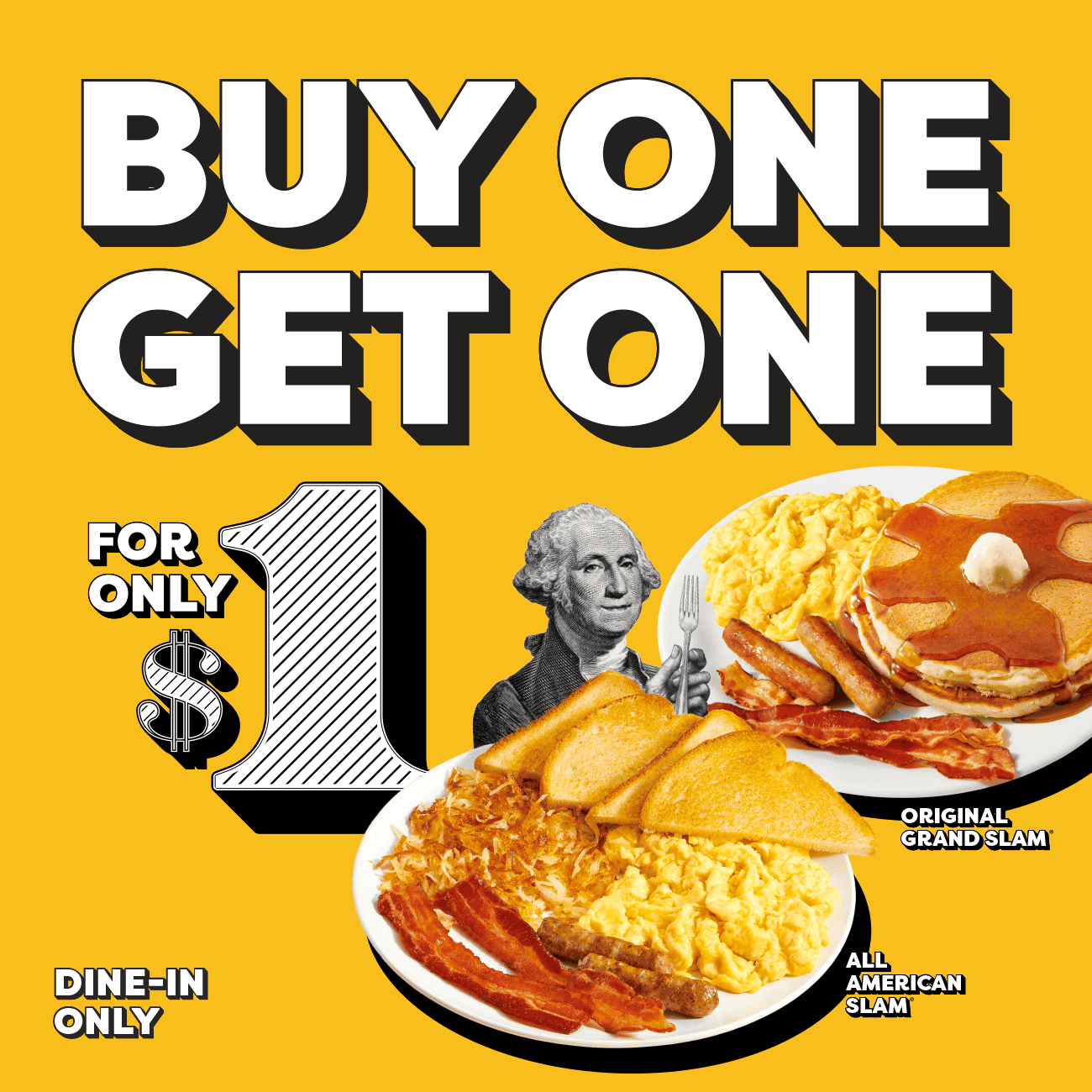
Okay, let's talk about something important: breakfast. Or maybe lunch. Or even a late-night snack. Let's talk about Denny's. And more specifically, let's talk about the magical phrase, "Buy One Get One for a Dollar." Why is this relevant? Well, who doesn't love a good deal, especially when it involves delicious food? It's a simple promotion, but understanding the psychology and economics behind it can be surprisingly fascinating. Think of it as a real-world lesson in marketing and value.
The purpose of Denny's "Buy One Get One for a Dollar" (BOGO) deal is pretty straightforward: to attract customers and increase sales volume. It's a classic marketing tactic designed to incentivize people to spend more. The benefits are clear for both parties involved. For Denny's, they move more product, potentially introduce new customers to their menu, and generate buzz. For the consumer, it's a chance to enjoy a meal (or two!) at a significantly reduced price. It's the thrill of getting a 'steal,' even if you weren't originally planning on ordering two entrees.
But how can we use this concept beyond just satisfying our hunger pangs? Believe it or not, the principles behind a BOGO offer apply in surprisingly diverse areas. Think about educational settings. A teacher could use the concept to incentivize extra credit: "Complete one extra credit assignment and get another similar one graded for free (meaning you get double the points!)." This encourages students to engage with the material more deeply. In daily life, we see this everywhere. Consider a gym offering a "Refer a friend, get a month free" deal. It's the same core idea: incentivize action by offering a reward that makes it seem like a fantastic value.
Must Read
Imagine you're trying to encourage healthy eating habits in your family. You could adapt the BOGO model: "Eat one serving of vegetables at dinner, and get an extra helping of your favorite (healthy) side dish." It frames healthy eating in a more positive light, making it feel less like a chore and more like a treat. Similarly, if you're trying to build a new habit, like reading, you could apply the same principle: "Read one chapter of a book, and get an extra 15 minutes of relaxing downtime." The key is to associate the desired behavior with a tangible reward that feels like a bonus.
So, how can you explore this further? The easiest way is to analyze other promotional offers. Pay attention to the language used and the perceived value offered. Ask yourself: "Why am I being tempted by this deal? Is it truly beneficial for me, or am I just caught up in the excitement?" You could even try designing your own "BOGO" offers for tasks or activities you want to accomplish. This could be anything from household chores to personal goals. The goal is to understand how this simple marketing tactic can be adapted and applied in creative ways to motivate yourself and others. Next time you see that Denny's sign, remember it's more than just a cheap meal – it's a lesson in behavioral economics waiting to be explored!