
Where Should You Mount A Carbon Monoxide Alarm

Alright, let's talk about that unsung hero of home safety, the carbon monoxide (CO) alarm. You've got it, which is awesome! But have you ever paused to think if it's truly in its prime spot to do its vital job? Because, let's be real, knowing where to mount it is just as crucial as having one. Think of it like this: you wouldn't keep your emergency chocolate stash where you can't find it, right? Same principle, but with much higher stakes!
Carbon monoxide, often dubbed "the silent killer," is a real sneaky one. It's invisible, odorless, and tasteless – a true master of disguise. It comes from fuel-burning appliances like furnaces, gas stoves, fireplaces, and even your car, if left running in an attached garage. When these don't vent properly, CO builds up, and that's where your trusty alarm steps in. But for it to be your knight in shining armor, its placement matters. A lot.
Understanding the Invisible Threat
First, a quick reality check on what CO actually does. When inhaled, it replaces oxygen in your blood, leading to symptoms like headaches, dizziness, nausea, and in severe cases, unconsciousness and death. Yikes! That's why your alarm is more than just a gadget; it's a literal lifesaver. Unlike smoke, which rises, CO is similar in density to air, meaning it mixes pretty evenly throughout a room. So, forget the myth that it only "floats up" or "sinks down." It's everywhere, man!
Must Read
This common misconception is why precise placement advice is so important. You’re not just trying to catch a plume; you’re monitoring the general air quality in specific areas. Think of it as having ears in all the right places, always listening, always ready to shout for help when you can't. It's your home's personal bodyguard against an invisible intruder.
The Golden Rules of Placement
So, where's the sweet spot? The general consensus, and the recommendation from the National Fire Protection Association (NFPA), is this: mount a CO alarm on every level of your home. Yes, even the basement if it's a living space or houses fuel-burning appliances. And here's the kicker: place one near or within hearing distance of every sleeping area. Imagine a little guardian angel watching over your slumber – that's your CO alarm.

Why sleeping areas? Because you're most vulnerable when you're asleep. Your senses are dulled, and you wouldn't notice the early signs of CO poisoning. Having an alarm strategically placed to wake you up is absolutely critical. Aim for it to be within 10-15 feet of each bedroom door. It’s about creating a perimeter of protection around your most precious cargo: your family.
On the Wall or Up High? Demystifying the Height Debate
This is where things can get a little nuanced, and it largely depends on the specific alarm model you have. So, rule number one always is: check the manufacturer's instructions! They know their product best.
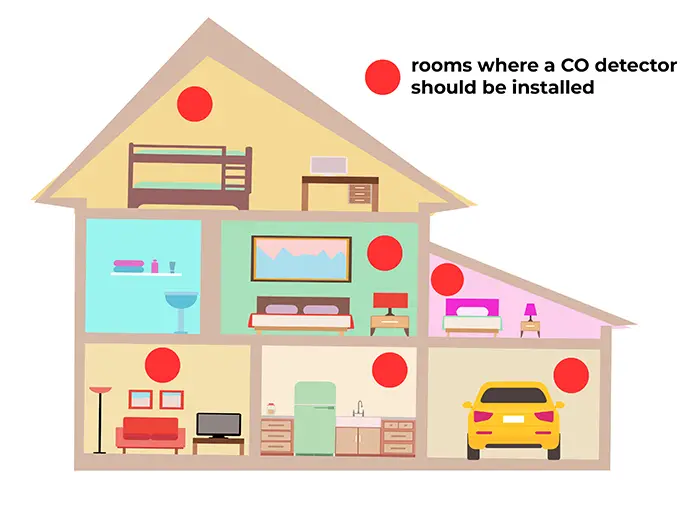
However, generally speaking, most CO alarms are designed to be mounted on a wall. A good rule of thumb is to place it about 5 feet from the floor (roughly eye level). This height is usually effective because, as we mentioned, CO mixes evenly with air. Placing it too high on the ceiling might delay detection slightly, and too low on the floor could expose it to damage or dust. Some models are specifically designed for ceiling mounting, often integrating with smoke detectors, creating a sleek two-in-one solution. But again, always double-check your model's manual!
Where Not to Place Your CO Alarm
Just as important as knowing where to put it, is knowing where not to. Avoid these common pitfalls:

- Directly above or next to fuel-burning appliances: This might seem logical, but it can lead to false alarms from minor, harmless CO emissions during startup.
- In garages: Unless specifically designed for garage use, car exhaust will constantly trigger it.
- In direct sunlight or near heat sources: Extreme temperatures can affect the sensor's accuracy.
- In very humid areas like bathrooms: Moisture can damage the electronics.
- Behind curtains or furniture: Obstructions can block the sensor from detecting CO effectively.
- Near air vents, fans, or open windows: Strong air currents can dilute the CO concentration near the sensor, causing it to miss critical levels.
- Within 20 feet of major cooking appliances: Kitchen fumes can sometimes trigger false alarms.
Smart Tips & Maintenance for Peace of Mind
Having the alarm is step one; maintaining it is step two. Remember to test your alarm regularly, usually with a simple push of a button – you'll hear a cheerful beep, letting you know it's working. Many alarms also have a digital display showing CO levels, which is a neat feature.
Don't forget to change the batteries twice a year (a good time is with Daylight Saving Time changes, that classic reminder!). And here's a fun fact: CO alarms don't last forever! Most have a lifespan of 5-7 years. Check the manufacture date on the back of your unit; if it's past its prime, it's time for an upgrade. Think of it as giving your home a mini tech refresh, ensuring its vital senses are sharp and ready.
Ultimately, a little thoughtful placement and regular maintenance go a long way. This isn't just about ticking a box; it's about creating a haven where you can truly relax, knowing that while the cozy fire crackles, or the furnace hums along, your invisible guardian is silently standing watch. So, take a moment today, give your CO alarm a little check, and enjoy that priceless peace of mind.
