
Carbon Monoxide Detector How To Change Battery

Alright, settle in, grab your coffee – or maybe a strong cup of courage – because we're about to embark on one of life's truly epic sagas. Not scaling Mount Everest, not discovering a cure for the common cold, but something arguably far more terrifying: changing the battery in your carbon monoxide detector. Yes, that mysterious disc on your ceiling, usually forgotten until it decides to wage a sonic war against your sanity.
You know the sound, don't you? That insidious, intermittent, high-pitched chirp. It starts subtly, a ghost in the machine, just enough to make you question your sanity. "Was that... a bird inside the house? Did my toaster just achieve sentience?" No, my friend, it's the harbinger of a dying 9-volt battery, specifically designed to drive you absolutely bonkers before it finally gives up the ghost entirely. It's like your house is gently passive-aggressively reminding you it needs attention, one shrill beep at a time.
The Great Chirp Mystery: Unmasking the Culprit
First things first, you need to confirm it's actually the carbon monoxide (CO) detector. Sometimes, the smoke alarm pulls a fast one, pretending to be its silent-killer-detecting cousin. The easiest way to tell? Most modern units have a little label, or a quick glance at the instruction manual (if you haven't used it to level a wobbly table leg) will confirm. They often look very similar, these ceiling-dwelling sentinels of safety. Think of them as the slightly less dramatic cousin of the smoke alarm, who prefers a polite, yet utterly maddening, warning over a full-blown scream.
Must Read
Why Bother? A Brief, Not-So-Scary Interlude
Before we dive into the gritty mechanics, let's briefly touch on why this little device is actually a big deal. Carbon monoxide is often called the "silent killer," which sounds like a villain from a low-budget horror movie, but it's true. It's odorless, colorless, and tasteless. It’s essentially a ninja gas. Without your chirpy little guardian, you wouldn't know it's there until it's too late. So, while its dying battery is an utter menace to your peaceful home, the detector itself is a superhero in disguise. And honestly, isn't a chirping battery infinitely better than... well, you know. Let's not dwell!
The Ascent: Reaching Your Nemesis
Okay, mission control, let's get operational. Your CO detector is likely perched high on a wall or ceiling, precisely where it's hardest to reach. This is where your first tool comes in: a sturdy step stool or, if you're feeling adventurous and your life insurance is paid up, a stable chair. Please, no rickety stools or balancing acts with precariously stacked encyclopedias (unless they're the really old, heavy ones – those have surprisingly good structural integrity).

Cracking the Code: The Battery Compartment
Now, for the slightly tricky part. Every CO detector has its own personality when it comes to battery access. Some are graceful, some are downright baffling. You're looking for a small tab, a twist-and-turn mechanism, or sometimes, believe it or not, the entire unit twists off its base plate. It's like a tiny escape room on your ceiling. "Which way do I turn it? Counter-clockwise? Clockwise? Do I need to whisper an ancient incantation?" Often, there's an arrow or a "push here" indicator. Be firm, but gentle. We're performing delicate surgery here, not trying to win a wrestling match against a plastic disc.
Once you've liberated the unit (or just opened the tiny door), you'll likely be greeted by the sight of a 9-volt battery. Yes, that rectangular block with two little nubs on top, looking suspiciously like a miniature house. It's the workhorse of home safety devices. Why 9-volt? Because they offer a good balance of power and longevity, perfect for those long stretches of "please don't chirp" silence. Plus, they're sturdy enough to withstand the trauma of being dropped from a step stool when your hands are full.
The Swap: Out With The Old, In With The New
Pull out the old 9-volt battery. It's usually connected by two little clips – one positive, one negative. Just gently unclip it. Sometimes they’re a bit stiff, like they’re holding onto dear life (which, ironically, they are). Now, grab your fresh, shiny 9-volt battery. Ensure you connect it correctly: positive to positive, negative to negative. It's usually pretty intuitive; the clips are shaped to only go on one way. Don't force it, or you might end up with a very sad, very broken new battery, and still a chirping detector. The universe has a cruel sense of humor like that.
Once the new battery is snug, tuck it back into its compartment. Close the door or re-attach the unit to its base. You might hear a triumphant "beep" or "chirp" immediately – a little thank you from your detector for giving it a new lease on life. Or, it might just go blissfully silent. That silence? That's the sound of victory. That's the sound of you, the homeowner, defeating the tiny plastic overlord.
The Grand Finale: Test It!
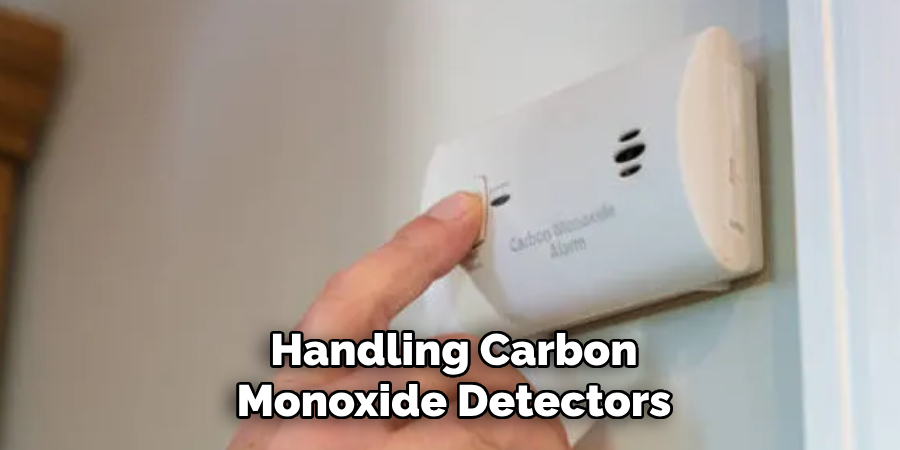
You did it! But don't descend from your step stool throne just yet. Most CO detectors have a test button. Press it. Hold it for a few seconds. Prepare yourself for a sudden, ear-splitting siren that will make you jump, possibly drop your coffee, and scare any nearby pets into another dimension. This loud noise is your detector confirming it's fully operational and ready to protect you. It’s like it’s screaming, "I LIVE! And I'm ready to warn you about invisible gases!"
A Few Last Tidbits of Wisdom (and Humor)
Congratulations, you're a hero! But your journey isn't quite over. Here are a few final tips:
- When to Change: A good rule of thumb is to change your batteries twice a year, perhaps when you adjust your clocks for Daylight Saving Time. It’s a useful mnemonic, like "spring forward, fall back, change battery, don't get gassed."
- Old Battery Disposal: Don't just toss the old battery in the regular trash. Many communities have specific battery recycling programs. Be a good environmental steward!
- Unit Lifespan: Here's a surprising fact: the detectors themselves don't last forever! Most CO detectors have a lifespan of 5-7 years, after which the sensor can degrade. There's often a manufacturing date or "replace by" date printed on the back. So, even if it's not chirping, if it's older than your dog, it might be time for a full replacement.
- Dust Bunnies: Give your detector a gentle wipe with a soft cloth occasionally. Dust can interfere with the sensor. Think of it as giving your tiny guardian a spa day.
So, there you have it. You've faced the chirp, climbed the heights, outsmarted the battery compartment, and emerged victorious. Go forth, tell your tales, and sleep soundly, knowing your home is safe and your ears will remain blissfully free from that incessant, sanity-testing, high-pitched chirp. At least until next time. Because there's always a next time.
