Can You Sleep With Contacts In
Okay, so picture this: it's 3 AM. You're sprawled on the couch, half-eaten pizza box precariously balanced nearby, and the credits of some mind-numbingly awful movie are rolling. You vaguely remember intending to get up and take out your contacts hours ago, but...nap won. We've all been there, right? (Please tell me I'm not alone in this shameful experience!)
The next morning, you peel your eyelids apart, feeling like you've glued them shut with superglue. Your eyes are drier than the Sahara, redder than a baboon's behind, and you can barely see straight. The first thought that claws its way through the morning fog? "Oh crap, I slept in my contacts again."
Which brings us to the age-old question: Can you sleep with contacts in? The simple answer? Usually, it's a big, flashing, neon-sign NO. But like most things in life, the truth is a bit more nuanced.
Must Read
The Eye-Opening Truth (Pun Intended!)
See, your eyes need oxygen. Like, a lot of it. When you're awake, blinking helps bring oxygen to your cornea (that clear front part of your eye). When you're wearing contacts, especially older types, it restricts the amount of oxygen that can get through. And when you're sleeping? No blinking. Oxygen levels plummet. Think of it as your eyes suffocating in their sleep. Not exactly a peaceful image, is it?
Now, some contact lenses are specifically designed for extended wear – meaning you can technically sleep in them. These are typically made of silicone hydrogel, which allows more oxygen to pass through. But even with these lenses, it's not a free pass to snooze city every night. (Don't get all excited and think you've found a loophole!)

Why It's a Bad Idea (Even With "Extended Wear" Lenses)
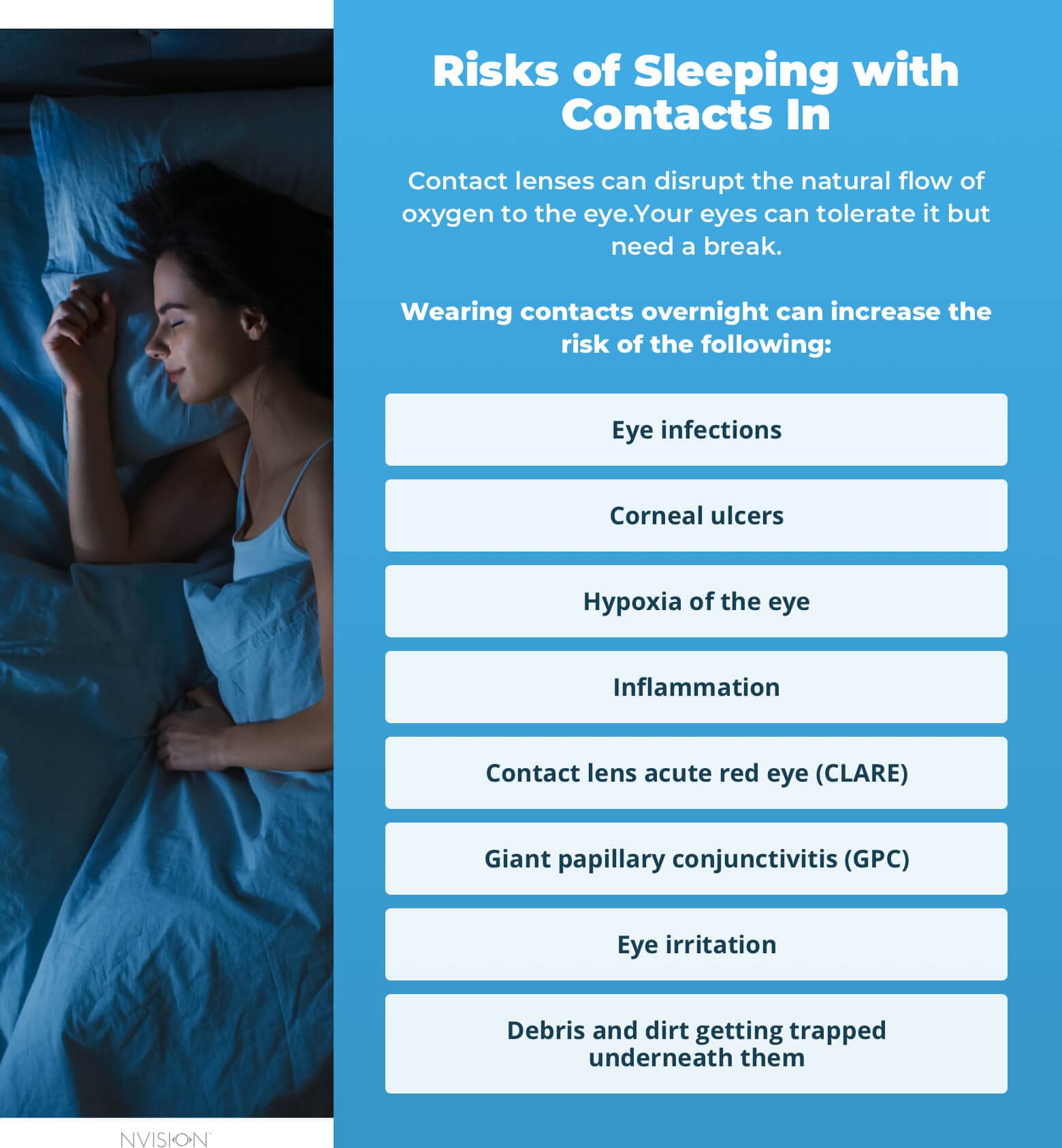
Here's the deal: sleeping in contacts, even the "safe" kind, significantly increases your risk of:
- Corneal ulcers: Nasty infections that can scar your cornea and mess with your vision. Not fun.
- Keratitis: Inflammation of the cornea. Think red, painful, and super sensitive to light.
- Dry eye: Making your eyes feel like they're full of sand. Constantly.
- Infection: Bacteria love warm, moist environments. Your eye under a contact lens? Prime real estate for microbial mayhem.
Basically, you're creating a petri dish on your eyeball. Not the look you're going for, I presume.
The Exception to the Rule (And When to Call Your Eye Doctor)
Okay, okay, so there are some exceptions. Your eye doctor might prescribe extended-wear lenses for specific reasons, such as certain vision correction needs or therapeutic uses. But this is a decision made in consultation with a professional, not something you decide to do because you’re feeling lazy. (Seriously, don't self-diagnose your way into needing an eye patch!)
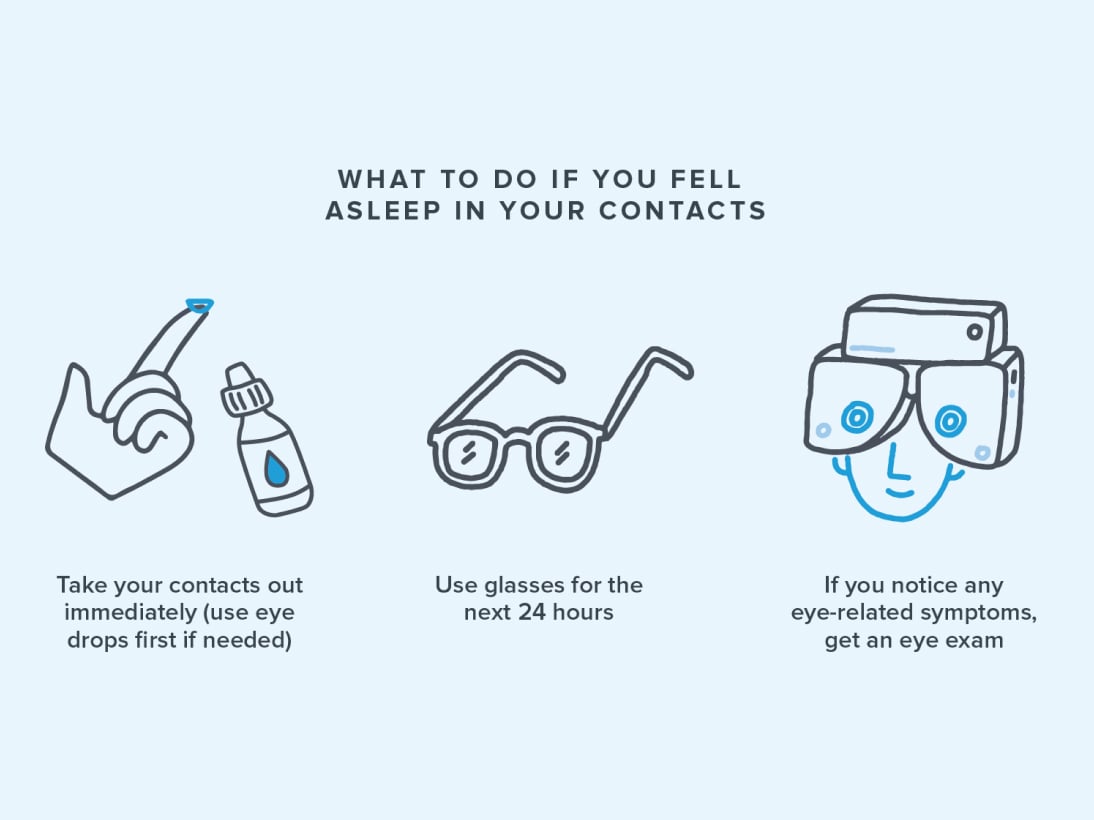
And even then, regular check-ups are crucial. If you notice any redness, pain, blurred vision, or unusual discharge, remove your lenses immediately and call your eye doctor. Don't try to tough it out. Your eyes will thank you.

Tips for the Contact Lens-Challenged Sleeper
So, what can you do if you're prone to accidental contact lens naps?
- Set reminders: A phone alarm can be your best friend.
- Keep lens solution and a case by your bed: Make it easy to take them out, even when you're half-asleep.
- Consider daily disposables: One-day lenses are a great option if you occasionally forget. At least you're starting with a fresh pair the next day!
- If you do sleep in your contacts, give your eyes a break: Take them out first thing in the morning and wear your glasses for a few hours.
The bottom line: Sleeping in contacts is generally a bad idea. While some lenses are designed for extended wear, it still increases your risk of complications. Always follow your eye doctor's instructions and prioritize the health of your eyes. After all, you only get one pair! (Unless you're a lizard. Then I'm just jealous.)
So, next time you find yourself drifting off with your contacts in, remember this article. Your eyes will thank you for it!