
2 3 Is Not Always Equivalent To 4 6

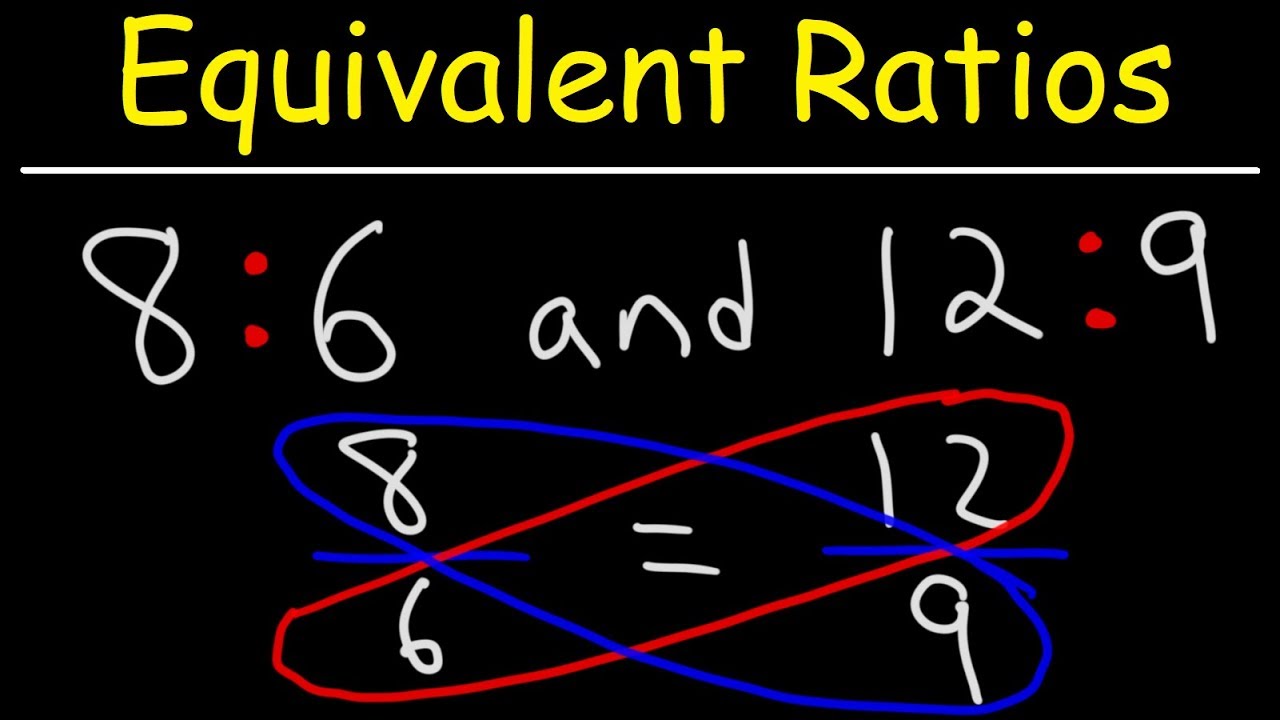
We all learned in school that fractions are these lovely, predictable things. 2/3 is the same as 4/6, right? Equivalent! You can picture dividing a pizza into thirds and taking two slices, or dividing it into sixths and taking four slices. Same amount of pizza, no arguments.
But what if I told you that in the real world, sometimes 2/3 is not equivalent to 4/6? Prepare for your brain to be pleasantly scrambled. We're going to leave the land of perfect mathematical abstraction and venture into the messy, hilarious, and sometimes poignant world of human experience.
People Math: A Whole Different Story
Let’s start with something simple: recipes. Imagine you're baking cookies. Your recipe calls for 2/3 of a cup of sugar. You think, "Hey, I'm a whiz at fractions! I'll just use 4/6 of a cup instead."
Must Read
Seems harmless, until you realize your measuring cups are slightly off. Maybe your 1/3 cup measure is actually a little more than 1/3, and your 1/6 cup is a little less. Suddenly, you've inadvertently added more sugar than intended. Oops! Your cookies are now diabetes bombs. Delicious diabetes bombs, but still.
That's people math in action. Human error, imperfect tools, and the sheer chaos of real life creeping into our perfect fractions.
The Dating Game (or Inefficiency of Love)
Let's talk about dating. Suppose you meet two people, Alice and Bob. You spend 2/3 of your available dating time with Alice. Then, feeling mathematically obligated, you decide to spend 4/6 of your dating time with Bob. Seems fair, right?
But what if you really click with Alice? Those initial two-thirds of your time were magical! While spending more time with Bob, you realize that while he is nice, the spark just isn’t there. You've mathematically allocated equivalent time, but emotionally, you've shortchanged yourself. The 2/3 spent with Alice was worth far more.

Sometimes, quantity isn’t quality. Love isn’t a spreadsheet; it’s a wild, unpredictable beast. Dividing your heart into mathematically equivalent portions is a recipe for potential romantic disaster.
Pizza and Perceptions: The Illusion of Fairness
Okay, back to pizza. You order a pizza cut into 6 slices. You eat 4/6. Your friend eats 2/3, which is also 4/6. Mathematically, you ate the same amount.
But what if your slices had all the pepperoni, and your friend got the plain cheese slices? Suddenly, even though the fractions are equivalent, the experience isn’t. You feel like you got a better deal. This is true even if you both like cheese more; you just needed to feel like you were favored somehow!
Perception is everything! This highlights how human psychology warps our understanding of fairness. Equivalent fractions don’t always translate to equivalent happiness.
The Art of Compromise (and Uneven Slices)
Imagine you're negotiating a deal. You want something, and the other person wants something else. You agree to give them 2/3 of what they want, and they give you 4/6 of what you want. Sounds equitable!
But what if what you're giving up is significantly more valuable than what you're receiving? Maybe they are getting a prime piece of land and you are getting some swampland in Florida. The numbers might be equivalent, but the actual value isn't. You've been swindled, but the math looks right!
Compromise isn’t always about perfect numerical equivalence. It's about understanding the true worth of what you're trading, even if it defies simple calculations.
Sharing Grandma's Recipe (and Family Secrets)
Your grandmother’s secret cookie recipe calls for 2/3 of a teaspoon of a certain spice. You decide to double it, making it 4/6. Makes sense, right?

Except… Grandma’s teaspoon was special. It was slightly larger than a standard teaspoon, and she knew it. Plus, the spice was home-grown, and the flavor was more intense than anything you can buy in the store. By doubling the 2/3 (in standard measurements), you've drastically altered the flavor of the cookies! It’s not Grandma’s recipe anymore.
Sometimes, the magic lies in the unquantifiable. It's the pinch of love, the secret ingredient, or the unique measuring spoon that makes all the difference. You can’t always translate those into perfect fractions.
The Time Paradox (and the Illusion of Productivity)
You decide to spend 2/3 of your day working on a project. Then, feeling productive, you allocate 4/6 of the next day to the same project. Mathematically equivalent time, right?
But what if you were incredibly focused and efficient during the first day's 2/3? Maybe you were fueled by inspiration and caffeine! The next day, you're tired, distracted, and the 4/6 is spent staring blankly at the screen. The same fraction of time yields drastically different results.

Productivity isn't a constant. It ebbs and flows. Dividing your time into perfectly equivalent fractions won't magically make you more productive. Listening to your body and mind is key.
The Joy of Imperfection
The point isn't that math is wrong. Math is beautiful and precise. But life is messy, subjective, and gloriously unpredictable.
Trying to force everything into perfectly equivalent fractions is not only impossible, it's often counterproductive. Embrace the imperfections! The slight variations, the unexpected twists, the moments when 2/3 is definitely not the same as 4/6. That's where the real fun begins.
So, the next time you're faced with a situation where you're tempted to divide things up into neat, equivalent portions, remember this: Human experience is the spice of life. And sometimes, the best recipes are the ones that defy the rules, even if they don’t add up perfectly on paper.