
You May Legally Turn Right On A Steady Red Light

Ever sat at a red light, tapping your fingers, feeling like you're wasting precious minutes of your life? We've all been there. That simmering frustration as you watch the seconds tick by, knowing your destination is just around the corner.
But what if I told you that, in many places, that red light isn’t necessarily a brick wall? It might actually be more like a politely-worded suggestion.
The Unexpected Freedom of Right on Red
Prepare yourself, because this might blow your mind (or at least mildly surprise you): in most parts of the United States, and in many other countries around the world, you can legally turn right on a steady red light. Yes, you read that right!
Must Read
Imagine the possibilities! That extra bit of time saved, that slight edge in the race against the clock. It's like discovering a secret superpower hidden in plain sight.
The Art of the Careful Creep
Of course, this freedom comes with a caveat. It's not a license to recklessly barrel through intersections. Think of it more as a carefully choreographed dance, a delicate negotiation with the surrounding traffic.
First, you must come to a complete stop. No rolling stops allowed! Channel your inner race car driver, but with significantly less speed and a whole lot more caution.
Then, and this is crucial, you have to yield to oncoming traffic and pedestrians. They have the right of way. Always. Imagine them as royalty, and you, my friend, are a humble courtier.
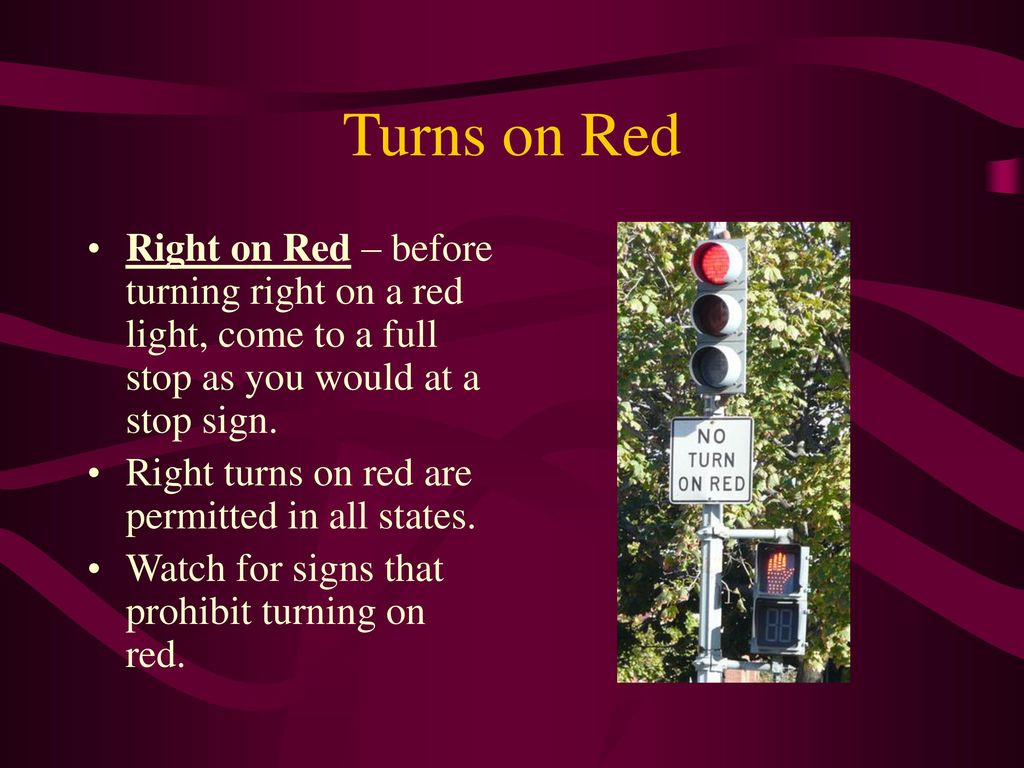
Finally, and only when it’s safe, you can make your turn. Smoothly, confidently, and with the quiet satisfaction of someone who knows a legal loophole when they see one.
The "No Turn on Red" Rebellion
Now, here’s where things get interesting. Some intersections, those rebellious little things, refuse to play along. They proudly display a "No Turn on Red" sign, a clear declaration of independence from the right-on-red movement.
Ignoring these signs is a big no-no. It’s like walking into a library and blasting heavy metal music. It’s just not done. Respect the sign, and wait your turn.
These signs are usually there for a good reason. Maybe the intersection has poor visibility, or a high pedestrian traffic. Whatever the reason, it's best to obey the rules of the road.
Right on Red: A Comedy of Errors (and Near Misses)
Let's be honest, turning right on red can sometimes lead to hilarious situations. You creep forward, peering left, trying to gauge the speed of an approaching car. They flash their headlights at you. Are they telling you to go? Or are they warning you to stay put? The ambiguity is enough to drive a person mad!

Then there's the "stare-down" with the oncoming driver. Both of you locked in a silent battle of wills, trying to determine who will yield first. It's like a Western movie, but with SUVs instead of horses.
And who hasn’t experienced the "almost-but-not-quite" moment? You think you have an opening, you start to go, and then BAM! A cyclist appears out of nowhere. Heart pounding, you slam on the brakes, narrowly avoiding disaster. A reminder that patience is, indeed, a virtue.
The Importance of Being Seen (and Being Polite)
One of the biggest challenges of turning right on red is making sure other drivers see you. A small car trying to squeeze through a gap in traffic can easily be overlooked. It's like being a ninja, but with a much higher risk of getting rear-ended.
Therefore, it's essential to be visible. Use your turn signal. Make eye contact with other drivers. Let them know your intentions.

And most importantly, be polite. A friendly wave can go a long way. It can defuse tension, prevent misunderstandings, and make the whole experience a little less stressful. After all, we're all in this traffic jam together.
Beyond the Law: The Ethical Right on Red
Turning right on red is legal, but is it always ethical? That's a question worth pondering. Just because you can do something, doesn't necessarily mean you should.
Sometimes, the safest option is to simply wait. Even if it means losing a few seconds. Your life, and the lives of others, are worth more than a tiny bit of time saved.
Think of it as a "right-on-red" conscience. A little voice inside your head that reminds you to be cautious, considerate, and ultimately, responsible.
Right on Red: A Global Phenomenon
The practice of turning right on red isn't just an American thing. Many other countries around the world have adopted similar rules, although sometimes with slight variations. In some places, you can only turn right on red at certain intersections. In others, you have to wait for a green arrow before making your move.
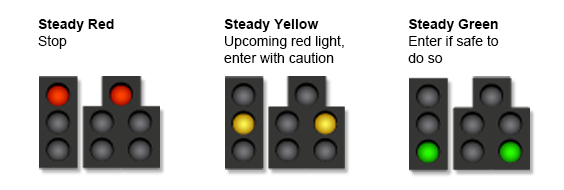
Exploring the nuances of right-on-red rules in different countries can be surprisingly fascinating. It's like a window into their culture, their values, and their approach to traffic management.
So, next time you're traveling abroad, pay attention to the local rules. You might just learn something new about the world, and maybe even save yourself a traffic ticket.
Right on Red: More Than Just a Traffic Law
In conclusion, turning right on red is more than just a simple traffic law. It's a reflection of our society, our values, and our relationship with time. It's a reminder that even within the confines of rules and regulations, there's always room for a little bit of freedom, a little bit of creativity, and a little bit of common sense.
So, go forth and turn right on red (legally and safely, of course). But remember, with great power comes great responsibility. Use your newfound freedom wisely, and always be mindful of the safety of others.
Drive safe, and happy turning!