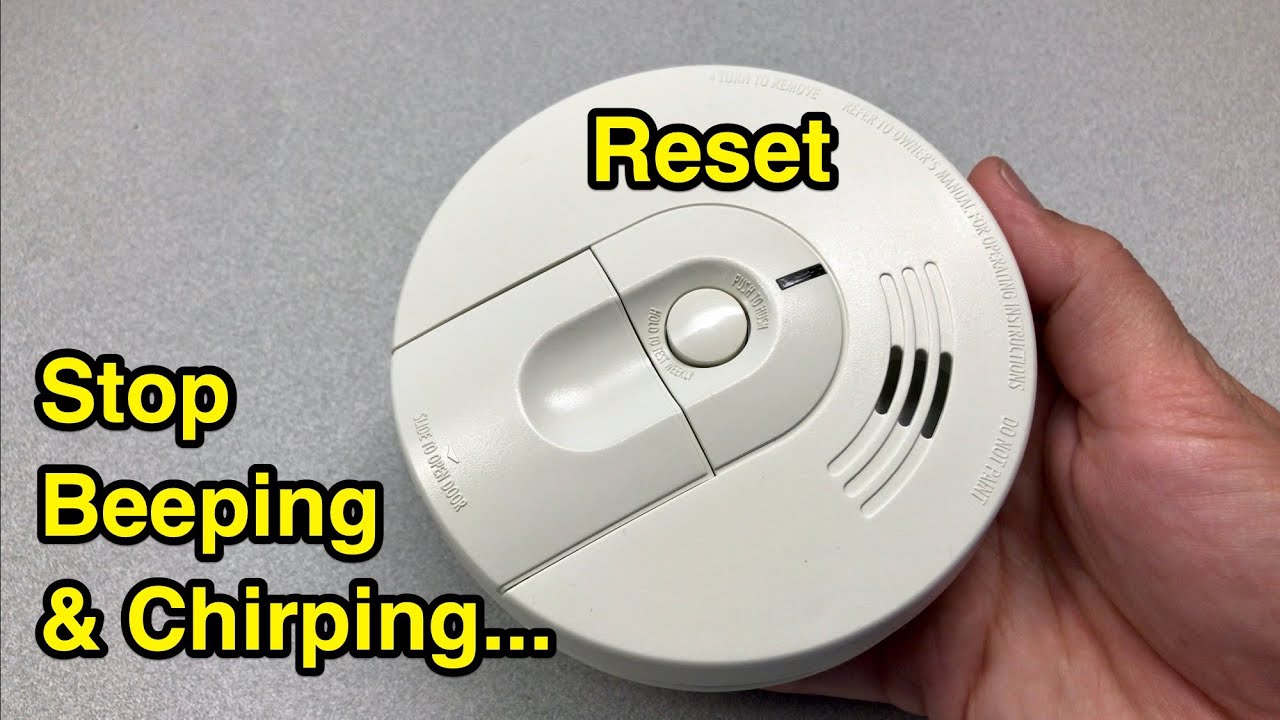
Why Won't My Smoke Detector Stop Beeping

Ah, the persistent chirp. That unmistakable, rhythmic bleat that pierces the quiet of your home, transforming a peaceful evening into a low-grade psychological thriller. We're talking, of course, about the infamous smoke detector, a device universally celebrated for its life-saving vigilance, yet sometimes secretly reviled for its mysterious, unending beeps. But what if we told you this seemingly mundane domestic nuisance isn't just a problem to be solved, but an opportunity? A chance to engage your inner detective, hone your DIY skills, and even, dare we say, find a touch of creative satisfaction?
For the uninitiated, the ceaseless chirp might feel like an auditory assault, but for the discerning homeowner, it’s an invitation to a fascinating, albeit tiny, mystery. Think of it as a mandatory, real-time puzzle game. It offers surprising benefits for artists, hobbyists, and casual learners alike. It sharpens your listening skills, forcing you to discern the subtle nuances of different beeps. It cultivates patience, a virtue every creator knows well. And for the budding hobbyist, it’s a low-stakes entry into the world of home maintenance, building confidence one silenced chirp at a time.
The "Why Won't My Smoke Detector Stop Beeping" phenomenon presents a rich tapestry of examples. There's the classic low-battery chirp, a slow, deliberate 'peep' every 30 to 60 seconds, which is arguably the most common culprit. Then there's the more insistent, often multi-chirp alert, indicating the unit itself has reached its end-of-life – typically 7 to 10 years, a testament to its long, loyal service. And let's not forget the false alarms, sometimes triggered by dust, steam from a shower, or even an overenthusiastic chef, which challenge you to locate and silence the overly sensitive sentinel.
Must Read
Ready to embrace the adventure? Here are some tips for trying it at home. First, don't panic! Most beeps are easily remedied. Your initial mission: identify the specific detector that's chirping. They often beep in unison, creating a cacophony, so listen closely. Once you've found the culprit, the simplest solution is often the best: change the battery. Even if you think you just changed it, a fresh battery is always the first step. If that fails, give the unit a gentle vacuum or wipe down to remove any accumulated dust. Finally, if the unit is old (check the date on the back!), it might be time to replace it entirely. Remember to always test your detectors regularly after any intervention!
So, why is this domestic detective work actually enjoyable? It's the profound sense of accomplishment. It's the moment of profound, blissful silence after the last chirp fades into oblivion. It’s knowing you’ve brought peace back to your sanctuary, demonstrating a quiet mastery over your surroundings. It's not just about stopping a beep; it's about reclaiming your tranquility, one solved mystery at a time.