
Where Are The Us Nuclear Plants Located
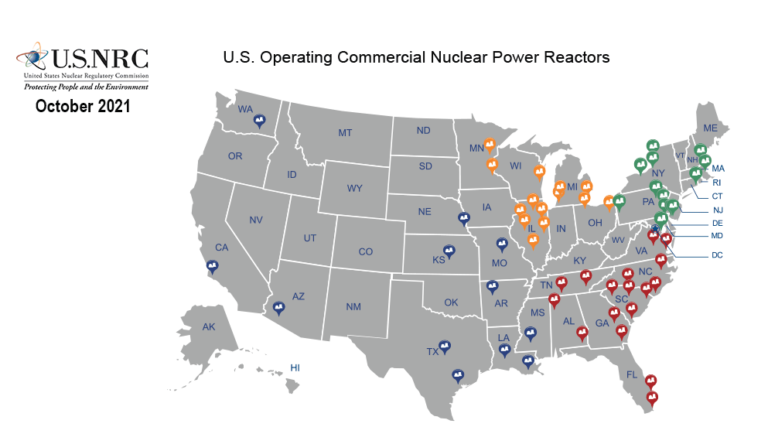
Okay, so grab another sip of coffee, because we're about to tackle a question that probably makes you think of glowing green rods and Homer Simpson: "Where in the heck are the US nuclear plants actually located?"
I mean, come on, when you hear "nuclear plant," do you immediately picture some super-secret, top-bunker facility in the middle of nowhere? Like, with barbed wire, armed guards, and maybe a giant, ominous cooling tower that only reveals itself during a lightning storm? Yeah, me too. But the reality is, well, a little less dramatic and a lot more… visible.
Let's be real, these aren't hidden fortresses. They're actually pretty out in the open, just often in places you might not think to look or, frankly, haven't had a reason to drive past. It's not like there's a giant neon sign blinking, "NUCLEAR POWER HERE! COME GET YOUR POWER!"
Must Read
So, Where Are They Hiding? (Spoiler: They're Not Hiding)
Think about it. Nuclear power plants are basically super-efficient, super-powerful steam factories. And what does a steam factory need a whole lot of? If you said "water," give yourself a gold star! You're brilliant!
That's right, the biggest, most crucial factor for nuclear plant locations is access to a massive, reliable water source. We're talking rivers, big lakes, or the coastlines. They need water to cool down all that steam, so it can turn back into water and start the whole process over again. Without epic amounts of water, it's a no-go.

So, if you're picturing nuclear plants in, say, the middle of the Arizona desert (unless it's next to the Colorado River!), you can probably ditch that mental image. Most of them are concentrated along the East Coast, the Midwest, and the South, hugging those big, beautiful water bodies.
A Little East Coast Energy
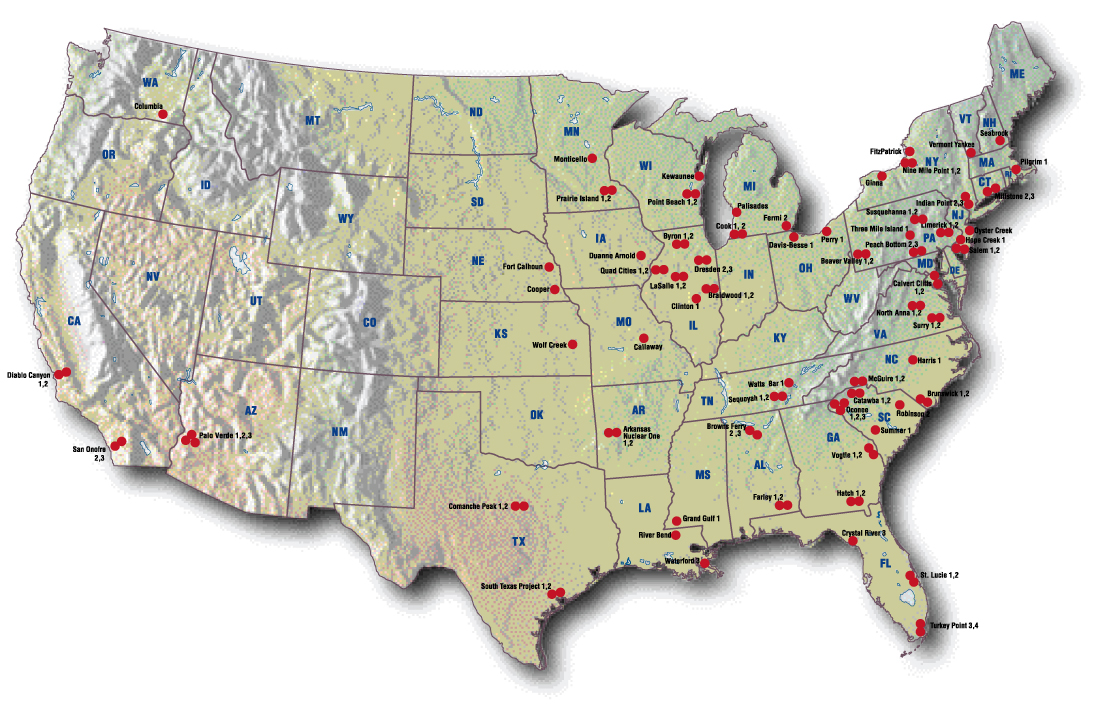
Take the East Coast, for instance. Plenty of plants dotting the landscape from New England all the way down to Florida. Why? Oh, you guessed it! Rivers, estuaries, and the Atlantic Ocean. It's practically a buffet of cooling water. Plus, there's a huge population density in the East, so lots of folks needing electricity. Makes sense, right?
Midwest: Lakes and Rivers Galore
Then swing over to the Midwest. Hello, Great Lakes! We're talking Lake Michigan, Lake Erie, Lake Ontario – absolute cooling powerhouses. You'll find a good chunk of plants around these freshwater giants. And don't forget the big rivers like the Mississippi and the Ohio. They're literally the lifeblood for many plants inland.
Down South, Where the Power Flows
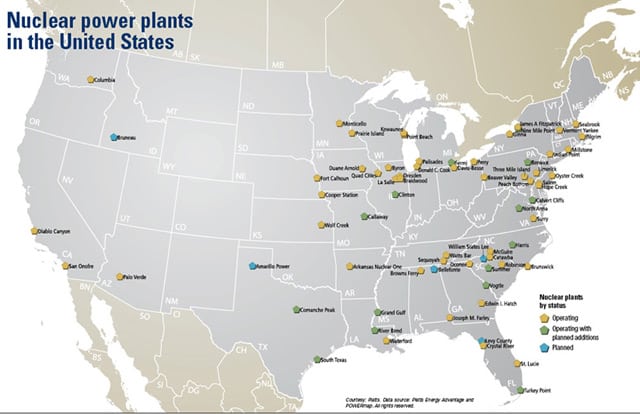
The South? Oh, they've got their fair share too! The Mississippi River, the Tennessee River, and all those lovely Gulf Coast waters. Again, it all comes back to that liquid gold for cooling. Places like Alabama, Georgia, the Carolinas – they're all in on the nuclear game.
And What About the West?
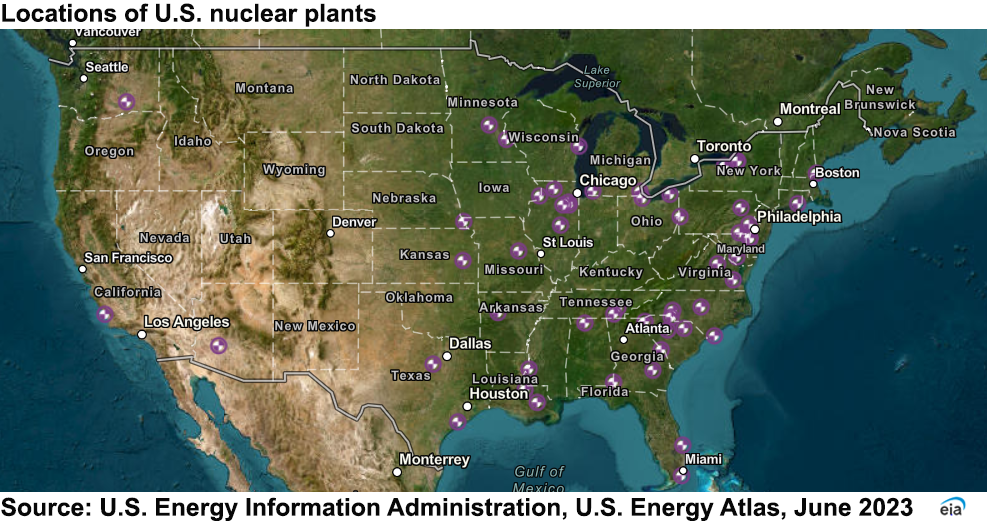
Now, the West gets a little trickier, mainly because it's, well, drier. You won't see as many nuclear plants out there. But they do exist! Think places like Arizona (with its access to the Colorado River) and California, generally located where they can tap into a significant water source, often the Pacific Ocean.
Not Too Close, Not Too Far
Beyond water, there are other smart reasons for their locations. They're usually not right in the middle of a huge metropolitan area. You know, just in case. But they're also not so far out that it's impossible to transmit the power to where people live. It's a delicate balancing act, finding that sweet spot of safety and practicality.
Also, engineers look for geologically stable ground. No one wants a power plant on a major fault line, obviously! That's just common sense, even for the most laid-back nuclear plant operator.
The Boring Truth
So, the big reveal is that US nuclear plants aren't some grand mystery. They're generally located where they have plenty of water, a reasonable distance from major populations, and stable ground. They're usually big, imposing structures, often with those iconic cooling towers (which, by the way, are mostly emitting harmless water vapor, not glowing green stuff!).
Next time you're driving along a major river or cruising past a huge lake, just imagine: somewhere nearby, there might be a silent, hardworking nuclear plant, churning out electricity for your coffee maker, phone charger, and that binge-watching session you've planned. And now, you know exactly why it's there. Pretty cool, huh? Or should I say, pretty chilled by massive amounts of water?