What Will Happen In 100 Trillion Years

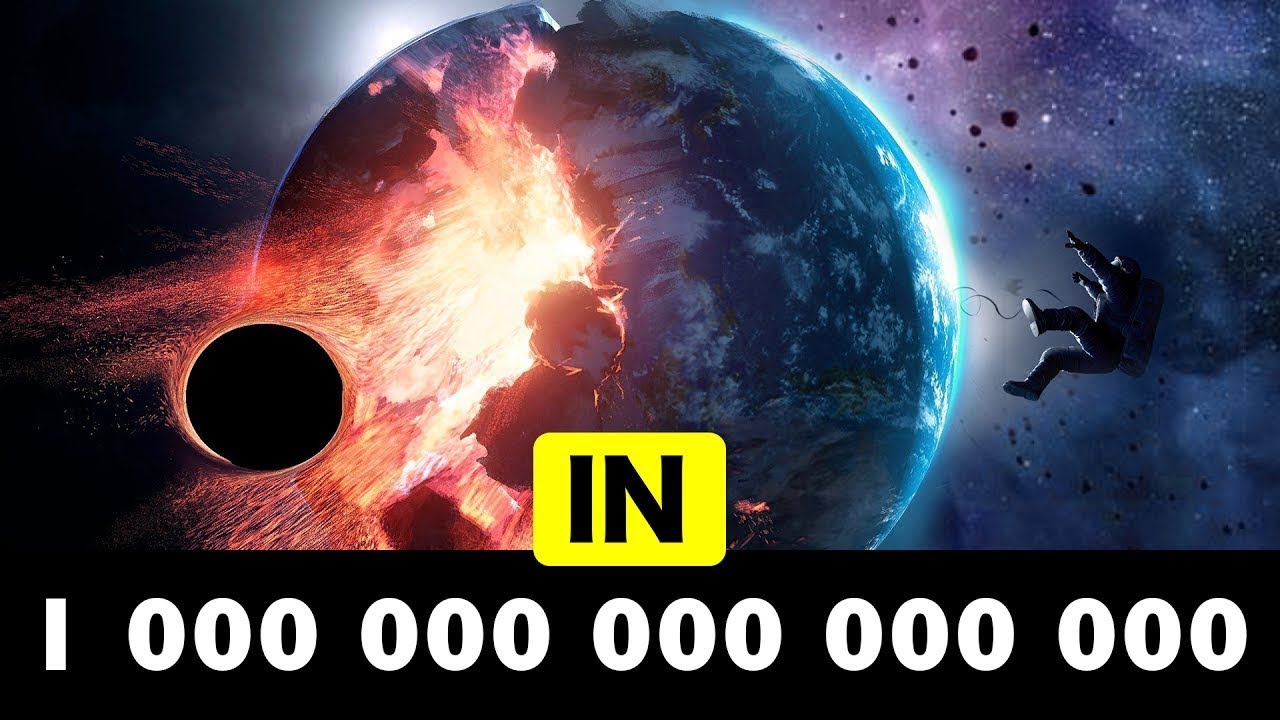
Humans have always been fascinated by the future. From sci-fi novels to blockbuster movies, we love to imagine what's coming next. But what about really next? We're not talking about flying cars or teleportation; we're talking about a timescale that makes the age of the dinosaurs look like a blink of an eye. We're talking about 100 trillion years. It might sound like an abstract, almost comical amount of time, but contemplating what might happen then offers a uniquely mind-expanding creative playground.
Why should artists, hobbyists, or even just curious minds care about the far, far future? Because it's a fantastic exercise in unfettered imagination. It's a chance to break free from the constraints of present-day technology and societal norms and build entirely new worlds and possibilities. Think of it as the ultimate blank canvas. For artists, it's a prompt to envision new forms of life, landscapes sculpted by unimaginable forces, and the faded echoes of our civilization. For hobbyists, it's a springboard for world-building projects, speculative evolution, and grand, theoretical simulations. And for casual learners, it's a journey into the realms of astrophysics, cosmology, and the sheer, humbling scale of time.
What might this look like in practice? Imagine:
Must Read
- The Fading Stars: A painter could depict the last red dwarfs sputtering out in a universe approaching absolute cold, painting with muted tones and stark contrasts.
- The Wandering Black Holes: A digital artist might create a visualization of black holes merging in the darkness, their gravitational interactions distorting spacetime in bizarre and beautiful ways.
- The Progeny of Machines: A writer could craft a story about the descendants of our AI, evolved over eons into forms unrecognizable to us, navigating a dying universe.
- The Echoes of Humanity: A musician could compose a piece representing the faint gravitational waves still rippling through space from events that happened on Earth long, long ago.
- The Sculpting Hand of Entropy: A sculptor might create an abstract piece representing the slow, relentless decay of matter, with forms dissolving and reshaping over time.
Want to give it a try? Here are a few tips:
- Research: Familiarize yourself with basic concepts of cosmology, stellar evolution, and thermodynamics. You don't need to be an expert, but a little knowledge goes a long way.
- Focus on the Core Concepts: The universe will be incredibly different. Stars will have died out. Galaxies will have merged. Black holes will dominate. Consider the implications of these massive changes.
- Embrace the Absurd: Don't be afraid to go wild with your ideas. There's no "right" answer, so let your imagination run free.
- Start Small: Don't feel like you need to create a fully realized universe. Start with a single element, like a type of life form or a specific landscape, and build from there.
Exploring what might happen in 100 trillion years is ultimately enjoyable because it forces us to confront our place in the universe. It's a humbling reminder of the vastness of time and space, but also an empowering opportunity to imagine a future beyond our wildest dreams. It's a chance to play with the very fabric of reality, to create worlds that are both terrifying and beautiful, and to ponder the ultimate fate of existence. So, go ahead, gaze into the abyss of time and see what wonders await.