
What Is The Oxidation State Of Each Element In K2cr2o7
+%2B+2(Cr)+%2B+7(O)+%3D+0.+2(%2B1)+%2B+2(Cr)+%2B+7(-2)+%3D+0..jpg)
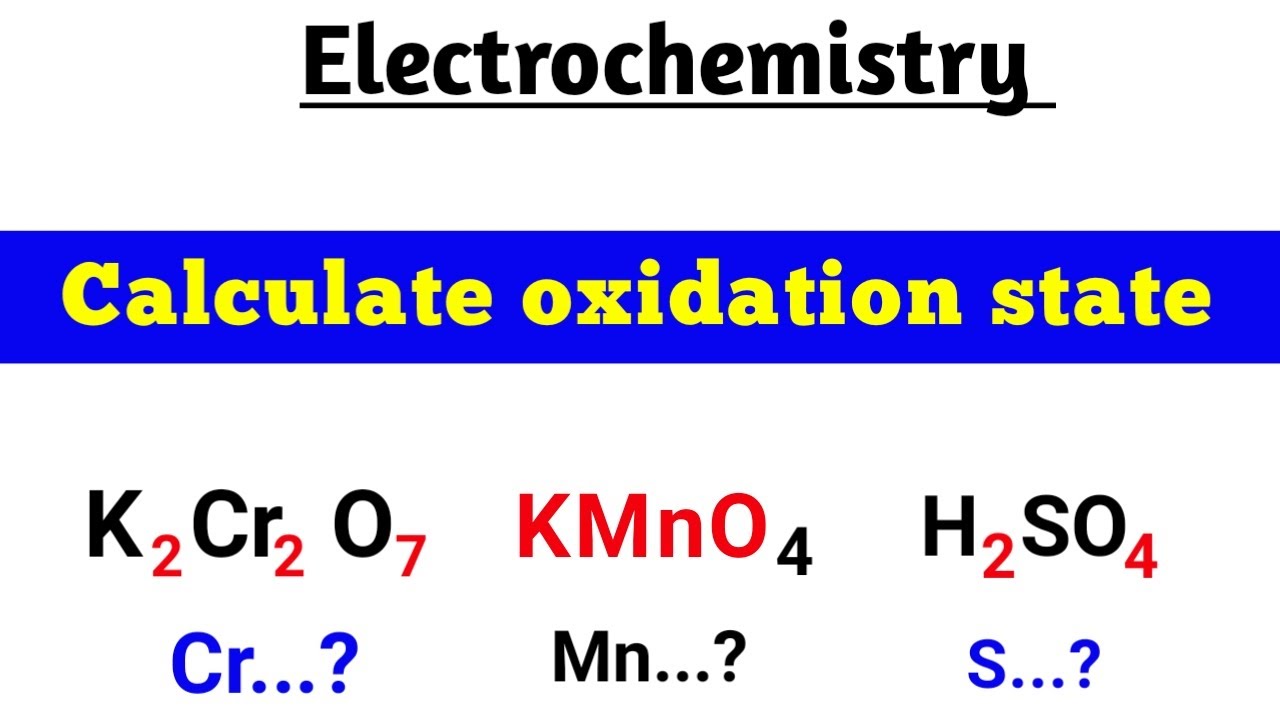
Okay, so you're staring at K2Cr2O7, huh? Potassium dichromate. Fancy name, isn't it? Makes you feel like a real chemist just saying it. But the real question is: what's the deal with the oxidation states? Let’s break it down, nice and easy, like we're sipping lattes and solving the universe's mysteries.
First things first: what is an oxidation state anyway? Think of it as a bookkeeping system for electrons. It's a way to track how many electrons an atom has gained or lost in a chemical bond. No actual transfer happens all the time, mind you! It's a formalism, but a super useful one. We need it, like we need coffee on a Monday morning.
The Rules of the Game
Before we dive into the compound itself, let's quickly recap the golden rules. We're basically playing by the book here, folks.
Must Read
* Rule #1: The oxidation state of an element in its elemental form is always zero. So, a chunk of pure potassium? Zero. A flask full of oxygen gas (O2)? Zero. Easy peasy, right?
* Rule #2: The oxidation state of a monoatomic ion is equal to its charge. Sodium ion (Na+)? +1. Chloride ion (Cl-)? -1. See? We're practically pros already!
* Rule #3: Oxygen almost always has an oxidation state of -2. Yeah, yeah, there are exceptions (like with fluorine or in peroxides), but let's not get bogged down. In most cases, oxygen's our reliable -2 buddy.

* Rule #4: Hydrogen almost always has an oxidation state of +1. Again, exceptions exist, mainly with metal hydrides, but we're keeping it simple today.
* Rule #5: The sum of the oxidation states in a neutral compound is zero. Zero! Nada! Zilch! That's the key to unlocking everything. And in a polyatomic ion, the sum equals the charge of the ion.
Cracking the K2Cr2O7 Code
Alright, let's tackle our potassium dichromate. K2Cr2O7. Ready? Deep breaths. We've got this.
Potassium (K): Potassium is in Group 1 of the periodic table, meaning it tends to form +1 ions. So, its oxidation state is +1. We have two of them, so that's +2 total from the potassium.

Oxygen (O): As we said, oxygen is usually -2. We have seven of them! So, -2 multiplied by 7 is -14. Woah, that's a lot of negative charge!
Chromium (Cr): Now for the tricky one! This is where we use our Rule #5. The whole compound is neutral, so the sum of the oxidation states must be zero. Let's do some algebra! (Don't worry, it's not that scary.)
We know: 2(K) + 2(Cr) + 7(O) = 0
Plug in what we know: 2(+1) + 2(Cr) + 7(-2) = 0
Simplify: 2 + 2(Cr) - 14 = 0
Combine: 2(Cr) - 12 = 0
Isolate Chromium: 2(Cr) = 12
Solve for Chromium: Cr = +6

So, the oxidation state of chromium in K2Cr2O7 is +6! Boom! We did it!
Recap Time!
Just to make sure we're on the same page (and not just daydreaming about more coffee), let's quickly summarize:
* Potassium (K): +1 * Chromium (Cr): +6 * Oxygen (O): -2
There you have it! You've successfully navigated the oxidation state minefield of potassium dichromate. Give yourself a pat on the back. You deserve it! Now, who's up for another chemistry challenge?