What Is The Difference Between 157 And 161 Index Lenses
Lisa Davis
Ever peered through someone's glasses and thought, "Wow, those lenses are thin!" Or maybe you've cringed at your own thick spectacles. That's where lens indexes come in! Let's dive into the slightly mysterious, but super interesting, world of lens indexes. Specifically, the difference between 1.57 and 1.61. Think of it as a lens thickness showdown!
Lens Index: The Thinness Secret!
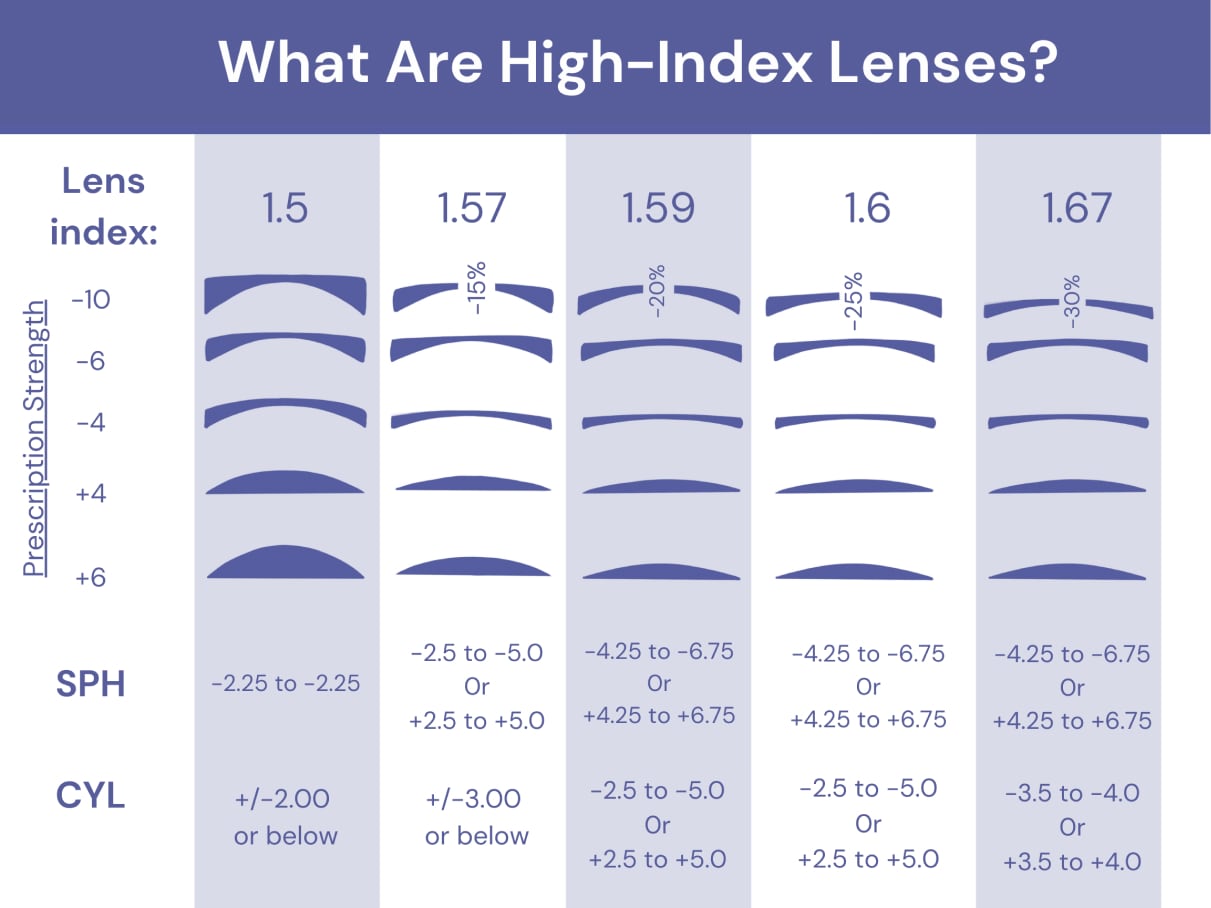
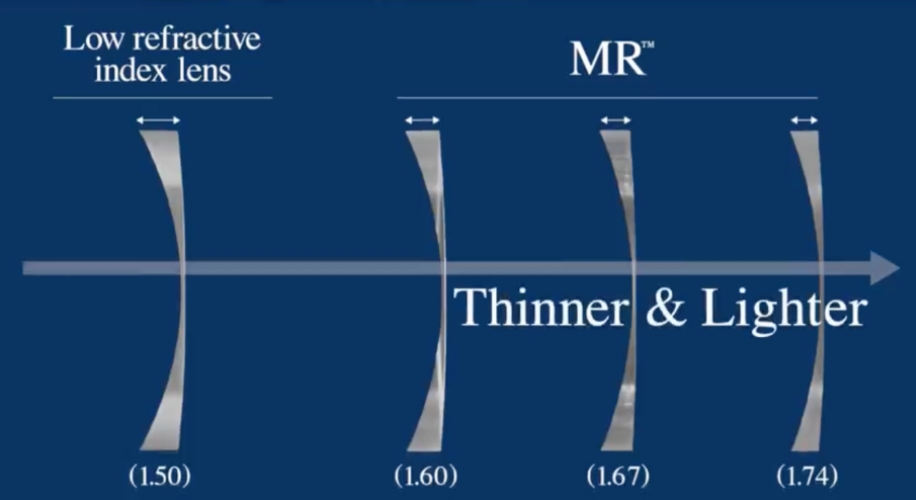
Imagine a magic number that tells you how much a lens can bend light. That's essentially what the index of refraction is. The higher the number, the more the lens bends light. And guess what that means? A higher index lets you use less material to achieve the same prescription. Translation: thinner lenses! Hooray!
So, when you hear about 1.57 or 1.61 lenses, these numbers are simply referring to their index of refraction. They're like different levels on a thinness scale. The higher you go on that scale, the thinner your lenses become.
1.57 lenses are often called mid-index lenses. They're a great compromise between thinness, clarity, and price. If your prescription isn't super strong, 1.57 lenses might be perfect. They’re a significant step up from standard plastic lenses (which usually have an index of 1.50). You get a noticeable reduction in thickness and weight. Plus, they are typically more impact-resistant than standard plastic!
Think of 1.57 as the "sensible shoes" of lens indexes. They're practical, reliable, and get the job done without being too flashy. They're a solid choice for everyday wear.
What is the Difference Between Regular Lenses and High Index Lenses
1.61: The Sleek and Slim Choice
Now, let's talk about 1.61 lenses. These are considered high-index lenses. They take the thinness game up a notch! If you have a stronger prescription, 1.61 lenses will make a big difference in the overall look and feel of your glasses. They're noticeably thinner and lighter than 1.57 lenses.
Picture this: You have a prescription that makes standard lenses look like magnifying glasses. Switch to 1.61, and suddenly, your glasses are sleek and stylish! It’s like going from a clunky brick phone to a slim smartphone.
The Showdown: 1.57 vs. 1.61
So, what’s the real difference? It boils down to thickness and weight. 1.61 lenses will always be thinner and lighter than 1.57 lenses for the same prescription. This can be especially important if you have a strong prescription. Nobody wants to feel like they're carrying around paperweights on their nose!
What is the difference between 1.61 and 1.67 index lenses? – lakoh
Here's a quick comparison:
Thickness: 1.61 wins! Thinner is always better, right?
Weight: Again, 1.61 takes the crown. Lighter lenses are more comfortable for all-day wear.
What is the difference between 1.61 and 1.67 index lenses? – lakoh
Price: 1.57 lenses are generally more affordable. You'll pay a bit more for the added thinness of 1.61.
Optical Clarity: Both offer great clarity, especially with anti-reflective coatings. This is where the magic happens!
Making the Right Choice
Choosing between 1.57 and 1.61 lenses depends on a few factors. Your prescription is the biggest one. If you have a strong prescription, 1.61 lenses are definitely worth considering. Your budget also plays a role. If you're on a tighter budget, 1.57 lenses offer a great balance of thinness and affordability.
Difference Between 1.61 And 1.67 High Index Lenses
Don't be afraid to chat with your eye doctor or optician. They can help you decide which lens index is right for you. They’ll consider your specific needs and preferences. Think of them as your personal lens consultants!
And remember, getting new glasses should be fun! It's a chance to update your look and see the world a little clearer (and thinner!). So, go forth and explore the exciting world of lens indexes! You might be surprised at how much of a difference it makes.
Who knew lenses could be so entertaining? Get ready to see the world in a whole new (and thinner!) light.