
What Is Fire Alarm System
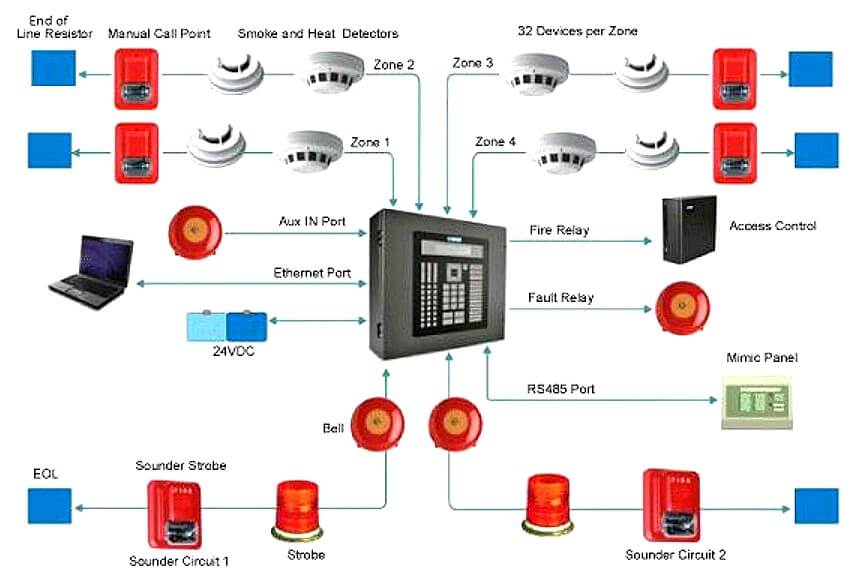
Ever wondered about those mysterious boxes on the ceiling? You know, the ones that love to sing their loudest song at the most inconvenient times. We're talking about the one, the only, the incredibly dramatic fire alarm system.
Let's be honest, for many of us, the first thought isn't "oh good, safety!" It's usually something closer to "who burned the popcorn again?!" or "seriously, 3 AM?!"
These systems are often the unsung, or rather, overly sung, heroes of our modern buildings. They're like that one friend who's always a little bit extra, but you know deep down they mean well.
Must Read
Their mission is vital, but their execution can sometimes feel like a prank. A very loud, very public prank.
The Drama Queens of Detection
Imagine a building with a personality. The fire alarm system would definitely be its most flamboyant resident. It just loves a good, loud entrance, often uninvited.
Its primary goal is noble: to protect us from fire. But its methods? Oh, they are certainly... memorable and spectacularly over-the-top.
It’s almost as if they thrive on surprising you. Just when you're in the middle of a crucial Zoom call, about to score that winning point in a game, or finally drifting off to sleep. They have impeccable bad timing.
They are the ultimate party poopers, capable of bringing any gathering to a screeching, ear-splitting halt. All in the name of safety, of course.
"The fire alarm system: Your building's personal, very enthusiastic, early morning wake-up call and master of dramatic pauses."
Who Are These Noisy Neighbors?
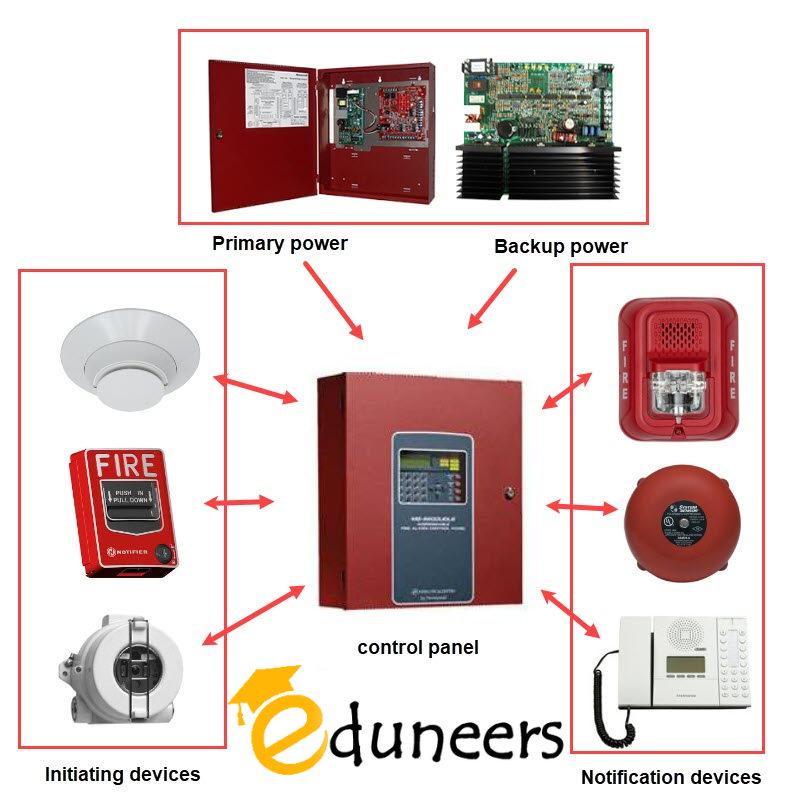
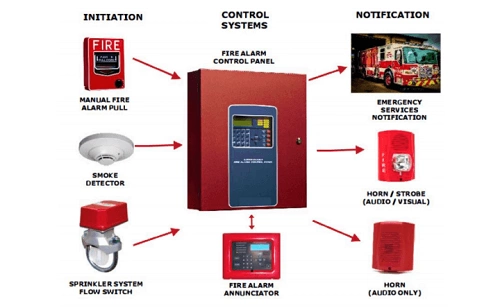
A fire alarm system isn't just one grumpy box. Oh no, it's a whole orchestra of components, each playing its part in the symphony of safety. Or, as some might argue, the symphony of sudden, ear-splitting panic.
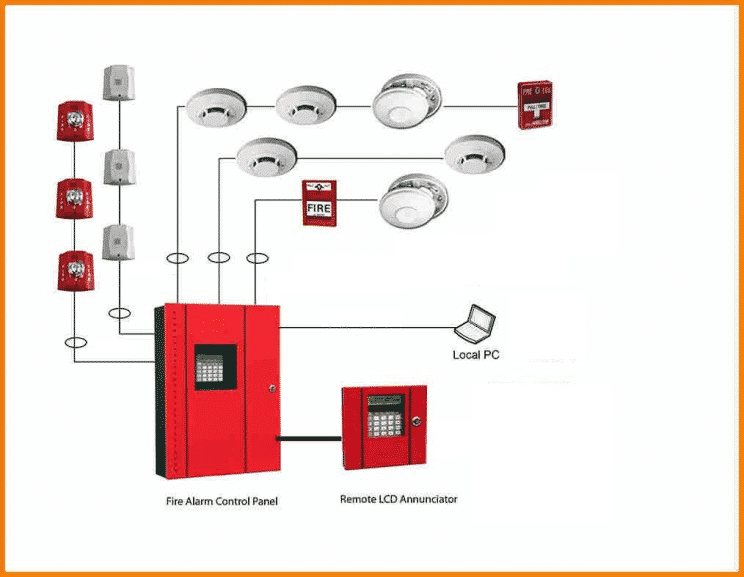
Think of it as a highly specialized team, dedicated to sniffing out trouble. Even if that trouble is just a particularly smoky piece of toast or a rogue curling iron.
Each part has a unique job, contributing to the overall, sometimes jarring, harmony. They work together to get your attention, whether you want to give it or not.
The Sensitive Sniffers: Smoke Detectors
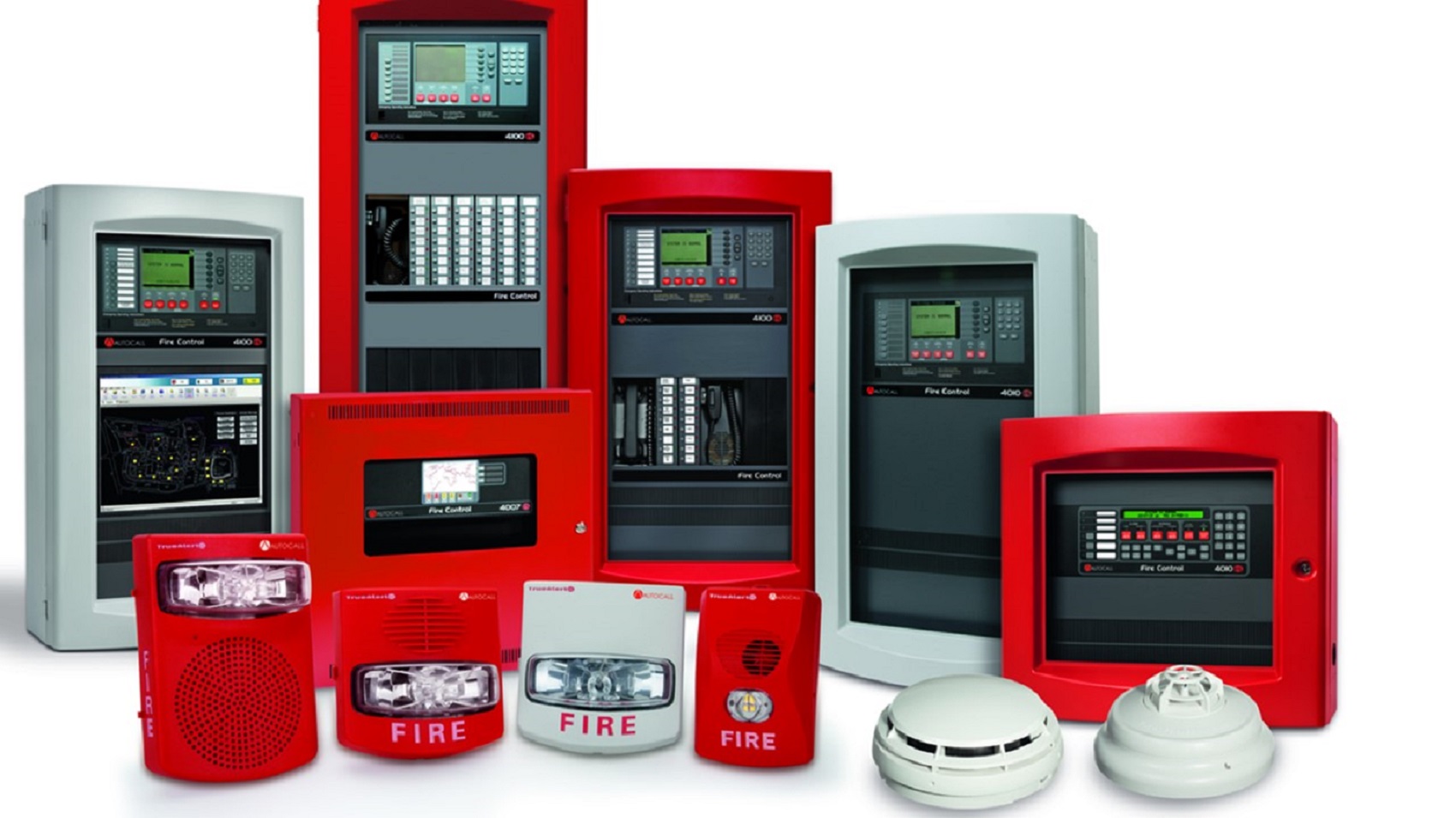
First up, we have the smoke detectors. These are the building's noses, and boy, are they sensitive! They are constantly on alert, scanning the air for any hint of smoke particles.
They come in a few flavors, like photoelectric or ionization, but their job is the same. To detect those tiny traces that hint at a burning problem, or sometimes, just a really enthusiastic toaster.
Sometimes, they might mistake your culinary experiments for a raging inferno. A little charring of dinner and BAM! Instant concert, complete with flashing lights.
They don't discriminate. Whether it's a real fire or just a burnt microwave dinner, their protocol is to alert. Better safe than sorry, they seem to shriek.
The Heat Seekers: Heat Detectors
Then there are the heat detectors. These are a bit more chill, less prone to panicking over a slightly smoky bagel. They wait for a significant, sustained rise in temperature.
They're the calm, collected members of the team, the logical ones. Only raising an alarm when things are truly heating up, not just warming up.
They are often found in places where smoke might be common and harmless, like kitchens or garages, specifically to avoid those annoying false alarms. They understand the difference between toast and trouble.
The Red Button of Doom: Manual Pull Stations
And what if you see smoke or fire before the automatic detectors do? That's where the manual pull stations come in. These are the bright red boxes often found on walls near exits.
They are your direct line to the alarm, a personal invitation to initiate the building's siren song. A simple pull and the whole building knows something is amiss.
It's like pressing the big, shiny "ALERT!" button yourself, giving you a tiny bit of heroic control in an emergency. Just remember to only pull it when there's an actual emergency, not just curiosity.
The Loudmouths: Notification Appliances (Horns and Strobes)
Once danger is detected, by whatever means, it's time for the building's grand announcement. This is handled by the notification appliances. We're talking about the horns and strobes.
The horns are, shall we say, vocally gifted. They blast out that unmistakable, attention-grabbing sound, designed to cut through any conversation or deep sleep.
The strobes, those bright flashing lights, are for people who might not hear the horns. They ensure everyone, even the hard of hearing, gets the visual "GET OUT!" message.
Together, they create a sensory overload designed to make you stop whatever you're doing and pay immediate, undivided attention. Mission accomplished, usually with a jump.
The Brain of the Operation: The Fire Alarm Control Panel
All these individual components report back to one central hub: the Fire Alarm Control Panel (FACP). This is the brain, the mission control, the nerve center.
It receives signals from detectors, processes them, and decides if it's time for the building-wide, ear-splitting announcement. It's the decision-maker.
It can even tell responders exactly where the alarm originated, pointing them to the specific floor or zone. No more guessing games in a smoky hallway, potentially saving precious minutes.
After all the ruckus, the FACP is also where the system gets reset. It’s the manager who eventually turns off the noise and restores calm, once the all-clear is given.
Why All The Racket? The Serious Bit (Sort Of)
Despite their dramatic flair and uncanny ability to interrupt your day, fire alarm systems are incredibly important. They're not just there to annoy you, even if it feels that way sometimes.
They provide precious seconds, sometimes minutes, for people to evacuate safely. Those few moments can literally be the difference between a close call and a tragedy.
Think of them as professional time-givers. They buy you invaluable time to react and get out when danger looms, before things get truly out of hand.
It’s their job to be overly cautious, to err on the side of extreme noise. A false alarm is inconvenient, but a missed alarm can be devastating.
"An annoying alarm is a sign that the system is working. A silent system in a fire? That's when you truly worry, and wish for the loudmouths."
So, the next time that piercing wail starts, try not to grumble too much. Take a deep breath (if the air is clear!) and remember their crucial, life-saving role.
They might be overzealous, a bit loud, and certainly lack social graces. But they are genuinely, aggressively, looking out for you and everyone else in the building.
They are the guardian angels with a megaphone and a flashing disco light. And even if they often get the timing wrong, we're ultimately safer because of their unwavering, boisterous vigilance.
So, here's to the fire alarm system: the dramatic, loud, and utterly essential protectors of our everyday lives. May your popcorn never set them off, unless it's genuinely on fire!