What Does Merci Mean In French
Let's face it, who doesn't love throwing around a little French every now and then? There's something undeniably chic about peppering your conversation with words like "bonjour" or "au revoir." But if there's one French word that's universally useful and appreciated, it's "merci." It's a tiny word with a powerful impact, and understanding its meaning is key to navigating French culture – and even just impressing your friends.
So, what does "merci" actually mean? Quite simply, it means "thank you." But it's more than just a direct translation; it's an expression of gratitude, a polite acknowledgement of a kindness, and a fundamental building block of good manners in French-speaking countries. Think of it as the glue that holds pleasant social interactions together. It's the verbal equivalent of a smile and a nod, a way of saying, "I appreciate what you've done."
The beauty of "merci" lies in its versatility. You can use it in countless everyday situations. Someone holds the door open for you? Merci! The waiter brings you your coffee? Merci! Your friend lends you their pen? Merci! Your coworker covers for you in a meeting? A very enthusiastic Merci! It's even appropriate when someone simply says "Bonjour" to you – a polite "Bonjour, merci" is a lovely way to start a conversation. You'll hear it used in shops, restaurants, on public transport – basically, anywhere an exchange takes place.
Must Read
Beyond its basic meaning, understanding how to respond to "merci" is equally important. The standard reply is "de rien," which translates to "you're welcome" or, more literally, "it's nothing." You might also hear "je vous en prie," which is a more formal version of "you're welcome," or "avec plaisir," meaning "with pleasure." Choosing the right response depends on the context and your relationship with the person.
Want to use "merci" more effectively and sound even more authentic? Here are a few practical tips:
- Pronunciation is key: Make sure you're pronouncing it correctly. It's "mare-SEE," with the emphasis on the second syllable. Practice saying it aloud!
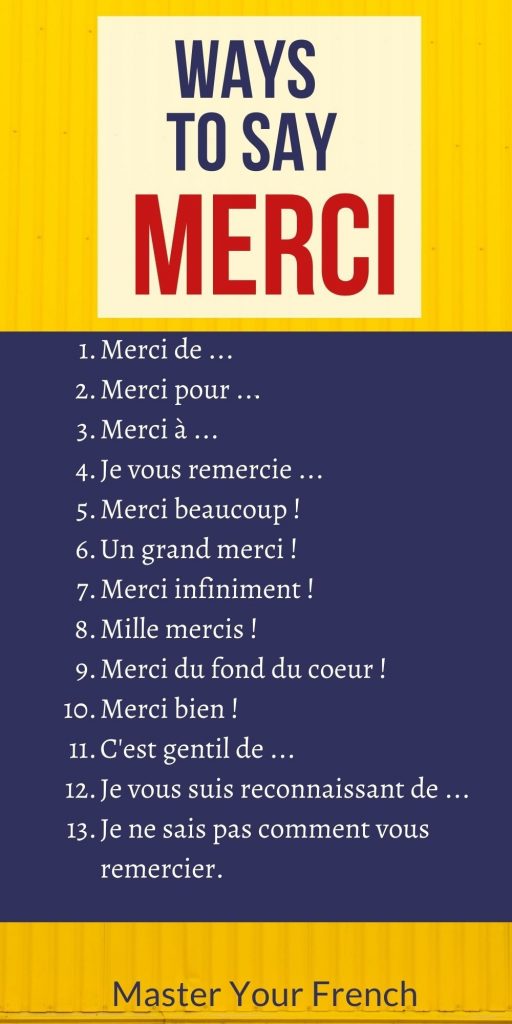
- Add emphasis: If you want to express sincere gratitude, try adding "beaucoup" (very much) to make it "merci beaucoup." This is a fantastic way to show genuine appreciation.
- Combine it with body language: A genuine smile and eye contact go a long way in conveying your sincerity.
- Learn variations: Explore other ways to say thank you, like "mille mercis" (a thousand thanks) for extra emphasis.
Mastering "merci" is more than just learning a word; it's about embracing a culture of gratitude. So, go ahead, sprinkle a little "merci" into your life. You'll be surprised at the positive impact it can have on your interactions, both in French-speaking environments and beyond!