
What Are Water Fire Extinguishers Used For

Imagine a big, red fire extinguisher. You've seen them in hallways, kitchens, and offices, right? Most people think of them as these mysterious gadgets full of chemicals.
But here's a little secret: some of the most common and useful fire extinguishers are actually just filled with plain old water! It sounds almost too simple, doesn't it?
Like bringing a garden hose to a raging inferno. Yet, for certain types of blazes, water is a surprisingly effective hero, ready to save the day.
Must Read
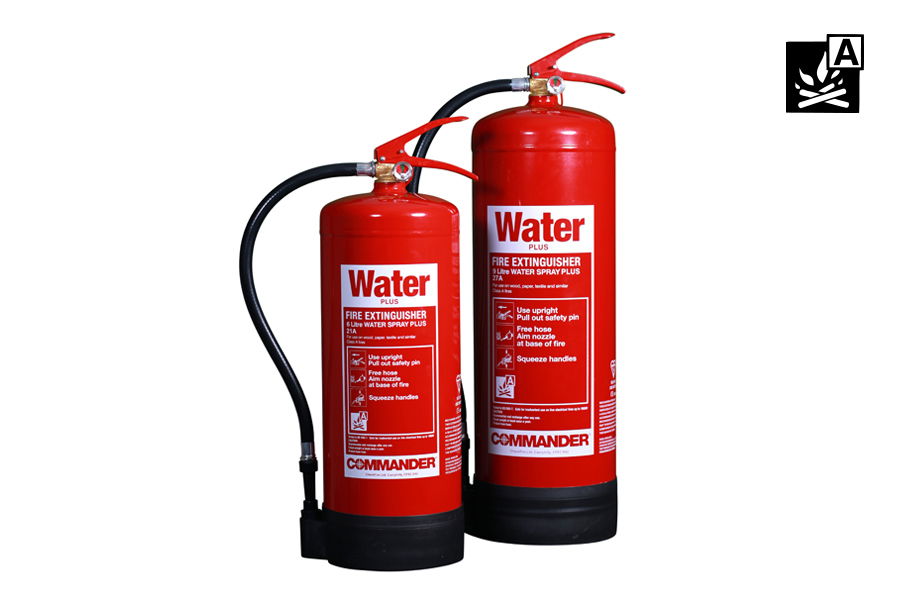
So, what kind of fires are we talking about where a bit of H2O becomes your best friend? We're talking about what the fire safety folks call "Class A" fires.
These are the everyday fires you might encounter in your home or office. Think of things that burn easily and leave ash behind.
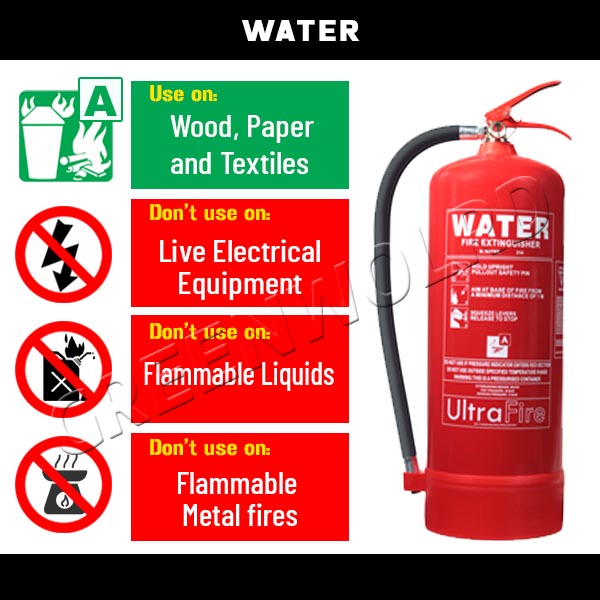
We're talking about incidents involving ordinary combustible materials. Things like wood, paper, cloth, and even most plastics.
Picture a stack of old newspapers getting too close to a heat source. Or a kitchen towel catching a spark from the hob.
Perhaps a rogue candle setting a decorative curtain alight. These are exactly the scenarios where a water fire extinguisher shines.
Water works its magic by cooling things down dramatically. It absorbs the heat from the burning material, lowering its temperature below the ignition point.

Without enough heat, the fire simply can't continue to burn. It's like taking the batteries out of a toy; it just stops.
It also helps to smother the flames a bit, cutting off their oxygen supply. This dual action makes it incredibly efficient for the right kind of fire.
However, and this is a big, important "however," you absolutely, positively do not want to use a water extinguisher on every type of fire.
Misusing an extinguisher can be dangerous, turning a small problem into a much bigger one. It's crucial to know your tools!
For instance, imagine trying to put out an electrical fire with water. Water conducts electricity, remember your basic science lessons?
You could get a nasty electric shock, or even make the electrical fault much worse. That's a definite
no-go zonefor water.
And those terrifying grease fires that sometimes flare up in the kitchen? The ones from hot cooking oil?
Throwing water on those is like adding fuel to the flames, literally! Water will cause the burning grease to splatter and spread, creating a massive, fiery mess.
So, water extinguishers have a very specific, yet incredibly important, job. They are like a specialized wrench in a toolkit, perfect for one task, but not for others.
They're designed to tackle those everyday combustibles that are common in homes and workplaces. They handle the "solid materials" fires with ease.
Think about your cozy living room: wooden furniture, fabric curtains, books, and magazines. All are potential Class A fire hazards.
A water extinguisher strategically placed can be the first line of defense for these common items. It's about preparedness, not panic.
What about in a school classroom? You'll find plenty of paper, cardboard projects, and fabric decorations.
A water extinguisher is often the safest and most effective choice for these environments. It's simple to use and highly effective for typical school materials.
Even in a small workshop filled with wood shavings and cloth rags, a water extinguisher is invaluable. A stray spark can quickly ignite these materials.
A quick burst of water can prevent a minor incident from becoming a major blaze. It provides those crucial few seconds to react safely.
These extinguishers are often easily identifiable by a red label with a large "A" or a picture of burning wood. Some even have a green triangle.
This symbol tells you exactly what kind of fire it's meant to fight. Knowing these symbols can be life-saving information.
Just like any important safety device, your water extinguisher needs a little bit of care. Make sure it's accessible and not hidden behind clutter.
Check the pressure gauge periodically; it should always be in the "green" zone, indicating it's ready to go.

They are typically very user-friendly. Most involve simply pulling a pin, aiming the nozzle, and squeezing a lever.
This ease of use is a huge advantage, especially in a stressful situation where every second counts.
Having one of these reliable devices at hand offers a wonderful sense of peace. It's like having a quiet, ever-vigilant guardian standing by, just in case.
So, the next time you spot a plain red fire extinguisher, remember its humble, yet powerful, purpose. It's not just a canister of chemicals; it might just be simple water.
It's ready to tackle the most common types of fires that start in our homes and workplaces every day. It's a reminder that sometimes, the simplest solutions are truly the best.
This unsung hero of fire safety deserves a nod of appreciation. It quietly protects us from those everyday blazes, proving that basic principles can be profoundly effective.
It’s a powerful tool for home and office safety, bringing peace of mind with its simple, effective design. For Class A fires, there's nothing quite like it.