What Are The Balls On The Power Lines Used For
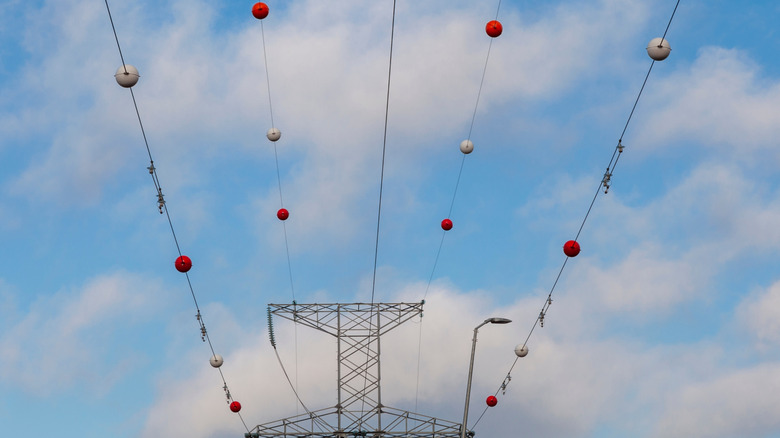
Ever found yourself gazing up at a power line, perhaps while stuck in traffic or on a leisurely walk, and spotted those brightly colored spheres dangling from the wires? Maybe they were orange, red, or white, strategically placed along the metallic cables. If you've ever paused and wondered, "What on earth are those balls for?" then congratulations, you've stumbled upon one of those delightful little mysteries of our modern world! It's actually quite a common question, and it's a fantastic example of how much thought and engineering goes into the infrastructure we often take for granted. Understanding these seemingly simple objects can give us a new appreciation for the safety measures that keep our world running smoothly.
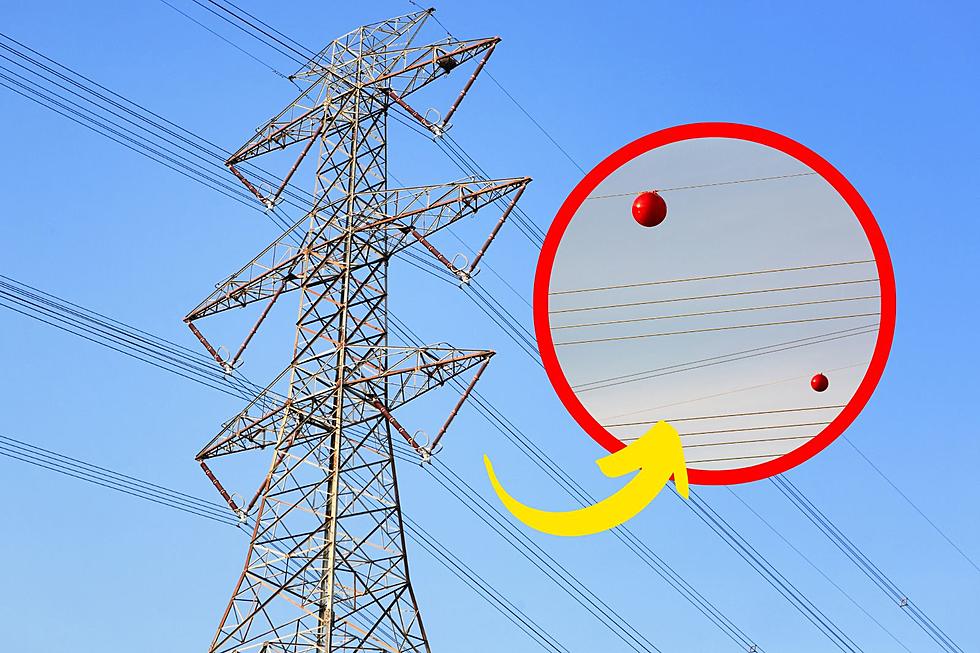
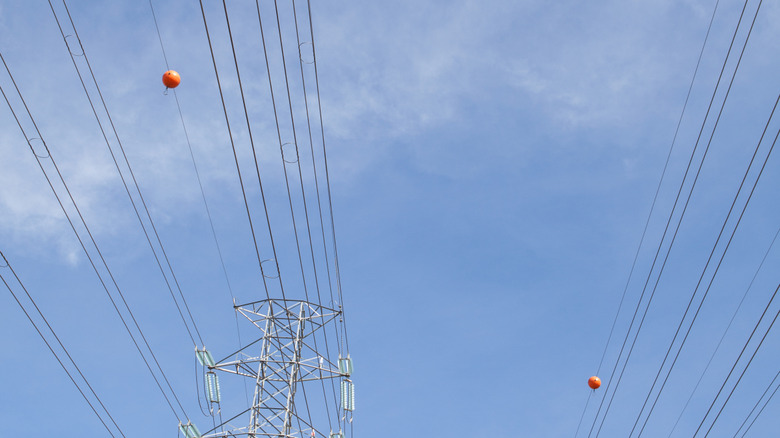
So, let's pull back the curtain on these enigmatic orbs. The most common type of ball you'll see on power lines are called aircraft warning markers, or sometimes just marker balls. Their primary purpose is elegantly simple: to make power lines more visible to aircraft, especially those flying at lower altitudes. Think about it: thin, grey power lines can be incredibly difficult to spot against a cloudy sky or varied terrain, particularly for pilots of helicopters, crop dusters, or small general aviation planes. These aircraft often fly low for various reasons, from agricultural work to emergency services, and encountering an unseen power line can be catastrophic.
That's where the marker balls come in. By attaching these large, contrasting spheres to the highest wires (often the ground wire, which is at the very top of the transmission tower), they effectively "thicken" the visual profile of the line. The bright, often alternating colors like international orange, white, and red are chosen for maximum visibility against different backgrounds and weather conditions. This significantly reduces the risk of collisions, protecting pilots, passengers, and ground crews, and preventing widespread power outages that could result from a downed line. They are an essential, though often overlooked, component of aviation safety near critical infrastructure.
Must Read
These markers aren't just for pilots; learning about them can also be a fascinating educational experience. In a STEM context, they illustrate principles of visual perception, engineering design, and aeronautical safety. For instance, you could explore why specific colors are chosen, or the aerodynamics of their design to withstand strong winds without damaging the power lines. In daily life, understanding their purpose makes you a more informed citizen, aware of the layers of safety built into our shared environment. Next time you're near a small airfield, a river crossing, or a valley where power lines span a wide gap, you're likely to spot these markers, serving as silent guardians in the sky.
Want to explore this curious bit of infrastructure further? The next time you're out and about, simply look up! Pay attention to where these balls are placed. Are they near airports? Across wide open spaces or valleys? Do you notice patterns in their colors? You might even research local aviation regulations (like those from the FAA in the United States) to see specific requirements for marking power lines in your area. For a fun activity with kids, turn it into a "spot the power line balls" game on a road trip. It's a simple, yet engaging way to foster curiosity about the world around us and appreciate the thoughtful, unseen engineering that keeps us safe every single day.