Umbc Psychology Ba Requirements

Ever wonder why some songs instantly get stuck in your head, or why certain colors make you feel a certain way? Maybe you're captivated by true crime documentaries, constantly analyzing the 'why' behind human behavior. If any of that resonates, then diving into psychology, even casually, can be incredibly rewarding. And if you're thinking about pursuing a formal education in it, the UMBC Psychology BA requirements offer a fantastic framework to explore this fascinating field.
You might think psychology is just for aspiring therapists, but it's incredibly valuable for artists, hobbyists, and anyone simply curious about the human experience. For artists, understanding the psychology of perception – how we see and interpret the world – can unlock new levels of creativity. Knowing how colors, shapes, and compositions affect viewers' emotions allows you to craft more impactful and meaningful artwork. Consider the impact of Gestalt principles on visual design; understanding these principles allows you to create visually appealing and understandable compositions.
Hobbyists, too, can benefit immensely. If you’re a writer, understanding character motivations and developmental psychology can help you create more believable and relatable characters. If you're a musician, understanding how music affects emotions can help you compose more powerful and moving pieces. Maybe you're a casual learner who enjoys podcasts or documentaries. Even a basic understanding of cognitive biases can help you critically evaluate information and make better decisions. Think about how learning about confirmation bias can help you be more objective when reading news or forming opinions.
Must Read
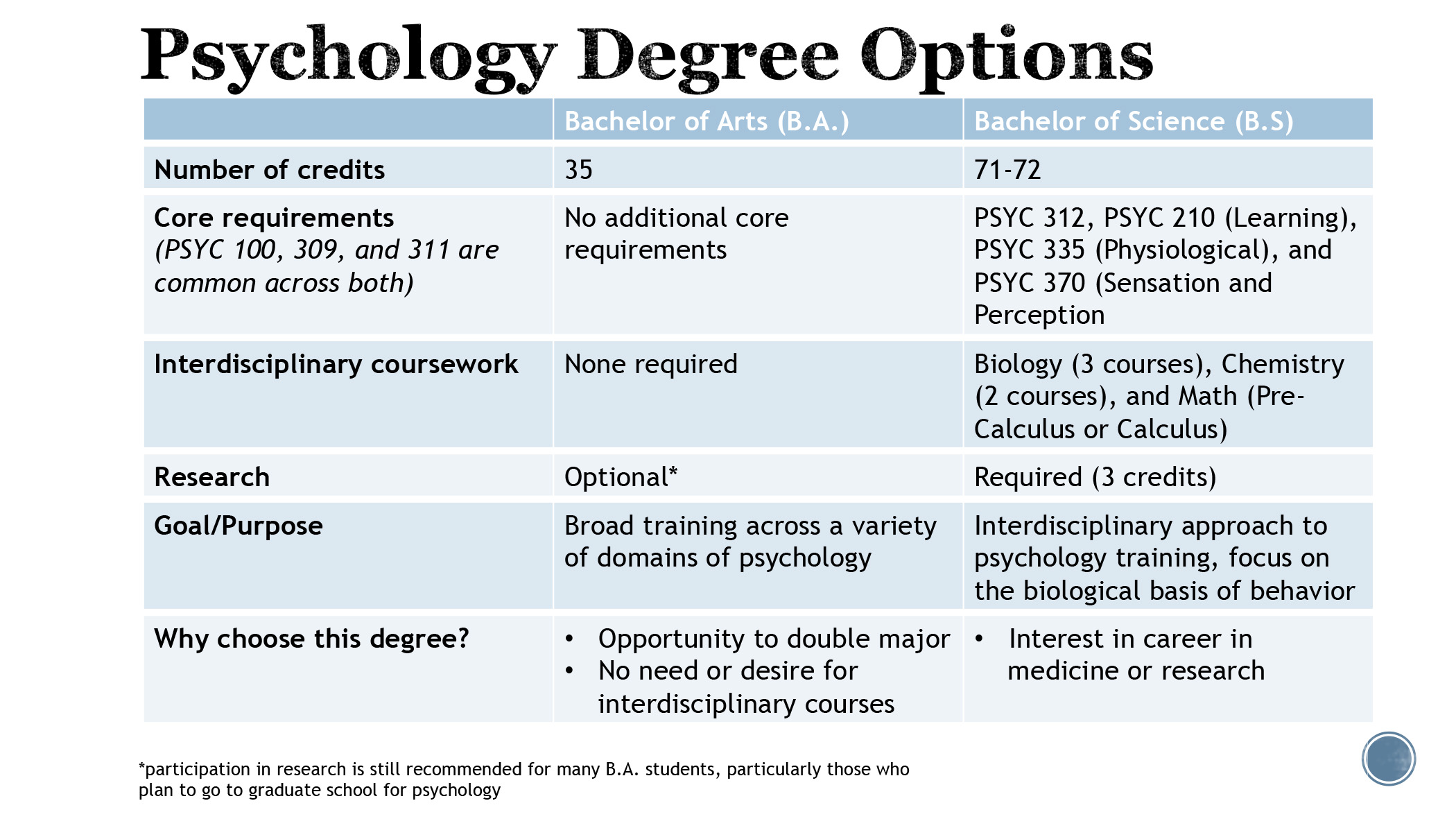
The UMBC Psychology BA program sets a strong foundation for understanding various facets of the human mind. Requirements typically cover a broad range of topics, including research methods (essential for evaluating psychological studies), cognitive psychology (how we think and remember), developmental psychology (how we change across the lifespan), social psychology (how we interact with others), and abnormal psychology (understanding mental disorders). They also frequently include a statistics requirement, equipping you with the tools to analyze data and draw meaningful conclusions. While specific course titles and requirements can vary, the core curriculum provides a comprehensive overview of the field.
Want to explore psychology without committing to a degree (yet)? Here are a few tips for trying it at home: Start with introductory books – many are written for a general audience. Listen to psychology podcasts – there are tons available on a wide range of topics. Watch documentaries or TED Talks on psychological topics. Practice active observation – pay attention to people's behavior and try to understand the underlying motivations. Most importantly, be curious and ask questions!
Ultimately, exploring psychology, whether through formal education or casual learning, is enjoyable because it's about understanding ourselves and the world around us. It helps us to empathize with others, make better decisions, and live more fulfilling lives. It's a journey of self-discovery and a fascinating exploration of the human condition. The UMBC Psychology BA provides a well-structured path for that journey, but the door is open for anyone with a curious mind.