Types Of Fire Extinguisher And Their Uses
Ever walked past a bright red fire extinguisher hanging innocently on a wall and given it a second thought? Probably not beyond a fleeting 'oh, that's there if I need it.' But guess what? These silent guardians are actually pretty fascinating, each one a little superhero trained to tackle a specific kind of fiery villain. It’s not just a case of "point and shoot" – understanding what's inside and what fire it's meant for can literally be a lifesaver. Ready to geek out a little on fire safety with a chill vibe?
Think of it like this: you wouldn't use a delicate dustpan and brush to clean up a muddy puddle, right? You'd grab a mop. Fires are similar. They come in different "flavors," and each flavor needs a different extinguishing agent. This is where our handy dandy classification system comes in!
The A, B, C, D, K of Fires: It's an Alphabet Soup of Safety!
Fire classifications might sound a bit like a boring school lesson, but trust me, it's the core of why these devices are so cool. They categorize fires based on the fuel that's burning. Let's break it down:
Must Read
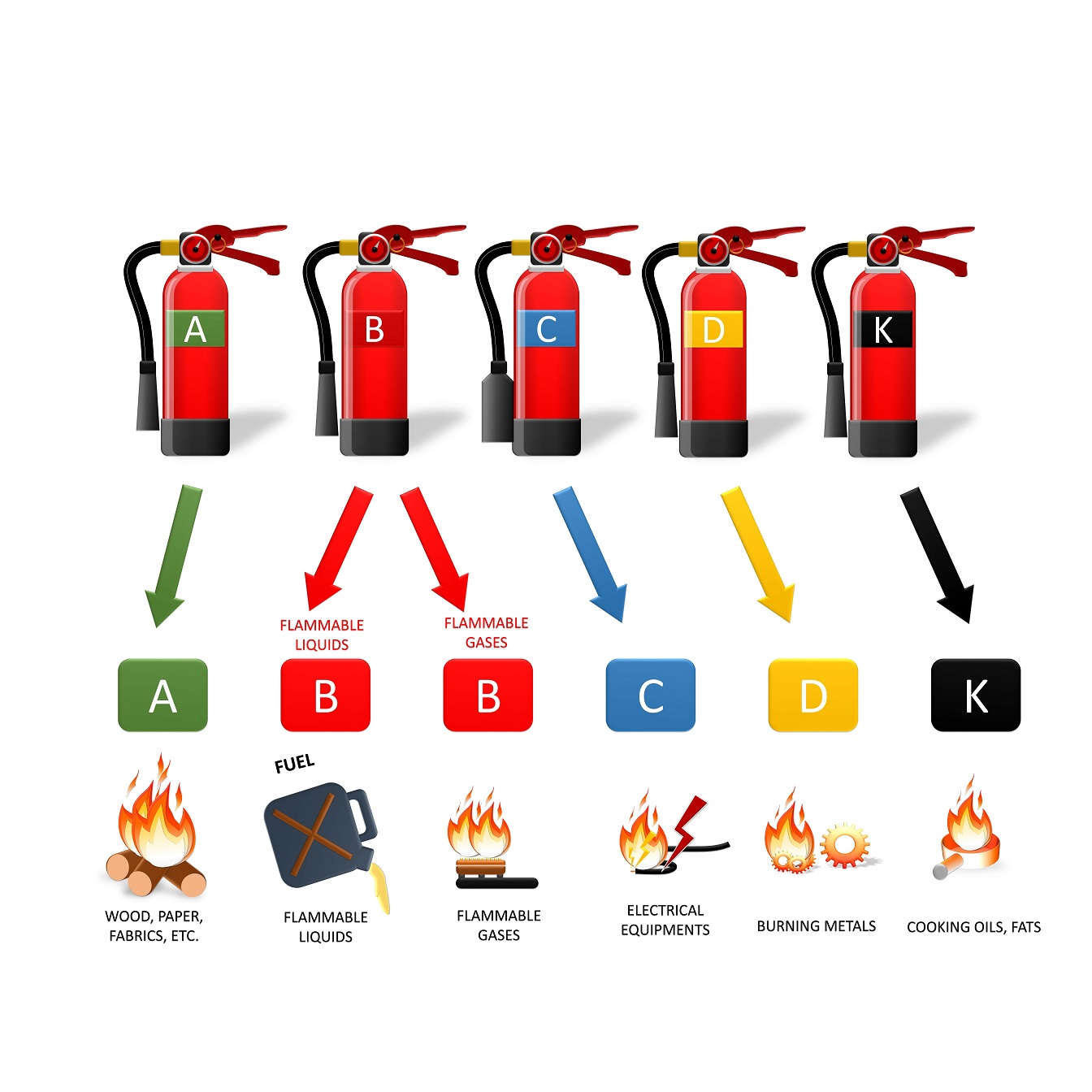
- Class A Fires: The Everyday Burners
These are the most common types of fires, involving ordinary combustible materials like wood, paper, cloth, and plastics. Think of a campfire gone wrong, or a wastebasket fire. They leave ash behind. - Class B Fires: The Liquid Flamers
These troublemakers are fueled by flammable liquids and gases – things like gasoline, oil, grease, paints, and propane. You know how water just spreads a grease fire? That's because Class B fires need a different approach entirely! - Class C Fires: The Electrical Zappers
Oh, the sparks! Class C fires involve energized electrical equipment. We're talking about appliances, wiring, motors, and circuit breakers. Using water on these is a huge no-no, as water conducts electricity, putting you in serious danger! - Class D Fires: The Metal Melters
These are a bit rarer for the average person, usually found in industrial settings. Class D fires involve combustible metals like magnesium, titanium, zirconium, or potassium. They burn incredibly hot and require very specialized extinguishers. - Class K Fires: The Kitchen Kingpins
A more recent addition to the family, Class K fires are all about cooking oils and fats found in commercial kitchens (and sometimes at home too, if things get really wild). These high-temperature grease fires are notoriously difficult to put out with conventional methods.
See? Knowing the 'fuel type' is step one. Now, let's meet the heroes designed to tackle each one!
Meet the Extinguisher Squad: Who's Good at What?
Just like a sports team, each extinguisher has its specialty. Let's get acquainted with the star players:

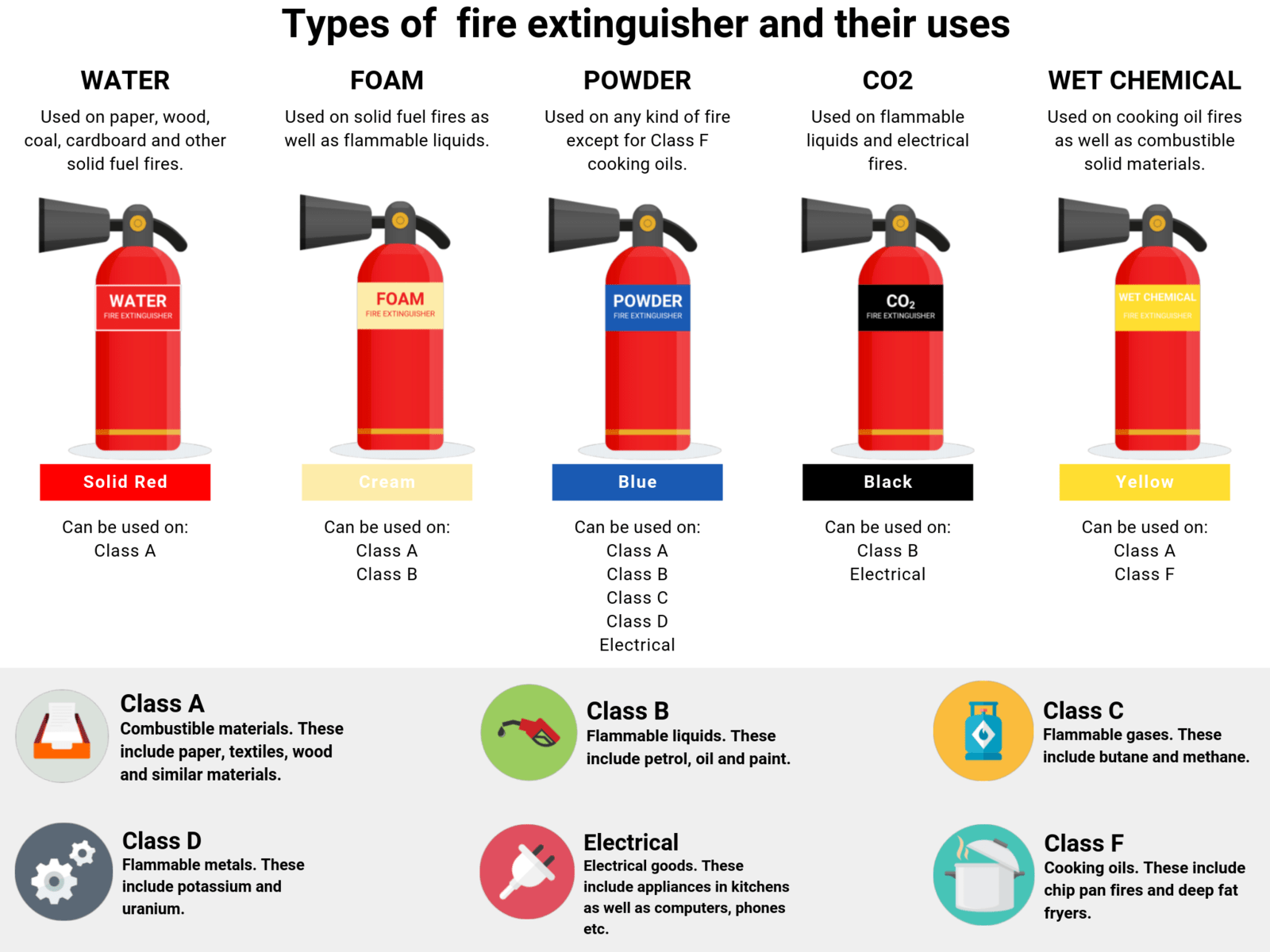
1. Water Extinguishers: The Classic Drenchers (Class A)
These are the simplest, often just filled with – you guessed it – water! They work by cooling the burning material below its ignition temperature. Think of it as a super-powered squirt gun for paper and wood. They're great for Class A fires, but a big nope for anything else, especially electrical or grease fires!
2. Foam Extinguishers: The Smothering Blankets (Class A & B)
Foam extinguishers are pretty cool because they do double duty. They don't just cool the fire (Class A), but they also create a barrier between the fuel and the oxygen (Class B). Imagine putting a thick, bubbly blanket over the flames – that's what foam does! They're excellent for flammable liquids because they prevent the vapor from escaping and reigniting.
3. Dry Chemical Extinguishers: The Multi-Purpose Marvels (ABC & BC)
If you see an extinguisher labeled "ABC," you've found the Swiss Army knife of fire fighting. These are super common because they work on Class A, B, and C fires. They contain a fine powder (often monoammonium phosphate) that works by interrupting the chemical reaction of the fire. There are also BC dry chemical extinguishers that focus on liquids, gases, and electrical fires. They leave a bit of a mess, but hey, they save the day!

4. Carbon Dioxide (CO2) Extinguishers: The Clean Killers (Class B & C)
These are the stealthy ninjas of the extinguisher world. CO2 extinguishers contain carbon dioxide gas under pressure, which, when released, displaces the oxygen surrounding the fire and also cools it down. The best part? They leave no residue! This makes them perfect for sensitive electronic equipment or valuable documents where cleanup is an issue. Just remember, they're not great for Class A fires because they don't prevent re-ignition.
5. Wet Chemical Extinguishers: The Grease Busters (Class K)
Specifically designed for those high-temperature cooking oil and fat fires (Class K), wet chemical extinguishers release a fine mist that creates a process called saponification. It essentially turns the burning oil into a non-combustible, soapy foam, cooling it down and smothering it. It’s like magic chemistry for your deep fryer!

6. Dry Powder Extinguishers: The Specialized Scientists (Class D)
These are the highly specialized tools, often found in labs or industrial facilities. Dry powder extinguishers use different types of powder tailored to specific combustible metals. They work by smothering the fire and forming a crust to cut off oxygen. You won't typically find these in your home kitchen!
Why Does All This Matter?
So, why bother with all this fire extinguisher trivia? Because knowledge is power, especially when seconds count. Knowing which extinguisher to grab (or, more importantly, which one not to grab) can make all the difference in safely containing a small fire before it becomes a major disaster. And if the fire is ever more than a tiny blaze, remember to always prioritize your safety and get out, then call the pros!
Next time you spot a fire extinguisher, give it a little nod of appreciation. It's not just a red can; it's a precisely engineered tool, ready to be a hero for the right kind of emergency. Pretty cool, huh?