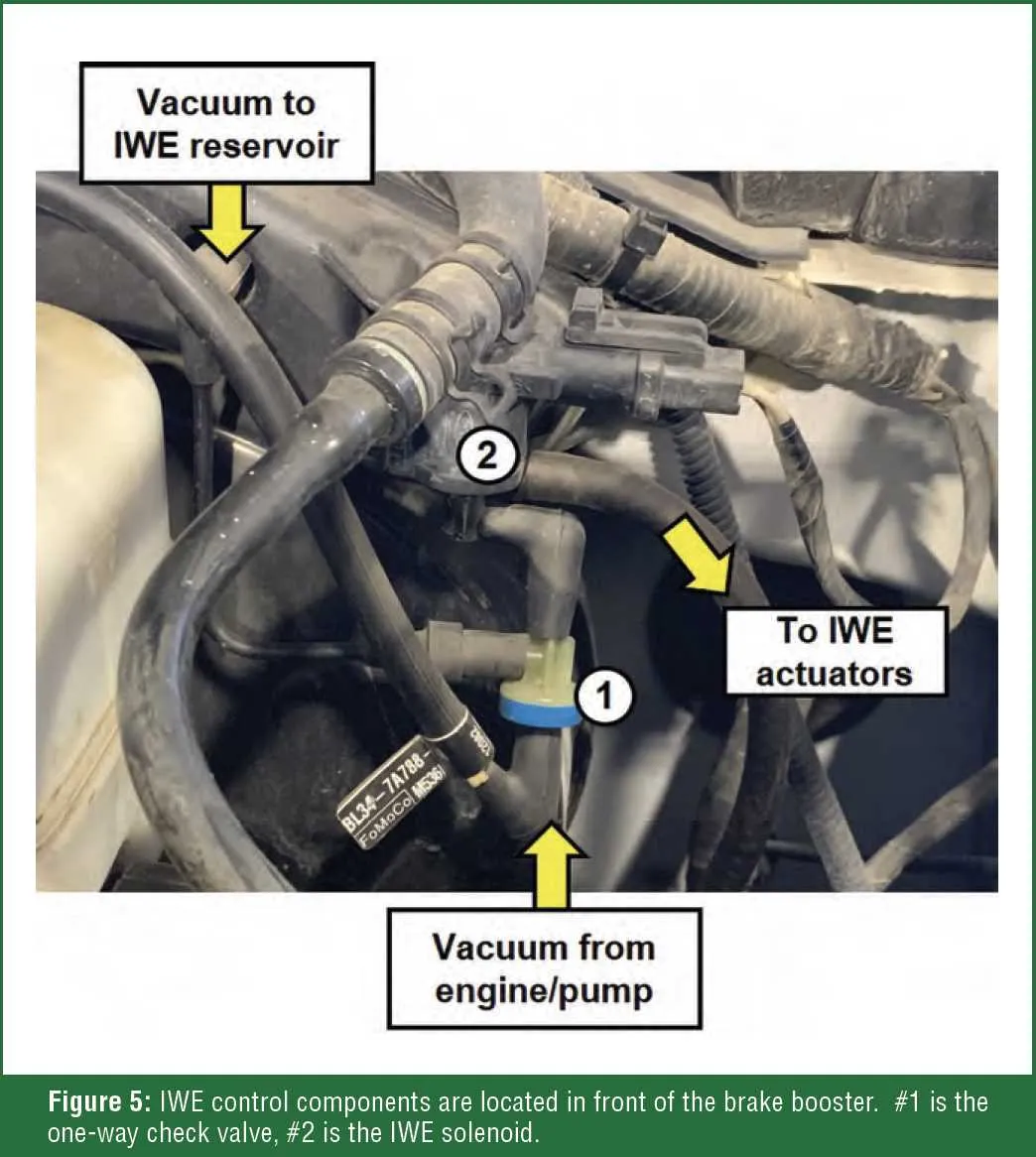
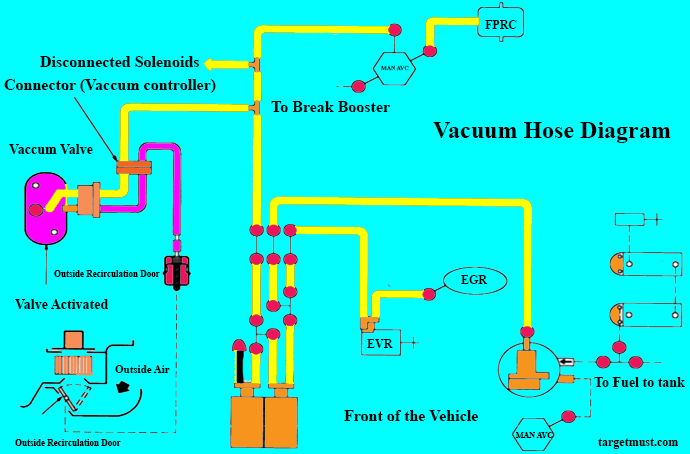
Triton Ford 5.4 Vacuum Hose Diagram

Let's face it, most of us don't spend our free time dreaming about vacuum hoses. But for those who love tinkering with their vehicles, especially the venerable Ford trucks and SUVs equipped with the 5.4L Triton engine, understanding the vacuum hose system is like unlocking a secret level in a video game. It's about taking control, understanding how things work, and saving a buck (or several hundred) in the process. There's a real sense of satisfaction in diagnosing and fixing a problem yourself, knowing you've mastered a challenge that many others would shy away from.
So, why should you care about a Triton Ford 5.4 vacuum hose diagram? Because these little tubes are essential for a smooth-running engine. They provide the necessary vacuum for a whole host of crucial functions, including the operation of the power brakes, the heating and air conditioning system, the cruise control, and even the fuel management system. A leak in one of these hoses can lead to a cascade of problems, from poor engine performance and reduced fuel economy to failing emissions tests and a disconcerting hissing sound under the hood.
Think about it: you're cruising down the highway, enjoying the cool air conditioning on a hot summer day. Suddenly, you notice the AC isn't as cold as it should be, and the engine seems a bit sluggish. Or maybe you're trying to park, and the brakes feel unusually stiff. Chances are, a vacuum leak is to blame. Identifying the culprit using a vacuum hose diagram can save you a trip to the mechanic and allow you to pinpoint the exact hose that needs replacing. This is a prime example of how a little knowledge about your vehicle's systems can translate into real-world benefits.
Must Read
The application of a vacuum hose diagram is pretty straightforward. You'll find these diagrams online, in repair manuals, or even sometimes on a sticker under the hood of your vehicle. The diagram shows the routing of all the vacuum hoses in the engine compartment, connecting various components and indicating the proper connections. By carefully comparing the diagram to the actual hoses on your engine, you can identify any disconnected, cracked, or damaged hoses that might be causing problems. Common problem areas include hoses near the exhaust manifold, where they are exposed to high heat, and hoses that have simply become brittle and cracked with age.

To enjoy this activity more effectively (yes, you can actually enjoy it!), here are a few practical tips:
- Invest in a good quality vacuum hose diagram. Clear, accurate diagrams are essential for accurate diagnosis. Don't rely on blurry or incomplete images.
- Take your time. Don't rush the process. Carefully compare the diagram to the actual hose routing in your engine compartment.
- Use a flashlight. A good flashlight will help you see hoses in hard-to-reach areas.
- Consider using a vacuum gauge. A vacuum gauge can help you test the vacuum in different parts of the system to pinpoint the location of a leak.
- Replace hoses with the correct type and size. Using the wrong type of hose can lead to problems down the road.
- Label the hoses. Before disconnecting any hoses, label them with tape and a marker to ensure you reconnect them properly.
By understanding your Triton Ford 5.4's vacuum hose system and using a diagram effectively, you can keep your engine running smoothly, save money on repairs, and gain a deeper appreciation for the inner workings of your vehicle. So, grab a diagram, get your hands dirty, and enjoy the satisfaction of fixing it yourself!