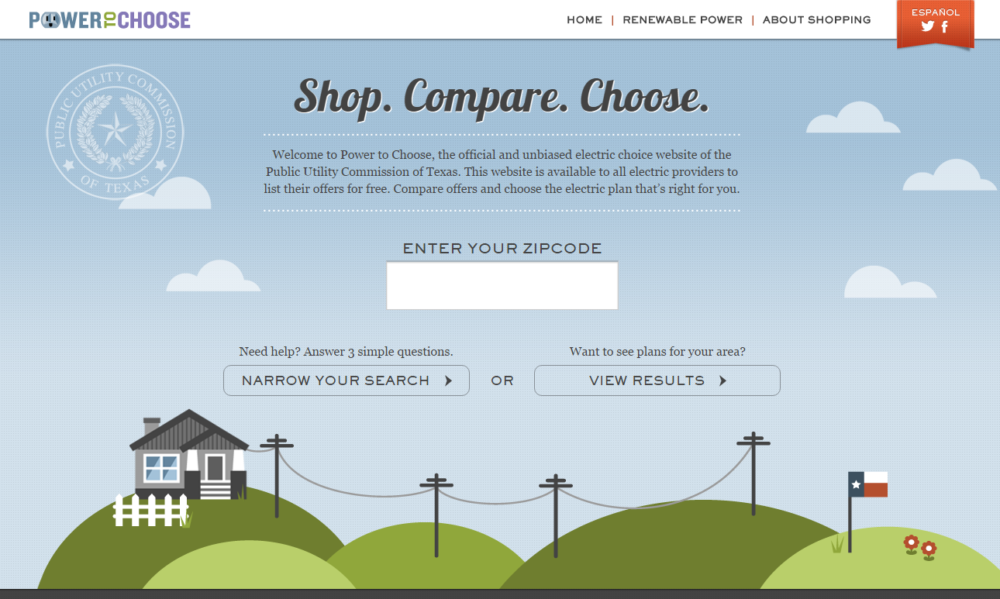
Texas Puc Power To Choose
Ah, Texas. A land of wide-open spaces, big personalities, and even bigger choices. From which delicious BBQ joint to hit up on a Saturday to which rodeo to attend, we Texans love having options. But did you know that spirit of choice extends to something as fundamental as the electricity powering your home? Yep, we're talking about the magic that is Power to Choose.
For those outside the Lone Star State, this might sound a little wild. Many places have a single, monopoly utility. Not here! Texas, being Texas, decided to do things a bit differently. Back in 2002, the state deregulated its electricity market (in most areas, though not all, like Austin or San Antonio, which have municipal utilities). This means that instead of one company dictating your rates, a whole host of electricity providers compete for your business. And that, my friends, is where Power to Choose steps in.
What Exactly Is Power to Choose?
Think of it as the ultimate online marketplace for electricity plans. The Public Utility Commission of Texas (PUC) created and maintains the Power to Choose website as a neutral platform. It's designed to empower consumers – that's you! – to compare different electricity plans from various Retail Electric Providers (REPs) in a transparent way. No hidden agendas, just information at your fingertips, like a digital rodeo for the best energy deal.
Must Read
The core idea? Competition drives innovation and better prices. When providers know you can easily jump ship, they work harder to offer competitive rates, enticing perks, and stellar customer service. It’s all about putting your power back in your hands.
Navigating the Electric Jungle: Your Practical Guide
Ready to dive in and find your perfect plan? It’s surprisingly simple. Head over to PowerToChoose.org. The first thing you'll do is enter your zip code. This tells the site which service area you're in, and thus, which REPs can actually provide service to your home.
Once you've entered your zip code, prepare for a list! You’ll see various plans, each with different rates, terms, and features. Don’t get overwhelmed; we’ve got some tips to help you filter through the options like a seasoned pro.
Types of Plans to Know
- Fixed-Rate Plans: These are often the most popular. You lock in a per-kilowatt-hour (kWh) rate for the duration of your contract (e.g., 12, 24, or 36 months). This offers stability and predictability, which is great for budgeting, especially during those scorching Texas summers or surprising winter freezes.
- Variable-Rate Plans: Here, your rate can change month-to-month based on market conditions. They might start low but can spike unexpectedly. Generally, these are best for very short-term needs or if you plan to move soon. Proceed with caution!
- Indexed Plans: Your rate is tied to a publicly available index (like the price of natural gas). These can be complex and are often recommended for those with a higher risk tolerance and understanding of market trends.
- "Green" or Renewable Plans: Many REPs offer plans that source a certain percentage (or even 100%) of their energy from renewable sources like solar or wind. You can feel good about powering your home with sustainable energy, often without a significant price premium.
Key Things to Look For – Your Detective Checklist
Just like you wouldn’t buy a new pickup without checking under the hood, don’t sign an electricity contract without reading the fine print. Here are your essential checks:
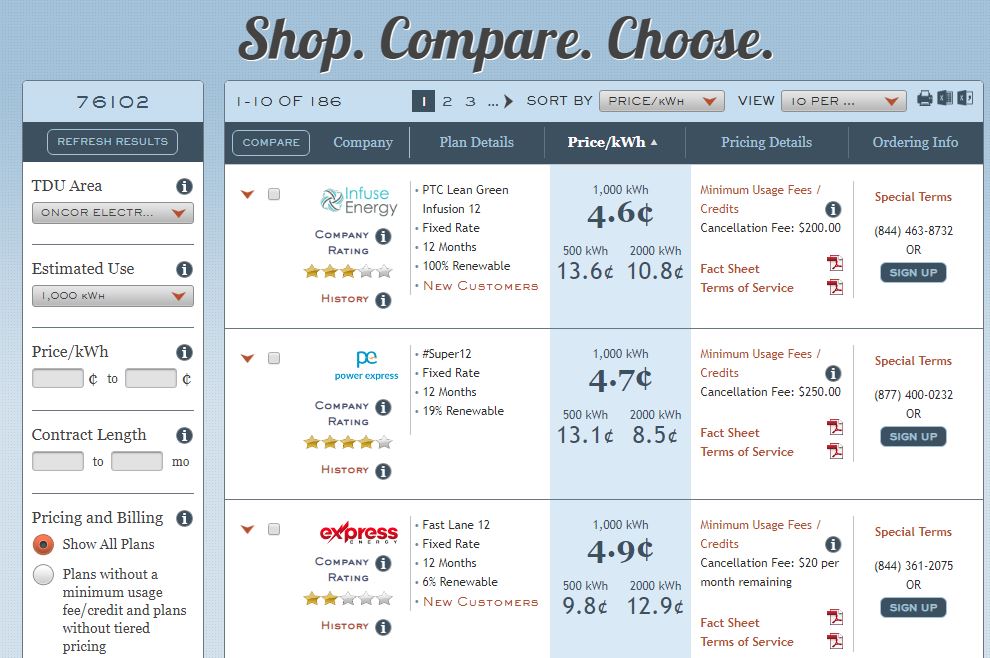
- The Energy Facts Label (EFL): This is your holy grail. Every plan has an EFL, which is a standardized document that breaks down the rate, contract term, fees, and other important details in a clear, comparable format. Always read the EFL!
- Contract Length: Are you looking for a 6-month quick fix or a 36-month commitment? Be mindful of your living situation.
- Early Termination Fees (ETFs): If you break your contract early, many plans will charge a fee. Know what it is before you commit.
- Usage Tiers: Some plans offer a great rate, but only if you use within a specific range of kWh (e.g., a credit if you use exactly 1000 kWh). If your usage fluctuates, these can be tricky.
- TDU Charges: Transmission and Distribution Utility (TDU) charges are a non-bypassable part of your bill. These are fees paid to the company that maintains the poles and wires in your area (like Oncor or CenterPoint). They are separate from your REP’s energy charge and will be on every bill, no matter which REP you choose. The EFL will show how these are factored into the advertised rate.
Texas-Sized Savings and Peace of Mind
Choosing your electricity provider might not be as exciting as a Friday night lights game, but it’s an act of independence, true to the Texas spirit. Taking a little time to compare plans means you're not just saving a few bucks; you're actively managing a significant household expense. That saved cash could go towards another delicious plate of brisket, a new pair of boots, or maybe even a little road trip to Big Bend.
In a world where so much feels out of our control, Power to Choose offers a delightful sense of empowerment. It’s a practical tool that allows you to make informed decisions for your home and your wallet. So go ahead, Texas, embrace your choices – not just in life, but in electricity too. You'll not only potentially save money but also gain peace of mind knowing you’re in charge of your energy future.